E-Paper



IndiQube signs ₹52 crore managed office space deal with Japanese e-commerce major in Bengaluru
Bengaluru real estate: IndiQube has signed a 35,000 sq ft office deal with a Japanese e-commerce firm in Outer Ring Road

 Prefer HTon Google


Managed workspace provider IndiQube Spaces Limited has signed a ₹52 crore managed office deal with a leading Japanese e-commerce company for around 35,000 sq ft in Bengaluru’s Outer Ring Road, the company said in a statement on April 15.
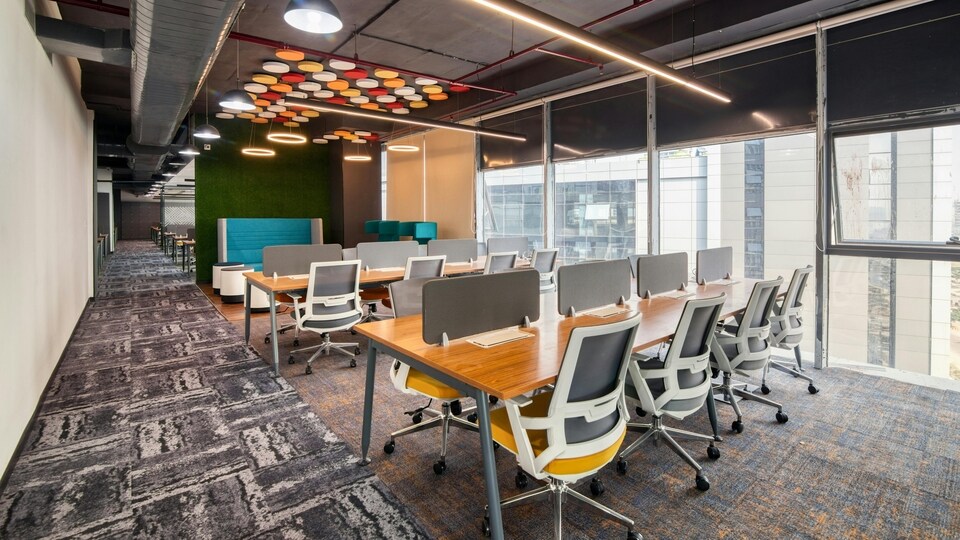
The five-year mandate will support the client’s India operations with a fully managed, enterprise-grade workspace, it said.
“The transaction comes at a time when India’s flex office market has crossed 100 million sq. ft., with enterprises increasingly adopting managed workspaces as a strategic lever for faster expansion, operational flexibility and talent access,” the statement said.
Outer Ring Road in particular remains one of the most preferred office corridors for global companies building operations in India, given its concentration of technology campuses, corporate ecosystems, and access to skilled talent, it said.
Rishi Das, co-founder and CEO, said the transaction reflects how global e-commerce firms are rethinking workplace strategies in India. He noted that for global capability centres (GCCs), office spaces are increasingly seen as strategic enablers of collaboration, culture, and execution rather than just physical infrastructure.
Co-founder Meghna Agarwal said that global enterprises are seeking workplaces that are operationally seamless, highly customised, and aligned with brand identity. “This is especially true for digital and consumer internet companies where team structures can evolve quickly, and employee experience matters deeply. Our focus has been on building a platform that combines customization, operational excellence, hospitality, and technology to exactly serve these requirements,” she said.
Also Read: Pune real estate: IndiQube signs ₹54 crore workspace deal for 1,140 seats with GCC client
Earlier transactions
Earlier, the company had signed a workspace leasing agreement with a leading Global Capability Centre (GCC) client in Pune for 1,140 seats, valued at ₹54 crore. According to a statement issued on March 20, the client leased the seats at the company’s IndiQube Orchid property in Yerwada for a five-year term.
According to the company's statement, the GCC client leased the space for 5 years. The company said that 40% of its portfolio is in leasing to GCCs.
IndiQube is a co-working space platform, offering managed office solutions tailored to startups, Global Capability Centres (GCCs), and large enterprises. The company was listed on the stock exchange last year, has a presence in 17 cities and manages over 9.55 million sq ft.
Also Read: Flexible workspaces provider IndiQube Spaces files for ₹850 crore IPO
Bengaluru tops flex office space leasing
Flexible office space in India crossed the 100 million sq ft mark, with total inventory tripling between 2020 and 2025 to reach 110–114 million sq ft, growing at a 23–25% CAGR over the past five years. The sector now comprises over 500 operators across nearly 2,600 unique centres. Bengaluru led as the largest flexible workspace market with 30–32 million sq ft of stock, followed by Delhi-NCR at 21–23 million sq ft, a report by CBRE India said.
Bengaluru is followed by Delhi-NCR with a stock of 21-23 mn sq ft and Pune at 13.6-14.6 mn sq ft Like Bengaluru, Delhi-NCR witnesses demand from sectors such as IT, technology and software development, BFSI, and Business Consulting and Professional Services. Pune’s (13.6 to 14.6 mn sq ft) market is driven by sectors such as IT, technology and software development, BFSI, and Engineering and Manufacturing (E&M).