
 E-Paper



Real estate bodies Naredco, Credai seek calibrated approach to CAQM's construction curbs in NCR
Naredco and Credai have called for construction curbs to be linked to actual pollution levels, adding that blanket restrictions could disrupt realty projects

 Prefer HTon Google


Reacting to the Commission for Air Quality Management's (CAQM) order restricting dust-generating demolition and outdoor construction activities across the NCR from November 5 to 20, with exemptions for essential public infrastructure, real estate industry bodies Naredco and Credai have called for a calibrated approach.
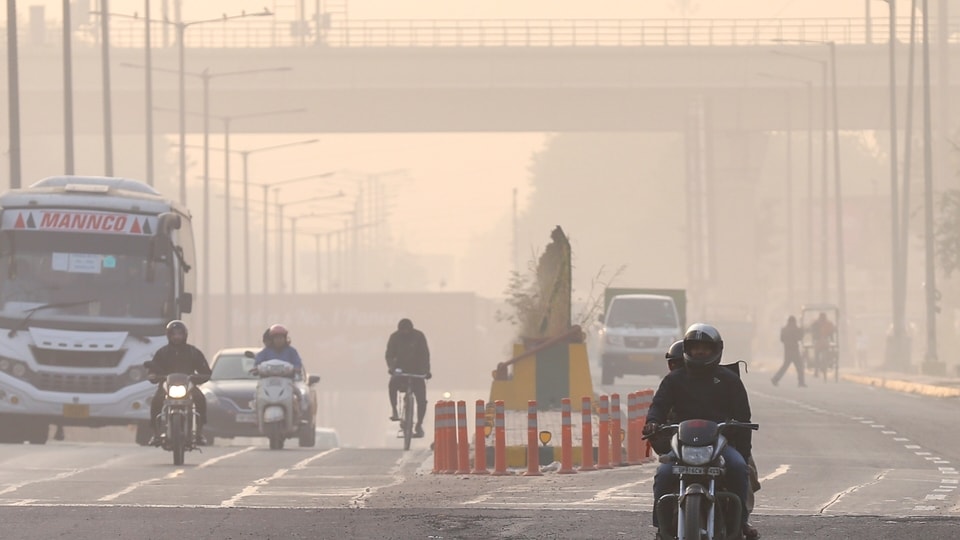
They said construction restrictions should be linked to actual pollution levels rather than imposed as a blanket ban, adding that unnecessary work stoppages could hurt the real estate sector, disrupt ongoing projects, delay construction schedules and affect the livelihoods of construction workers.
In an order dated October 30, the CAQM directed government and private offices in Delhi and five NCR districts, Gurugram, Faridabad, Sonipat, Ghaziabad and Gautam Buddha Nagar, to operate with up to 50% of their staff attending physically, while the remaining employees work from home. The directive exempts industrial establishments and essential services where such an arrangement is not feasible.
The Commission also directed restrictions on dust-generating demolition and outdoor construction activities across the NCR. The curbs extend to linear public infrastructure projects, including highways, roads, flyovers, overbridges, power transmission lines, pipelines and telecommunication works.
However, exemptions have been provided for projects related to Railways, Metro services, airports, inter-state bus terminals, hospitals, water supply and sanitation, national security and defence-related activities, as well as projects of national importance.
What the real estate industry bodies have to say
Parveen Jain, president of NAREDCO, said the precautionary measures announced by the CAQM were understandable given the deteriorating air quality across Delhi-NCR. However, he said restrictions on construction activities should be imposed in a calibrated manner and linked to actual pollution levels.
"A blanket ban on construction activities without sufficient cause is unnecessary and can adversely impact the real estate sector, livelihoods and ongoing development projects," he said.
“Such stringent restrictions should ideally be enforced when AQI levels cross the GRAP Stage IV threshold, and the situation warrants such intervention. The real estate sector is already undertaking several dust-control measures, including deploying anti-smog guns, covering construction materials, and adhering to prescribed environmental norms.
“A targeted approach, backed by strict monitoring and effective implementation, will help address pollution concerns without unnecessarily disrupting essential construction and infrastructure development. It is important to strike a balance between environmental protection and the continuity of economic and development activities,” Jain said.
CREDAI NCR said it had consistently encouraged its member developers to strictly follow the GRAP guidelines issued by the CAQM each year, along with the prescribed standard operating procedures (SOPs) and pollution-control measures, particularly during the winter months.
“The real estate sector remains committed to supporting the government's efforts to combat air pollution. However, any restrictions or bans on construction activities must be guided by scientific evidence and a clear assessment of the actual sources of pollution,” said Nikhil Hawelia, secretary, CREDAI NCR.
Citing recent studies and reports by relevant agencies, Hawelia said construction activities account for less than 1% of Delhi-NCR's overall air pollution. In this context, imposing a blanket ban on construction and demolition activities from November 5 to 20, without adequate scientific justification, may not be an effective or proportionate measure, he said.
He added that such restrictions could have a significant economic impact on the broader ecosystem of real estate-related industries and, more importantly, affect the livelihoods of nearly 10 lakh construction workers in Delhi-NCR.
Why has CAQM imposed the restrictions?
Explaining the rationale behind the preventive measures, the CAQM cited historical daily Air Quality Index (AQI) data for November from 2018 to 2025, which indicated a recurring pattern of elevated pollution levels in Delhi-NCR, particularly during early to mid-November.
"During this period, local emission sources, seasonal agricultural residue and biomass burning, and emissions from other episodic events further contribute to the pollution load, while adverse meteorological conditions, including low wind speeds, a shallow atmospheric boundary layer and reduced vertical mixing, further limit pollutant dispersion," the order stated.
The CAQM issued the directions under Section 12 of the Commission for Air Quality Management in National Capital Region and Adjoining Areas Act, 2021, which empowers it to take measures to protect and improve air quality in the NCR and adjoining areas. The Commission noted that AQI levels had reached the 'Severe' category on certain days during the period under examination.


