
 E-Paper



Youth Olympic Games: The curious case of India’s approach
The Games can be a path to future Olympic glory but Indian sports bodies don’t seem to have put much thought into YOG participation

 Prefer HTon Google


Did you know there’s a pretty important Olympics starting this weekend? And that India’s got athletes in it? Read or saw anything about them? Who designed their ceremonial kit etc., etc.? No, no, no and no?
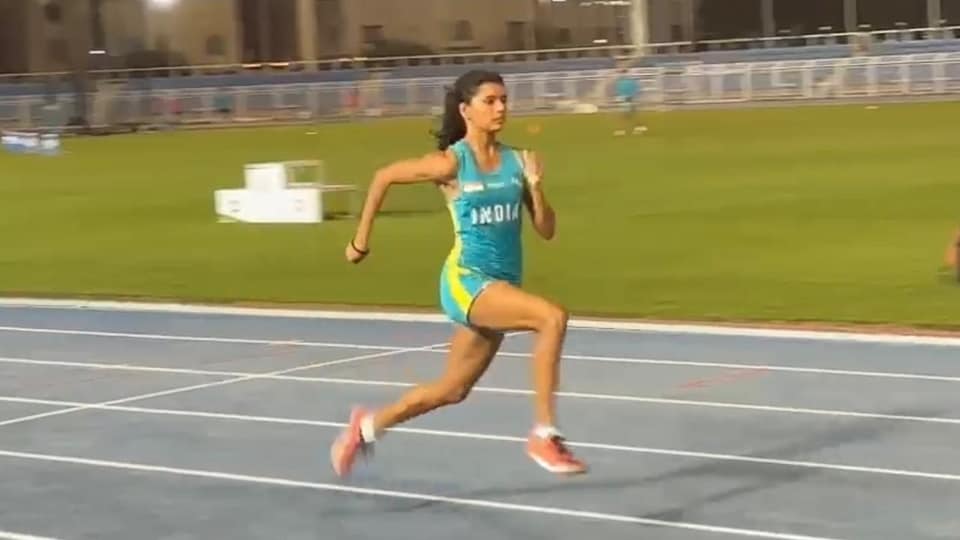
Well, that’s how much enthusiasm the Indian sporting establishment appears to have around the 2026 Youth Olympic Games (YOG) being held in Africa for the first time, in the Senegalese capital of Dakar (October 31-November 13), across 25 competition (medal) sports with a Games motto of “Africa welcomes, Dakar celebrates.”
In the Senegalese native Wolof, that’s “Afrig Dalal, Ndakaaru Jëmël” and “L’Afrique accueille, Dakar célèbre” in French. The YOG are a relatively new competition, first held in Singapore 2010 as the Summer YOG with Innsbruck 2012 marking the first winter youth Olympics. The age criteria for Dakar 2026 stipulates that no athlete can be younger than 14 and older than 17 at the time of competing.
India is sending its smallest YOG contingent — 17 athletes with 11 girls and six boys across 11 disciplines — having won 23 medals across the previous three editions. India’s best YOG performance came in the previous edition — Buenos Aires 2018 — with 13 medals from a contingent of 46. Before casting an eye on India’s 17 for Dakar 2026, let’s look closer at the 2018 numbers.
India won seven of its 13 YOG medals in 2018 across three sports which do not feature this time: hockey (five-a-side which adds to contingent numbers – 18 - but not Olympic-level continuity/relevance), shooting and weightlifting. Take away the hockey squad, plus four shooters and two wrestlers and that still leaves us with 22, five more than we have sent to Dakar2026.
Do those extra athletes matter? Yes. Because if this clutch of Indian athletes — average age just over 16 — are expected to be ready, if not for LA2028 at least Brisbane 2032, then competing with the global cream of their age group marks both a reality check and provides the impetus to push ahead.
Announcing the contingent, IOA President PT Usha said, “Dakar2026 is an important milestone for our young athletes. They represent the future of Indian sport and among them may be the champions who will represent India at Brisbane2032 and beyond.”
If we look back at Buenos Aires 2018, India’s medallists were Manu Bhaker, Saurabh Chaudhary, Lakshya Sen and Jeremy Lalrinnunga in individual sport, and amongst the hockey players we had Salima Tete, Lalremsiami, Bichudevi Kharibam and Vivek Sagar Prasad, who was part of the Indian hockey team that won back-to-back bronze medals in the Tokyo and Paris Olympics.
ALSO READ: PT Usha, Gagan Narang, Adille Sumariwalla in draft list of nominations for SOM election
Amongst other Indian performers, HS Prannoy, Yuki Bhambri, Shiva Thapa, Srihari Nataraj, Advait Page, Manav Thakkar and Archana Kamath have also been part of YOG contingents.
Globally, there is a particulary revealing list on Olympedia.com of at least 311 athletes who graduated from being summer YOG medallists to summer Olympic Games (OG) medallists. Manu, Vivek plus hockey defender Sanjay Rana are on it, but so are Chad Le Clos, Noah Lyles, Salwa Eid Nasar and Ma Ning.
There is some debate about the relevance of the YOG in terms of the calendar and training schedules of athletes across some sport. There are others where the YOG to OG transition is an accurate progress tracker. Definitely in swimming and athletics (not Indian strongholds) but also boxing, judo and table tennis where India has some skin in the game.
In Dakar 2026, India’s contingent is made up of one archer, one athlete, two badminton players, two boxers, one equestrian, one judoka, one sailor, two swimmers, one TT player, four (beach) wrestlers and one wushu fighter. The difference between the YOG and OG is that the athlete quota for a non-host country at the YOG depends on the international federation’s rules about the quotas. Athletics has only two — one male, one female — per non-host country, swimming has four — two male, two female, etc.
But here is where it gets odd: there is no concise document freely available outlining YOG quotas across sport for contending participants and coaches or for the general public. This quota document, I was informed, is only made available to each National Sports Federation (NSF). The IOA should ask Indian NSFs to put out detailed information about where and how their athletes attempted YOG quotas spots and how they fared.
Given that India has ambitions around hosting big events, you would think that there should be tremendous energy across sport into sending as many competitors to the YOG as they can. Rather than demonstrating a paucity of faith in the next generation.
For sure, India didn’t need to attempt Dakar2026 quotas in baseball or breaking or 3x3 basketball. But among the other YOG2026 competition sports, what about fencing, gymnastics, road cycling, taekwondo, triathlon? We sent 20 fencers to Aichi-Nagoya2026 – suddenly they have no successors?
As Alice said when in Wonderland, “curiouser and curiouser.”


