
 E-Paper



Couple earning ₹4 lakh/month delays having a child after ₹4 crore home loan: 'House started making life decisions'
The case has sparked a discussion online about housing affordability, financial planning and how a long-term EMI can influence major life decisions.

 Prefer HTon Google


A couple earning nearly ₹4 lakh a month has decided to delay having a child because of the financial pressure created by the recent home loan, according to a case shared by a SEBI-registered investment adviser. The case has sparked a discussion online about housing affordability, financial planning and how a large long-term EMI can influence major life decisions, including having children.
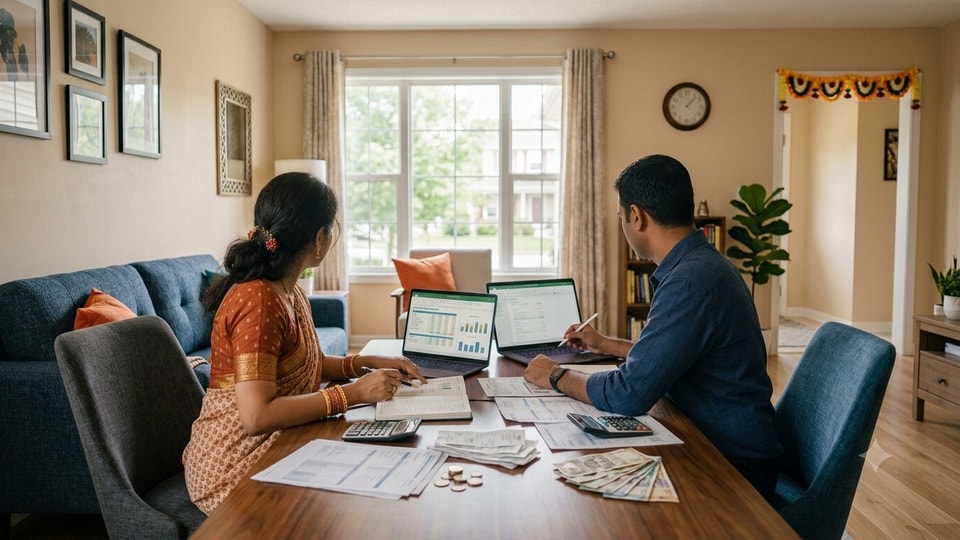
Vivek S G, a SEBI RIA, shared details of the couple's finances in a LinkedIn post after the husband approached him for advice on accumulating ₹70 lakh by December 2028, when their flat is expected to be handed over.
Vivek shared that the husband earns ₹2.35 lakh a month and saves ₹84,000, while his wife earns ₹1.61 lakh and saves ₹1.31 lakh. Together, they save ₹2.15 lakh every month.
The couple has already received ₹2 crore from the wife's father towards the ₹4 crore house. They now need to arrange another ₹70 lakh for registration and interiors by the time of possession.
(Also Read: Woman laid off twice shares powerful comeback after career break and motherhood: 'I became my own boss')
According to Vivek, if the couple invests their entire monthly surplus in short-term debt instruments for the next 28 months, they could accumulate roughly ₹65 lakh. "Slightly short of ₹70 lakh, but close enough to bridge," he wrote.
However, he pointed out that achieving the target would require the couple to direct virtually every rupee of their monthly savings towards the house for the next 28 months. "The problem is what that requires. Every rupee they save for the next 28 months goes into this one goal," he said.
"They arrive at handover day with the interiors funded, while having contributed absolutely nothing to their emergency fund, retirement corpus or child planning," Vivek wrote.
He also said that the financial pressure would not end once the couple moved into the property.
Vivek explained that the remaining ₹2 crore would be financed through a home loan. Assuming an interest rate of 8.5% over 20 years, he calculated that the couple's monthly EMI would be around ₹1,73,565.
Vivek then examined what would happen if either partner stopped earning. "If she stops working, for maternity, a layoff, a career break, or a parent who falls ill, their surplus drops to ₹84,000 against an EMI of ₹1.73 lakh. They're short ₹89,000 every month. If he stops working, the surplus is ₹1.31 lakh. Short by ₹42,000 every month," he wrote.
"This house won't survive on one person's income. It needs both of their incomes, at current levels, without interruption, for twenty years," Vivek wrote.
He said that the most striking part of the couple's situation was not the EMI itself but its potential impact on their plans for children.
"That's the real cost, and it doesn't appear on any loan document. The house has started making their life decisions before they've even moved in," he wrote.
Concluding the post, he clarified that this was not an argument against buying a house, but urged prospective homeowners to ensure that their finances could withstand unexpected changes. "You must either buy something that can survive on one income, or you must build a buffer large enough to absorb the gap before you sign," he wrote.
(Also Read: ‘People called us infertile’: Indian-origin couple opens up after DINK video backlash)
Social media reactions
The post drew several reactions from users, with many discussing the difference between being eligible for a home loan and being financially comfortable with it.
One user wrote, "Loan eligibility should never be the primary decision-making factor when a financial commitment can significantly impact our personal lives. Just because a bank says you can afford it doesn't necessarily mean you should take it."
"If someone voluntarily chooses a very expensive house and then says they cannot afford children, it suggests that their housing choice is affecting their ability to have children. A child certainly costs money. But there's a big difference between raising a child and raising a child with a luxury lifestyle. Sometimes it's not just about affordability, it's about priorities and how we choose to allocate our cash flow," commented another.
"This post is harsh truth of many high income group individuals , it seems they might have bought a house of 4 cr for show off. They think they own a house but in fact house own them now. I never call a home owned by loan our own home in-fact it's bank home not yours until last Emi is paid off," wrote a third user.
"This is where you need financial literacy, it's suicidal locking yourself for twenty years without any backup plans," said another.


