
 E-Paper



The Belgian Who Loved Hindi
Not only did he love Hindi, but he also researched it to an extent and has been known as one of the biggest Hindi scholars of all time. His journey began as a Belgian Jesuit and ended up as India’s renowned academic.

 Prefer HTon Google


Born on 1st September 1909
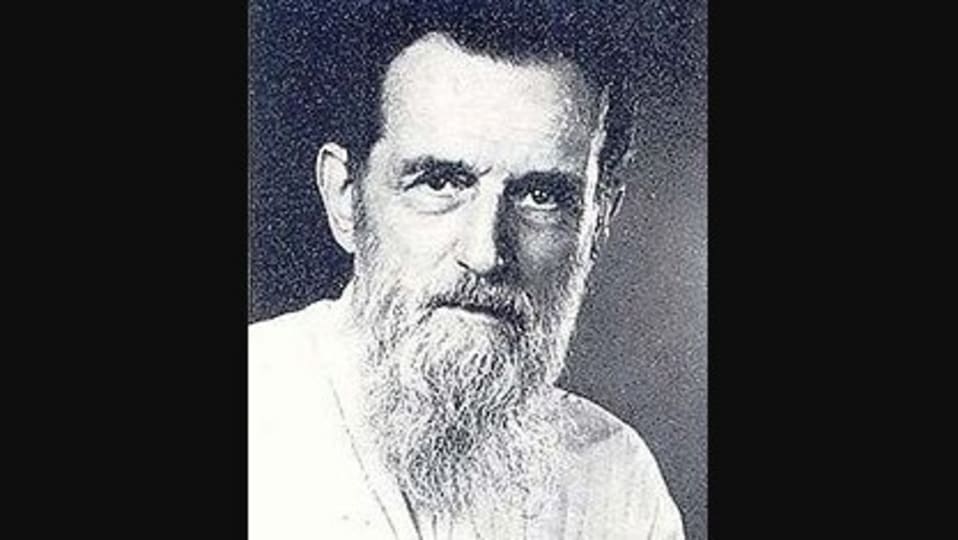
Camille Bulcke was born on 1st 1909 in a Knokke-Heist municipality, a village that belonged to the Belgian province of West Flanders. By the time he moved to India, Bulcke had already completed his B.Sc. Degree in civil engineering from Louvain University. He became a Jesuit in 1930 and later underwent philosophical training in the Netherlands. He left for India in the year 1934.
"When I arrived in India in 1935, I was surprised and pained when I realized that many educated people were unaware of their cultural traditions and considered it a matter of pride to speak in English. I resolved my duty would be to master the language of the people." – Camille Bulcke
You can guess through his words how much he would have respected and admired Hindi as a language. Bulcke took it as a duty and fulfilled it righteously by becoming the first person to officially turn in a Hindi research paper in India. Quite a deal, isn't it? But that is what makes him an inspiring and brilliant scholar who is vastly respected till day. Bulcke initially stayed in Darjeeling for a while and taught mathematics at Gumla (presently Jharkhand). The seeds of passion for Hindi got sown into his heart here itself.
Then began his path towards pursuing it devotionally. Bulcke first completed his theological training and then got appointed as a priest. Soon he was seen pursuing M.A in Sanskrit at Calcutta University and then an M.A in Hindi from Allahabad University as well. Hindi helped him understand philosophy much better and to get familiar with Indian philosophy, he dived deep into Hindi literature.
During his time spent in Allahabad, he came across Tulsidas' Ramcharitmanas. After having a chance to read and study it, Bulcke had become immensely attached to it. For him, it had become a paradigm of righteous goodness, values, and ideals. The poetic essence made him even more so devoted to it.
Bulcke was struck with the resemblance that the Ramcharitmanas had to the values of Jesus Christ, and so, he decided to base his thesis on a topic synonymous with it. He thus received his D. Phil from Allahabad University by choosing Ramkatha: Utpatti Aur Vikas as his subject.
This thesis was not only appreciated in the Hindi literature society, but also outside India. By 1949, Bulcke had started out as a professor in the St. Xavier's College, Ranchi. He was made the head of the department for both Sanskrit and Hindi. However, Bulcke's early hearing problems made him choose the line of a scholar rather than a professor.
Inspired by Tulsidas, he rewrote the famous Blue Bird play in Hindi and renamed it Neeli Pancchi. He was frequently seen getting invited to hold out conferences on Tulsidas and his writings, for which he was always ready. He helped people connect with their spiritual grounds and traditional roots and according to him, Tulsidas's works were the best source to get inspired from.
He ordained the Indian Citizenship in 1951 and took on the name Bihari after coming to Bihar and praising the state as Sita's own land. In 1974, he was awarded the Padma Bhushan for being an eminent scholar in the Hindi literary world.
Bulcke dedicated all his days to the Hindi-English dictionary that his lifelong research had produced. With over 40,000 words incorporated within it, the dictionary remains to be widely used in the whole of northern India till date. How great it is to see the passion of a foreign man turn him into an inspiring scholar to many. That's how the life of Camille Bulcke was, his endless love for Hindi and his faith in righteous human ideals have made the nation remember him even till today.
This was story was first published on This Day.app


