
 E-Paper



 Trending News
Bayer Clears Major Roundup Hurdle, but a New Study Raises Cancer Link Again
U.S. government-funded research links the common weedkiller to cancer, raising questions about litigation.


Bayer was supposed to be celebrating.
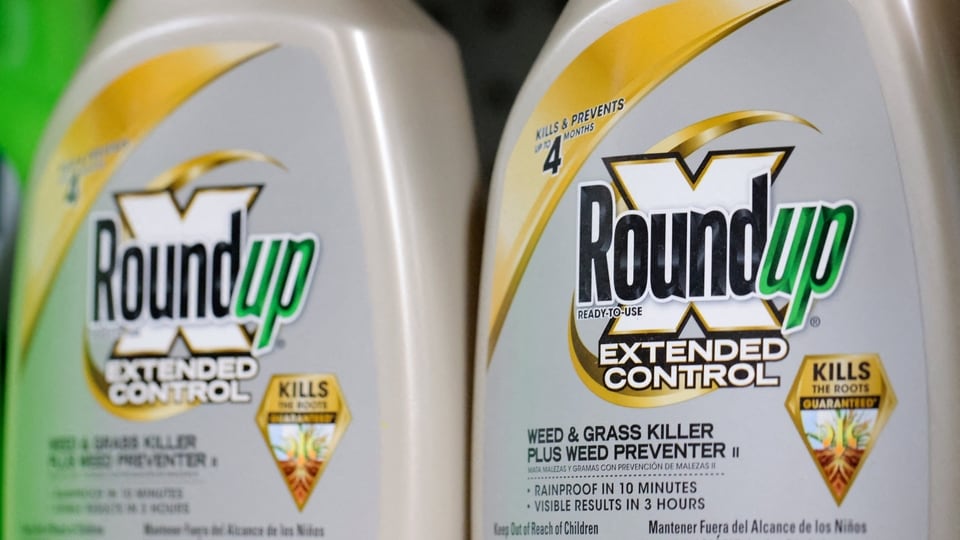
After nearly a decade of litigation, the German conglomerate finally won a judge’s approval Friday afternoon for a $7.25 billion settlement designed to bring the bulk of its current and future Roundup weedkiller litigation to a close.
Then a National Institutes of Health study came out. Released around the same time as the judge’s settlement decision, the research linked Roundup’s main ingredient—glyphosate—to cancer. The U.S. government hasn’t said there is any link, while the World Health Organization has deemed it a probable carcinogen.
The study’s findings throw a new wrench into Bayer’s Roundup litigation. The Environmental Protection Agency is in the process of re-evaluating the carcinogenic risks of glyphosate and is expected to rule by early 2027. An EPA spokesperson said the agency is working “hand in hand” with the Department of Health and Human Services, which oversees the NIH.
“Every relevant, quality study gets a seat at the table, and this one is no exception,” an EPA spokesperson said.
A spokeswoman for Bayer’s glyphosate division said the NIH study hasn’t yet undergone formal peer review, so its conclusions should be considered preliminary. The company said the EPA’s review of the pesticide is based on a large body of evidence and a number of long-term studies, rather than a single review.
Bayer’s shares, which trade in Germany, were down slightly Monday. The company’s stock has surged more than 70% over the past 12 months. But it is still below its price when Bayer bought Roundup’s maker Monsanto for $63 billion in 2016.
Roundup is the most popular weedkiller in the world. Roughly 300 million pounds of glyphosate are sprayed on U.S. crops each year. Bayer has said that glyphosate is one of the most thoroughly studied herbicides in the world, with about 2,500 studies over half a century. The company has long said glyphosate doesn’t cause cancer and is safe to use.
The new study, requested by Health Secretary Robert F. Kennedy Jr., found a positive but inconsistent association between glyphosate herbicides and certain blood cancers, particularly non-Hodgkin lymphoma. The authors said a link between cancer and glyphosate can’t be ruled out.
Make America Healthy Again advocates have long made opposing glyphosate a priority, but have had little success restricting it. Kennedy, a longtime glyphosate critic, is also a former plaintiffs’ lawyer and part of a legal team that won a 2018 Roundup verdict.
“With these findings, glyphosate meets every EPA criteria for a substance to be likely carcinogenic to humans,” said Calley Means, a Kennedy ally who until recently worked on health policy in the White House. “The EPA now has a decision.”
The NIH study didn’t run experiments or collect new data, rather it reviewed existing research. Some analysts question whether it will move the needle in the EPA’s periodic review of glyphosate.
“We are skeptical that an unpublished, non-peer-reviewed paper requested by HHS will, by itself, cause the EPA to change its existing position,” said Tom Claps, managing director of legal and regulatory analysis at the Gordon Haskett advisory firm. “Even if the EPA ultimately changes the Roundup label, Bayer has obtained an important layer of protection through its recently approved class settlement.”
While the herbicide is widely supported by farmers, most of the litigation has been brought by people who used it on residential lawns and gardens.
The Supreme Court ruled in favor of the company this summer, saying Bayer can’t be held liable for failing to warn about Roundup’s alleged risks when the federal regulator—the EPA—has repeatedly maintained glyphosate’s safety over the years.
That ruling has helped the company fend off lawsuits brought by Roundup users claiming it failed to warn them about alleged cancer risks.
Analysts have said the settlement materially reduces the uncertainty surrounding Bayer’s glyphosate liabilities. In his decision, Missouri Circuit Court Judge Timothy Boyer called the deal “fair and adequate.”
Bill Anderson, Bayer’s CEO, said the judge’s approval was “a decisive milestone in the company’s strategy to mitigate the risks of both pending and future Roundup litigation.”
Bayer’s settlement, which covers future plaintiffs, could still face a lengthy appeals process from objectors, which could take years to resolve. If the EPA were to change the label, it could increase Bayer’s litigation exposure, said Claps.
An EPA cancer warning could also bolster the arguments of plaintiffs who opted out of Bayer’s Roundup settlement and are attempting to take individual cases to trial.
Bayer has won most Roundup trials, including its most recent one in October.
Write to Patrick Thomas at patrick.thomas@wsj.com


