E-Paper



‘Hope Pakistan begins to play more constructive role in peace process’: Afghan ambassador
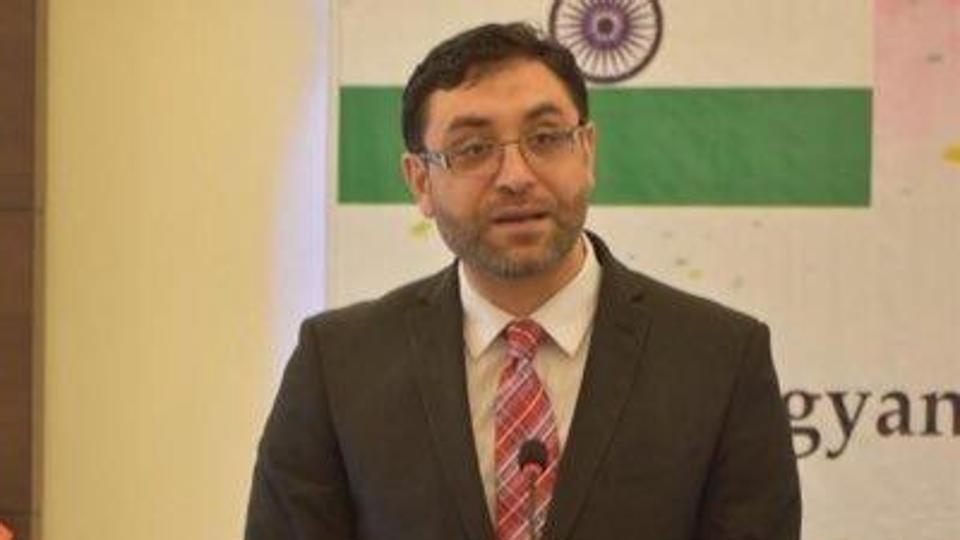
“We expected Pakistan to play a very constructive role to bring the Taliban to the negotiating table,” Afghan ambassador Farid Mamundzay said.

 Prefer HTon Google


Air power is essential for Afghan security forces to successfully take on the Taliban, and the Afghan government is looking to India and the US to provide more combat helicopters and associated logistics support, Afghan ambassador Farid Mamundzay said on Friday in an interview with Hindustan Times. On Pakistan’s role in the peace process, Mamundzay said Islamabad has not delivered as expected.
Here are excerpts from the interview:
Q: With the US president announcing the withdrawal of American troops from Afghanistan will be completed by August 31, which is much earlier than expected, what is your assessment of the security situation? Would you agree with the feeling in some quarters that the US drawdown could have been handled better?
A: Following the announcement by the US president about the withdrawal of US and international troops, the Taliban has waged a war against the Afghan government and the public. And that has made the situation very dire, not only in terms of security, but this has caused a humanitarian catastrophe. Over 200,000 people have been displaced since April 14, 2021, close to 4,000 civilians who have been killed. So this could have been handled in a more organised and planned manner. Now, the withdrawal would be completed in several weeks time. We were expecting that we will go through a very troubling time once these forces leave. And we are right, we are going through that phase now.
There is an active conflict going on and in almost 150 districts, the Taliban have captured many centres of our districts. Now, just remember that some of our districts are very large. So it’s difficult for them to hold the entire district. But what is significant for both the Taliban and our government is to hold the centre or capital of the district. Taliban has been capturing a number of capitals of the districts, which has caused an outcry from the local population and the government. In the past three days, we have been able to recapture 10 districts. Now, this would continue for a number of months, we would capture districts, they would recapture them. The withdrawal comes in a very un-fashioned manner. This could have been handled properly.
Q: How do you look at assessments by some Western capitals that the Afghan forces are not prepared and they’re going to collapse? And how much of a factor is air support?
A: First, if you have looked at US President Biden’s interview on Thursday, [he] denied that there has been any such assessment on the part of the US intelligence community, but in any case, the assumption that the government would collapse in six or 12 months, I think, is a very unrealistic assessment. We outnumber the Taliban by five or six times, a force of 70,000 to 75,000 cannot face a force of around 400,000. Also, given our landmass, our country consists of 652,000 sq km, one-fifth the size of India with almost 400 districts. It’s a very big country with very difficult terrain and it’s very difficult to be guarded by 400,000 people with a population of over 35 million.
So the assessment, I think, is unrealistic. Like I said, we are going through a turbulent time, but the resilience of our people and the heroic patriotism of our forces is there to defend Afghanistan.
In terms of air support, that’s the game-changer for us. Our assessment is, if we have the required air support, the Taliban would never be able to capture any district. And just to give you one instance, should we have 15 to 20 Mi-35 helicopters, or 30 to 40 Black Hawks or Chinook gunships, they would not be able to hold ground. The Afghan forces are still in their development phase, we have not yet got to a stage where we have a full conventional army. Taliban have the same equipment, weapons and ammunition that we have. Our superiority lies in air support and we appreciate the support that the US has recently promised, that they would support us with more air support. We call on all responsible countries in the region, including Russia, Iran and India, to provide us with the required air support. There are two components in air support – one is logistics, which also requires support, and one is helicopters used for fighting on the battleground, which is more critical than the logistic support.
Q: So if India could provide more helicopters, that would be welcomed?
A: We look to India for the light combat helicopters or LCH, of which we recently received two. We would want more of these helicopters.
Q: Have you raised this officially?
A: Not yet, no, we are waiting for the helicopters to be received from the US. Once we receive delivery of those, we are also raising our air force, which is not big enough to look after these precious assets. We are also in the training phase of growing the air force. So should we get to that stage, we will be requesting India to provide us with more support.
Q: The Taliban’s current strategy seems to be a mix of getting hold of territory and capturing key trade posts on the borders with Central Asian states. What could be their game plan? What do you think is behind this strategy?
A: There are several components. First, the Taliban are delaying the peace process. On July 5, they announced they would come up with a peace proposal next month. So, effectively they’re giving themselves two months’ time. Now, next month is a very vague term, when you are in the very first week of July, and you give yourself the luxury of prolonging that duration to next month. Technically, it could be the end of August, which leaves us with eight or nine weeks. You make Afghan people suffer for eight more weeks, inflicting heavy human and property losses. So it indicates that first, they want to delay the peace process despite the fact that there have been efforts on part of Iran to bring the [Afghan] government and Taliban to the negotiating table and have some sort of breakthrough, which didn’t happen sadly. Taliban are delaying this because they want to gain more territory so that they would speak from a position of strength should we get to the negotiating table again. Second, they want to prove to their foot soldiers, ground commanders and affiliates and associates that they are back in power. We have reports that Al-Qaeda, Jundullah, ETIM, LeT and JeM are celebrating Taliban’s victories. So the joyous moment for them is that the emirate is back, they would have a place where they could be used as a launching pad again for their operations. So in order to justify to those supporters, it is crucial for them to gain more territory and hold it.
Third, some Taliban leaders say they want to settle previous scores. For them, an element of revenge also exists, they think they have been treated badly in the past and it’s time for them to do the same, which goes against Islamic values and principles.
Q: There are a multiplicity of processes involving Iran, Russia, Qatar and Turkey to negotiate with the Taliban. Do you think these processes are really delivering?
A: I think none of these processes delivered sadly. We started the process with very good faith back in September, fulfilling all those commitments that a responsible government was supposed to do. But we were faced with a group that didn’t respond positively to the requests and desires of the Afghan people. If you look at the US-Taliban agreement, there were six commitments made – three on the part of the American and three on the part of the Taliban. The American commitments were they would release 6,000 Taliban prisoners, they would help form a negotiating team from the Afghan republic, and that they would withdraw from Afghanistan. The Taliban commitments were that they will cease violence, cut ties with international terrorist groups and they would enter the peace process with good faith. Now, without being party to [the agreement], we delivered on the two commitments made by the US and released 6,000 prisoners and formed a team for negotiations.
On the part of the Taliban, none of the three commitments was honoured. And President Biden said [on Thursday] that he doesn’t trust Taliban. This comes from the failure of the Taliban to honour any of those three commitments. You saw the recent UN Security Council report which states Taliban have not cut ties with international terrorist groups, including al-Qaeda or with any regional or international terrorist groups. Second, they didn’t stop the violence. There has been no suspicion of violence. We are on the brink of a huge influx of refugees to neighbouring countries, Turkey and the West. This is caused by the Taliban. In the past 20 years, this is the first time that Afghans are leaving their home. We invested heavily to bring those people back.
So none of those processes, whether it was the extended Troika in Moscow, Tehran, Istanbul, Qatar, delivered any results. We feel that the Taliban are buying time for themselves to continue with their military adventurism and capture more land. And then when we get to winter, they will propose peace negotiations when fighting is difficult. And then they speak from the position of strength that we hold XYZ percentage of the landmass, now agree to a peace deal on our terms, or else face defeat.
Q: The situation in Afghanistan can’t be delinked from the role of regional players, especially Pakistan. What do you think of efforts made by regional players so far to get the peace process moving? Have they delivered?
A: I think the country in the region with the most influence over the Taliban is Pakistan, which has been hosting the Taliban over the past 20 years. The Quetta Shura, Miranshah Shura, Peshawar Shura – they all exist in Pakistan. We understand that Pakistan may not fully control the Taliban, but they have a significant amount of leverage and influence over the Taliban. We expected Pakistan to play a very constructive role to bring the Taliban to the negotiating table, use that influence that the Pakistanis used to help the Americans. We understand that had Pakistan not supported the deal between the US and Taliban, there would have been no deal. We expected the government of Pakistan to help us in the same manner, in the same spirit so that Kabul and the Taliban reach a dignified and lasting deal. We sadly have not seen the kind of role that we expected Islamabad to play. I hope in the weeks ahead, that calculus will change and they will begin to play a more constructive role.
Q: India is the largest regional donor in Afghanistan and has done a lot of work on the development side. What are your country’s expectations now from India and what kind of support are you looking for? There’s been some talk of Afghanistan seeking help from India for the listing and delisting of Taliban leaders at the UN Security Council because there is a feeling they have possibly been given too much freedom to travel. Could India play a role there?
A: I think the three things that India can do – first, extending to us the required political and diplomatic support, which has always been there, but enhancing and strengthening that role both at the UN and other regional and international forums, with things like listing and delisting, raising the voice of the Afghan people, getting the consensus required in the region for the peace process.
And being an active member in the peace process on the side of the Afghan people, so that’s the first thing – where India can use its convening power to support the peace process.
Two, India can and should continue with economic and development assistance. And that could be used as leverage. When peace talks begin, it could be used as a way to send the right signals to the Taliban, that should they value democratic processes and preserve the gains of the past 20 years, India would continue assisting the Afghan people.
Third, together with diplomatic and political and economic assistance, is possible security assistance should we not reach a dignified and lasting peace deal with the Taliban. If we get to a stage where war is imposed on the Afghan public, then we look at India for military and security assistance to protect our people and to fight terrorist groups. So we have not yet got to that stage, we’re still giving peace a chance.
Q: Would this assistance involve troops or is Afghanistan opposed to boots on the ground?
A: We would want no boots on the ground. There is the required manpower who are willing to take arms and fight for their country and sacrifice. Despite the fact that there’s a lot of violence there, the people have always been there to be recruited for our security forces. [We want] more support for our military, more military hardware, more intelligence and logistics support, financial resources, things of those nature. The fighting could be done by the Afghans.
And one fact to be remembered – we are not fighting a civil war, we are fighting regional and global terrorism. In the Taliban and their ranks, there is a big percentage of foreign fighters. Those foreign fighters are irreconcilable. We want the Taliban to become part of mainstream society, come back and live in peace with us, integrate back into the mainstream polity of Afghanistan. But we would always have a problem with foreign fighters, with irreconcilable elements. Therefore, India with other major powers in the region, including Russia, China and Iran, should come forward and support the Afghan and Afghan army, who are fighting a major war on behalf of the region and the world.