
 E-Paper



 Trending News
How much more air can come out of the AI trade?
Markets are troubled—for good reason


TO THOSE WARNING of an artificial-intelligence bubble it sounded an awful lot like “pop”. On November 20th the NASDAQ index of technology stocks, home to AI’s biggest companies, deflated by over 5% in a day for the second time in just over a fortnight—and only the ninth in the past decade. The index is a fifth below its peak on October 6th. American chip companies, which furnish the AI revolution with computing oomph, had their worst week since the depths of the last big tech bust in 2001. The biggest of them, Nvidia, has now lost nearly half its value in just over a month, erasing $2.7trn from its market capitalisation, not far off the value of Britain’s entire FTSE 100 index. Anthropic, the world’s leading AI lab, which staged a record-breaking initial public offering on November 19th, gave up a big chunk of its post-IPO share-price gains.
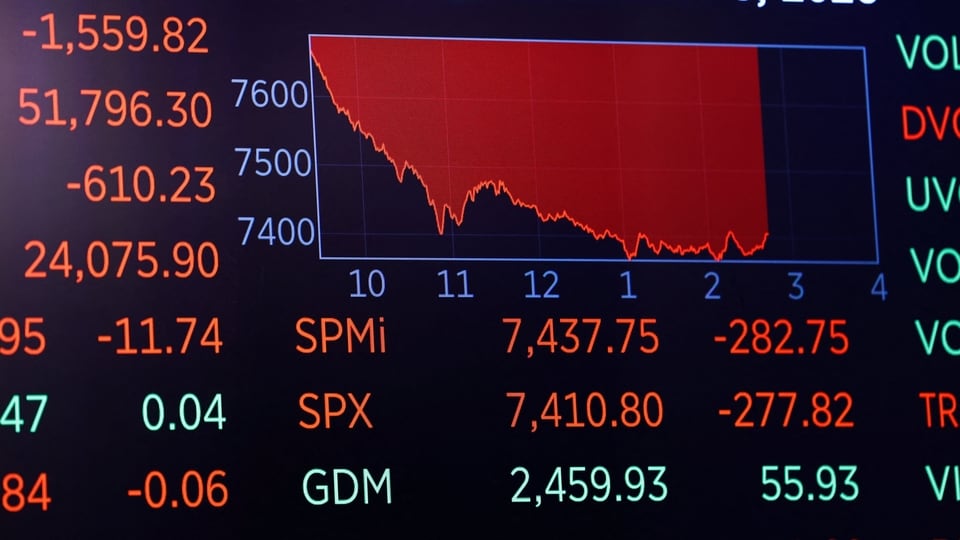
The technology sector is dragging broader stock markets down with it. The S&P 500 index of large American firms is down by more than 10% since its own recent record. The Nikkei 225 in Tokyo and the Hang Seng in Hong Kong have lost more. Not even Europe, which has no AI stocks to speak of, was spared the pain: its benchmark STOXX 600 has tumbled by 6% over the past week, from an all-time high. Nor were bitcoin (which often trades like tech stocks) or gold (which usually does not). Only true havens, such as Treasury bonds, rallied. The question now is what triggered the sell-off and, more important, what it portends.
The immediate causes of the Friday panic are murky, as with most freak-outs. It was probably not about investors pulling money out of their existing positions to buy Anthropic shares (since the price of those also slumped on the day). It cannot have been all about Nvidia, which did just lose an iconic chief executive to a sex-and-spying scandal but on November 17th unveiled quarterly results and sales forecasts that blew away analysts’ already bullish predictions. It definitely had nothing to do with Donald Trump’s latest pre-weekend threat, this time to slap “a tremendous tax” on tech firms building data centres abroad, which traders have learned to ignore.
The deeper reasons behind the market softness, by contrast, are plain. Markets are at last grappling seriously with the question of who, if anyone, will make money from AI.
Just before market sentiment began to turn in early October, Torsten Slok of Apollo, a private-markets giant, pointed out that annual operating cashflows of AI pedlars in the tech industry were forecast to double between 2025 and 2028, to around $2.4trn. Yet analysts covering AI buyers in all other industries were predicting much more modest cash generation—the implication being that the non-tech economy does not foresee a huge productivity boom that would justify big spending on AI tokens. As Mr Slok sums up, “Either tech’s customers will generate a lot more cash than their analysts expect, or tech’s cashflow forecasts are too optimistic.”
The market meltdown suggests that investors are suddenly finding Mr Slok’s second scenario more persuasive. A year ago they priced the NASDAQ at more than 30 times its constituent firms’ earnings over the following 12 months. Now the ratio has slid below 20, for the first time since early 2022. For chipmakers it has collapsed from nearly 35 just over a year ago to ten. Nvidia is trading below nine, barely ahead of a medium-size regional bank and a plastics manufacturer. This implies declining confidence in AI firms’ ability to make pots of money in the more distant future.
Share prices could fall further. Although the NASDAQ and the S&P 500 look cheap going by their forward price-earnings ratios, which are a fifth and a sixth below their ten-year average, respectively, they are still pricey on a cyclically adjusted basis. For the S&P 500 this gauge, which takes the previous decade’s-worth of profits to smooth out results, averaged a smidge over 40 between May and October. It has only been this high once before, at the height of the dotcom bubble in 1999, and came close in late 2021, amid a post-pandemic bull market. Both instances were followed by steep declines in the index, eventually of nearly half and a fifth, respectively. The index’s one-tenth dip still looks small by comparison.
AI bulls are clinging on to the possibility that the first of Mr Slok’s options will come good. It could happen. Morgan Stanley finds that more and more companies are trying to measure the return on their AI investments and, crucially, that these investments are paying off. Operating-profit margins of businesses the investment bank classifies as “AI adopters” are expected to widen by 4.6 percentage points this year, compared with last, and by another 1.5 or so percentage points in 2027. In both years that is more than for the S&P 500 as a whole. In time, laggards may notice and try to catch up.
This hints at a third possible scenario, which may resolve Mr Slok’s contradiction. AI firms could be selling tokens by the trillion to businesses that cannot afford to stint, lest they are outcompeted by more eager AI adopters in their own industry. In such an arms race the buyers would be paying up to maintain margins rather than expand them. That would make AI the new marketing. But then selling ads has turned Alphabet, Meta and others into some of history’s most profitable companies and created oodles of consumer surplus.
A world in which AI’s purveyors make loads of money, business users make no less than now, and consumers spend no more while getting better products: that would not be a terrible outcome. It certainly beats a stock-market crash.
For more expert analysis of the biggest stories in economics, finance and markets, sign up to Money Talks, our weekly subscriber-only newsletter.


