E-Paper


In Indiana, Lois Farris cared for family farmland; after her death at 99, her estate left a 400-acre farm for wildlife restoration
A conservation plan created by Lois Lynn Lowe Farris in 2005 is guiding restoration of her family’s 400-acre Indiana farm. Since receiving the land in 2022.

 Prefer HTon Google


In White County, Indiana, a 400-acre family farm is being transformed to support native wildlife, prairie plants and wetlands, fulfilling a conservation vision that began nearly two decades before its owner’s death. Lois Lynn Lowe Farris, who lived to be 99, left the property to NICHES Land Trust through her estate, ensuring that a significant portion of her family’s agricultural heritage would be protected and restored for future generations.
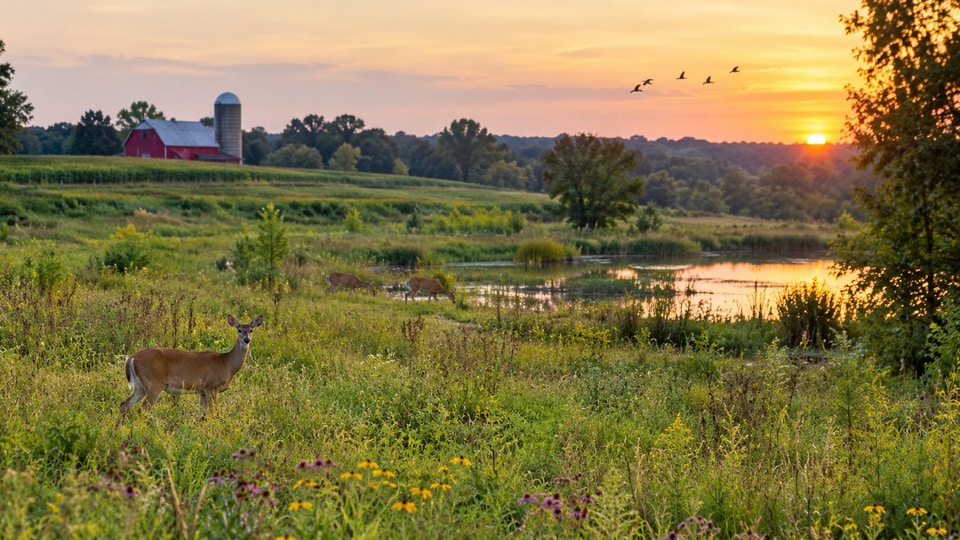
According toNICHES Land Trust, Lois Lynn Lowe Farris died in November 2021, leaving planned gifts to several conservation organizations, including the Indiana Department of Natural Resources, The Nature Conservancy, and NICHES Land Trust. In 2022, NICHES acquired the 400-acre Lois Farris North Farm, with the provision that the farm be managed according to the restoration plan that Farris created for it in 2005. This is now a big initiative aimed at restoring the native habitat within an area dominated by agriculture.
A family farming legacy spanning generations
She was born into a family that had been living in the Monon region since the early 1830s. Charles Lower, her great-great-grandfather, bought 240 acres once he moved to that region, and the total amount of land amounted to more than 900 acres in the end. All those lands were inherited from one generation to another, while Farris took care of her family farms and cattle breeding business after she graduated from International Business College of 4 Fort Wayne in 1941. In addition to agriculture, Farris always kept an eye on all animals and nature in general. Preserving her family land, heritage, nd wildlife habitat became her major concern. She first got acquainted with the NICHES in the early 2000s.
Deep Dive

Farris and NICHES had created a rudimentary plan by 2005 to return various areas of the North Farm back to dry prairie, savanna, wet prairie, and wetlands. This plan was set down in her will, providing the organization a clear direction for managing the property after her death. Her decision was particularly significant because she chose to entrust the land to a grassroots organization that had fewer resources compared to other conservation groups. She also included other established conservation organizations in her estate plan, distributing her support across institutions with complementary roles.
Restoring prairie, wetlands, and native wildlife habitat
Upon receiving the farm, the property contained both cultivated fields alongside remnants of sand prairie and sand savanna. Over the years, grazing, fire suppression, and the spread of invasive plants had negatively affected these natural ecosystems, although some native plant species remained on the land. Among the native plants were leadplant, white false-indigo, and porcupine grass, which offered a foundation for restoration. The process started with thorough mapping and the removal of invasive vegetation.
NICHES partnered with EcoLogic, the U.S. Fish and Wildlife Service, the Natural Resources Conservation Service, and other conservation specialists to map invasive plants and plan treatments. In 2024, it was reported that its teams and partners had applied techniques such as forestry mulching, prescribed burning, and shrub removal in order to enhance the environment of native plants within 175 acres.
In addition, the longer-term plan included restoring approximately 200 acres of cultivated fields, enhancing water systems, and creating a connected mosaic of prairie, savanna, and wetland habitats. Enrollment in the federal Wetland Reserve Easement program is intended to help guide the restoration of agricultural ground into wet prairie and sedge meadows.
A conservation legacy designed to outlast its owner
The Farris Estate project illustrates how a carefully structured bequest can preserve land while allowing conservation groups to repair damaged ecosystems. Rather than conserve the site simply as farmland or leaving it to the future decisions of future generations, Farris developed a model for restoring its natural essence. This effort also serves as an example of a greater trend in conservation in which land trusts work with governmental agencies and scientists to steward the landscape for years to come. Research in the Annual Review of Resource Economics has examined how land trusts, private landowners, and public policy interact in protecting privately held land.
NICHES has stated that this is their largest restoration project. In the future, there are plans to enhance hydrology, support native plant communities, and turn farmland into habitat. But all of this will depend upon management of the area through control of invasive species and use of prescribed fires. For Farris, restoration of the site was about more than just preserving her family's land. It was to give wildlife and native plants a better chance to thrive there. Her legacy proves that conservation does not always have to start out as a public crusade or a governmental project. Sometimes all that is needed for it to take place is for the right individual to recognize the worth of the land around her and make sure that it remains conserved well into the future.