E-Paper


This snail can regrow its entire eye in a month: Scientists are studying how it works
A South American apple snail can regrow a fully working, human-like eye in about a month, study finds.

 Prefer HTon Google


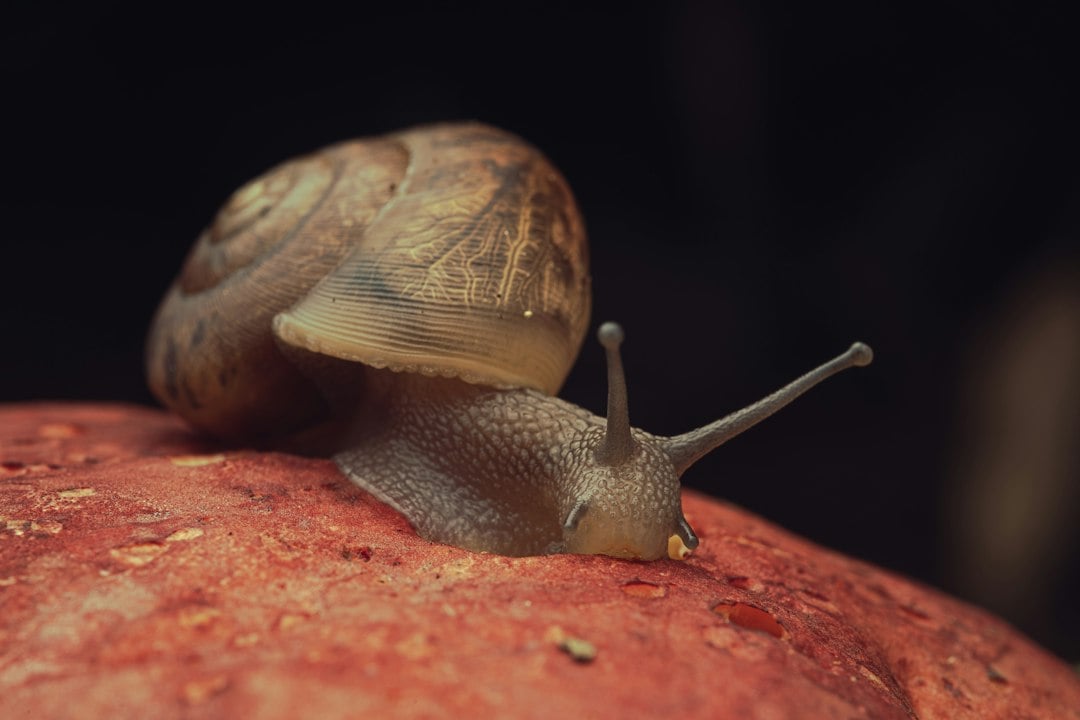
A freshwater snail native to South America can regrow a complete camera-type eye after it is removed, with the eye bulb and stalk regenerating within about a month. The finding was reported in a study published in the journal Nature Communications, which examined the golden apple snail, Pomacea canaliculata.

What makes the snail worth studying is the kind of eye it has. Golden apple snails carry a camera-type eye, the same basic design found in every vertebrate, including humans, which is built around a closed chamber, a transparent cornea, a focusing lens, and a retina lined with light-sensing cells. Most animals known for regenerating body parts, such as flatworms or starfish, have far simpler eyes or none at all, so finding a creature with a complex, human-like eye that can rebuild itself is rare. That rarity is what drew the research team to look closer.
How the eye regenerates
The scientists behind the Nature Communications paper surgically removed the eye bulb and stalk of adult snails and tracked what happened next, step by step. The wound completely healed within the first 24 hours after the eye was removed. Over the following days, a cluster of rapidly dividing cells called a blastema formed at the site, effectively a pool of raw material the body could shape into new tissue. By around day nine, a new optic cup formed as retinal cell precursors organized into a cup-like structure, with the regenerating retina becoming well defined and the lens beginning to form inside it by day 12. By around 15 days, all the major structures of the eye bulb were present, although the different components continued to mature and grow over the following weeks.
Deep Dive

The researchers found that thousands of genes changed their activity during regeneration, including genes involved in processes that resembled those used during vertebrate eye development. One gene in particular proved essential. Known as pax6, it is a key regulator of eye development in humans and other animals. When the researchers used CRISPR gene editing to disable pax6 in snail embryos, homozygous mutant embryos developed without eyes or eye stalks, showing that the gene was required for eye formation in the species. Some vertebrates, including fish, salamanders, and frogs, can regenerate certain retinal cells or eye components after injury, but complete regeneration of a camera-type eye after its removal has not been shown in the examples discussed in the study.
What the findings could mean for regeneration research
The apple snail is not the first mollusk to catch scientific attention for this trait. A 1988 paper in the Journal of Experimental Zoology examined the mystery snail and found that, after eye-stalk amputation, tissue at the wound formed an “eyecup” from which the eye regenerated. Retinal differentiation and a new lens were visible by 14 days, while a complete eye had regenerated by 25 days. That earlier research helped establish, decades before gene-editing tools existed, that certain snails have the biological machinery needed for complete eye repair. The newer genetic work builds on that foundation by adding molecular detail the original study could not provide.
Because the apple snail's eye shares important structural and genetic features with the human eye, the research team sees potential in using it as a model for studying regeneration. Human eyes do not have the same ability to regenerate retinal tissue. The National Eye Institute notes that the body cannot replace retinal neurons once they are lost to disease or injury. Retinal ganglion cells, whose axons form the optic nerve, also cannot regenerate on their own in humans, making vision loss from damage to these cells difficult to reverse. By mapping which genes switch on during regeneration and how they coordinate the rebuilding of the eye, the scientists hope the findings may eventually help researchers identify mechanisms relevant to human tissue repair.
There is no treatment emerging from this research yet, and the findings should not be taken as evidence that human eye regeneration is close. The study instead provides a way to investigate the genes and biological processes involved in rebuilding a complex eye. The researchers' findings make P. canaliculata a useful model for investigating eye regeneration and the genetic mechanisms involved, while the CRISPR experiments provide a way to test the role of individual genes in eye development.