
 E-Paper



How America's response to 9/11 led straight back to the Taliban in Afghanistan
The September 11, 2001 attacks changed a lot for the world. But most importantly, it changed the way the United States was perceived in the world.

 Prefer HTon Google


On September 11, 2001, the world watched in horror as America suffered the deadliest terrorist attack in history — one that would reshape its foreign policy and the course of world events.

Four airlines were hijacked by al-Qaeda terrorists to carry out a series of attacks that killed nearly 3,000 people. Of the four planes, two crashed into the North and South towers of the World Trade Centre in New York, plummeting the twin towers to the ground and covering Lower Manhattan with smoke, debris and grey dust.
A third plane crashed into the Pentagon in Arlington, Virginia, and a fourth in rural Pennsylvania after a passenger revolt.
Deep Dive

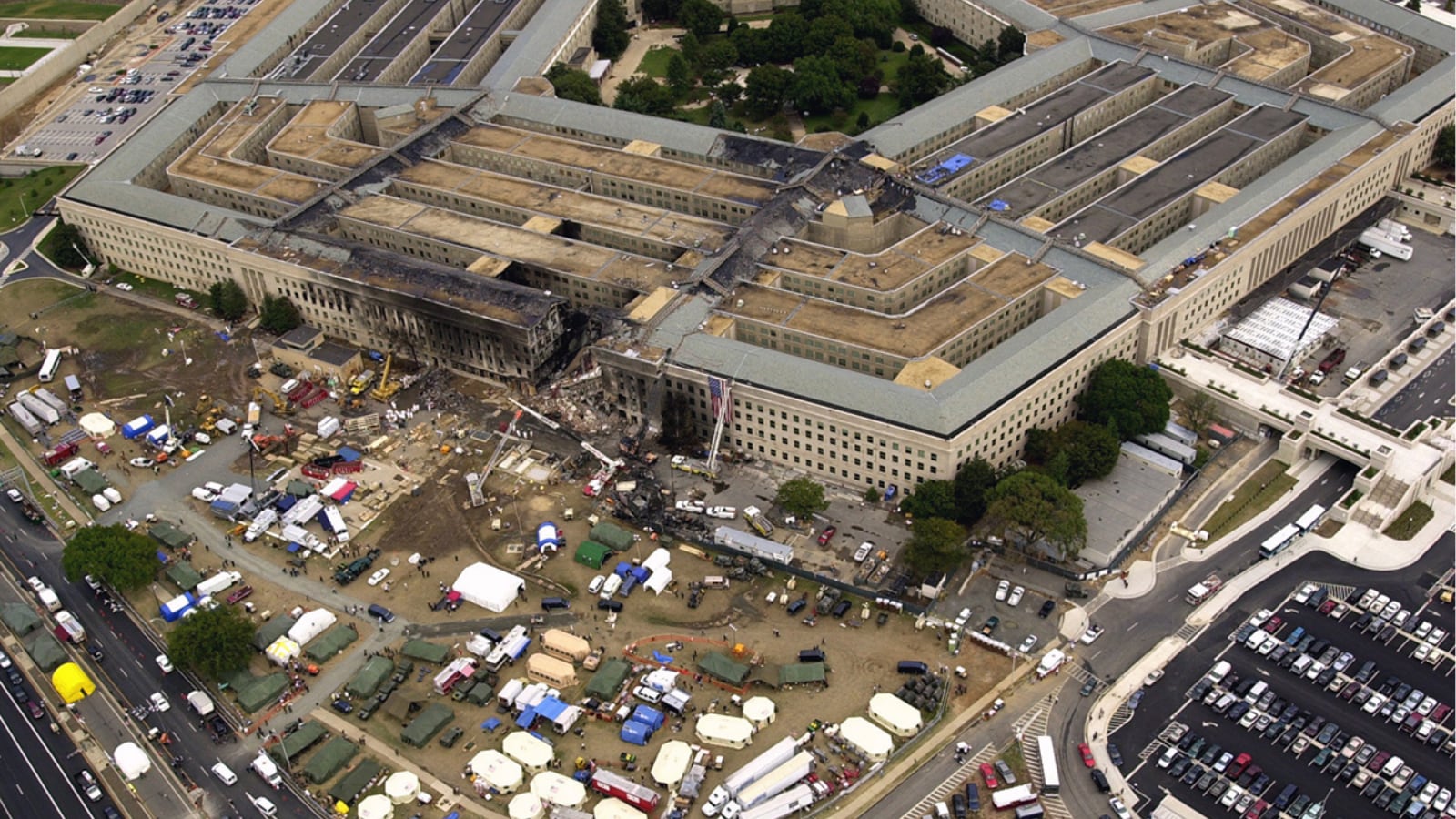
Inside the American response
As images of the attack on the Twin Towers emerged, the US government launched rescue operations at the World Trade Centre, grounded all civilian flights, and the George W Bush administration moved swiftly to frame a long-term response.
“Make no mistake about it, my resolve is steady and strong about winning this war that has been declared on America,” Bush told reporters at the Oval Office on September 13. Weeks later, the government launched the "global war on terror" and invaded Afghanistan.
Also Read | 25 years after 9/11: The warnings, ‘muscle hijackers’ and details you may not know
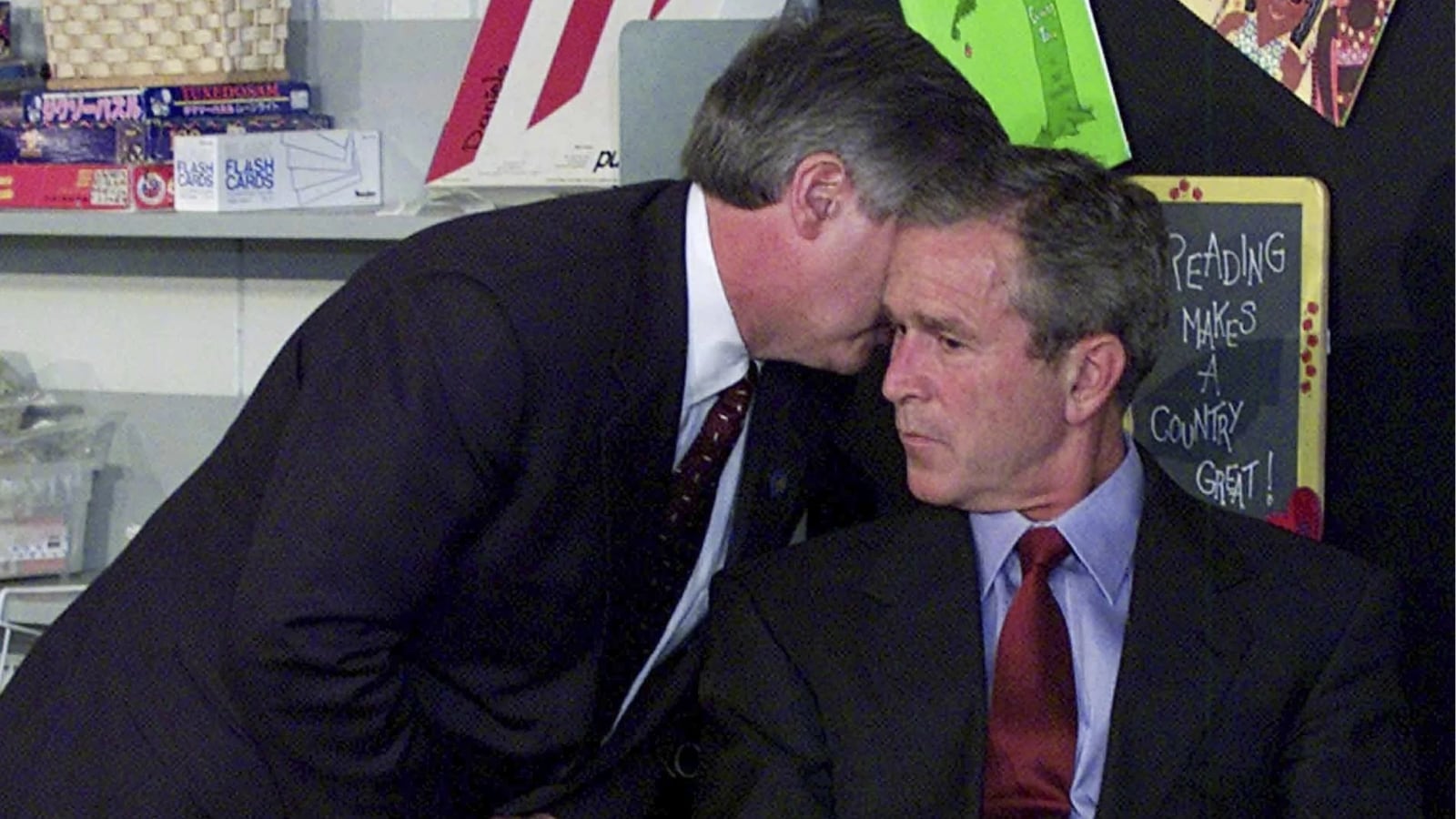
Bush’s ultimatum and a US-led invasion
To avenge the 9/11 strikes, the US government launched “Operation Enduring Freedom” with an aim to dismantle al-Qaeda, overthrow the Taliban regime in the country and disrupt international extremist networks.
In a televised address from the Treaty Room of the White House on October 7, President Bush announced the start of US airstrikes against al-Qaeda and Taliban targets in Afghanistan — action that followed his ultimatum demanding the Taliban surrender Osama bin Laden, which the regime ignored.
The US, however, did not carry out this operation alone. It led a coalition — including the UK, Canada, France, Italy, Spain, Turkey, the UAE and India — that provided military, defence and intelligence support. The US also set up military bases in Afghanistan, forcing the Taliban to retreat into other parts of the country or across the border into Pakistan. By 2004, a US-backed Islamic Republic of Afghanistan was established.
Also Read | The forgotten attack that came before 9/11: How a van bomb nearly brought down the Twin Towers
The Taliban regroups as Iraq diverts US attention
In the years that followed, the Taliban, however, began to regroup and called on Muslims to take up arms against American and foreign troops in Afghanistan. The 2003 US invasion of Iraq — Operation Iraqi Freedom — further diverted American attention and resources toward the ouster of former Iraqi president Saddam Hussein.
During this time, the Taliban increasingly attacked Kabul, killing NGO workers, government soldiers and US troops. On August 11, 2003, the North Atlantic Treaty Organisation (NATO) formally took command of the International Security Assistance Force peacekeepers in Kabul — the first time in the organisation's history it deployed forces outside Europe.
The Taliban insurgency intensified 2005 onwards, and the group regained ground across Afghanistan. The US-led coalition won tactical victories in the years that followed but failed to decisively defeat the terror group.
“The ferocity of the Taliban resurgence since their 2001 ouster has taken U.S. and NATO commanders by surprise, particularly in southern provinces where NATO forces have been clashing daily with militants since taking control of the region on Aug. 1,” CBS News reported then.
The report also quoted NATO spokesman Maj. Luke Knittig as saying: "Such blatant disregard for human life and potential undertaken by insurgents who callously ask to be called mujahedeen (holy warriors) cannot be more clear.”
US turns its focus to Pakistan border, Islamabad pushes back
In 2008, the Taliban strengthened further after a major jailbreak in Kandahar freed hundreds of its fighters. Unconfirmed reports around this time suggested the Taliban severed its ties with al-Qaeda, even though the US turned its attention to Pakistan over suspicion that the two parties – al-Qaeda and Taliban – were working along the border region.
As President Bush announced raids against militants in Pakistan, the decision brought severe harm to Washington and NATO's ties with Islamabad, marking a setback for “Operation Enduring Freedom”, according to the New York Times.
Then-Pakistan army chief General Ashfaq Kayani said Islamabad would not allow foreign troops to conduct operations on its soil. "The sovereignty and territorial integrity of the country will be defended at all costs, and no external force is allowed to conduct operations ... inside Pakistan," a military statement quoted Kayani as saying.
Obama administration and the killing of Osama Bin Laden
Back home, the US’ war in Afghanistan and Iraq had resulted in a severe economic crisis and tanked Bush's popularity, ultimately paving the way for the Obama administration.
Under Barack Obama, the number of US troops in Afghanistan gradually increased to counter insurgency. As the war continued and the humanitarian and refugee crisis worsened, the American, British and other NATO forces stepped up operations against the Taliban.
In 2010, the US allowed for talks with the Taliban in Afghanistan. The Taliban, however, refused to talk to "American puppets". It was not until November of that year that the US and Taliban leadership held talks, even though it did not turn out to be productive.
Even as these early diplomatic efforts stalled, Washington was pursuing a parallel and more secretive track against the broader terror network. On May 2, 2011, President Obama and US officials announced that Osama bin Laden had been killed in Operation Neptune Spear, a raid carried out in Pakistan's Abbottabad.
"The death of bin Laden marks the most significant achievement to date in our nation’s effort to defeat al Qaeda. Yet his death does not mark the end of our effort. There’s no doubt that al Qaeda will continue to pursue attacks against us. We must –- and we will -- remain vigilant at home and abroad," Obama said in his speech to the nation.
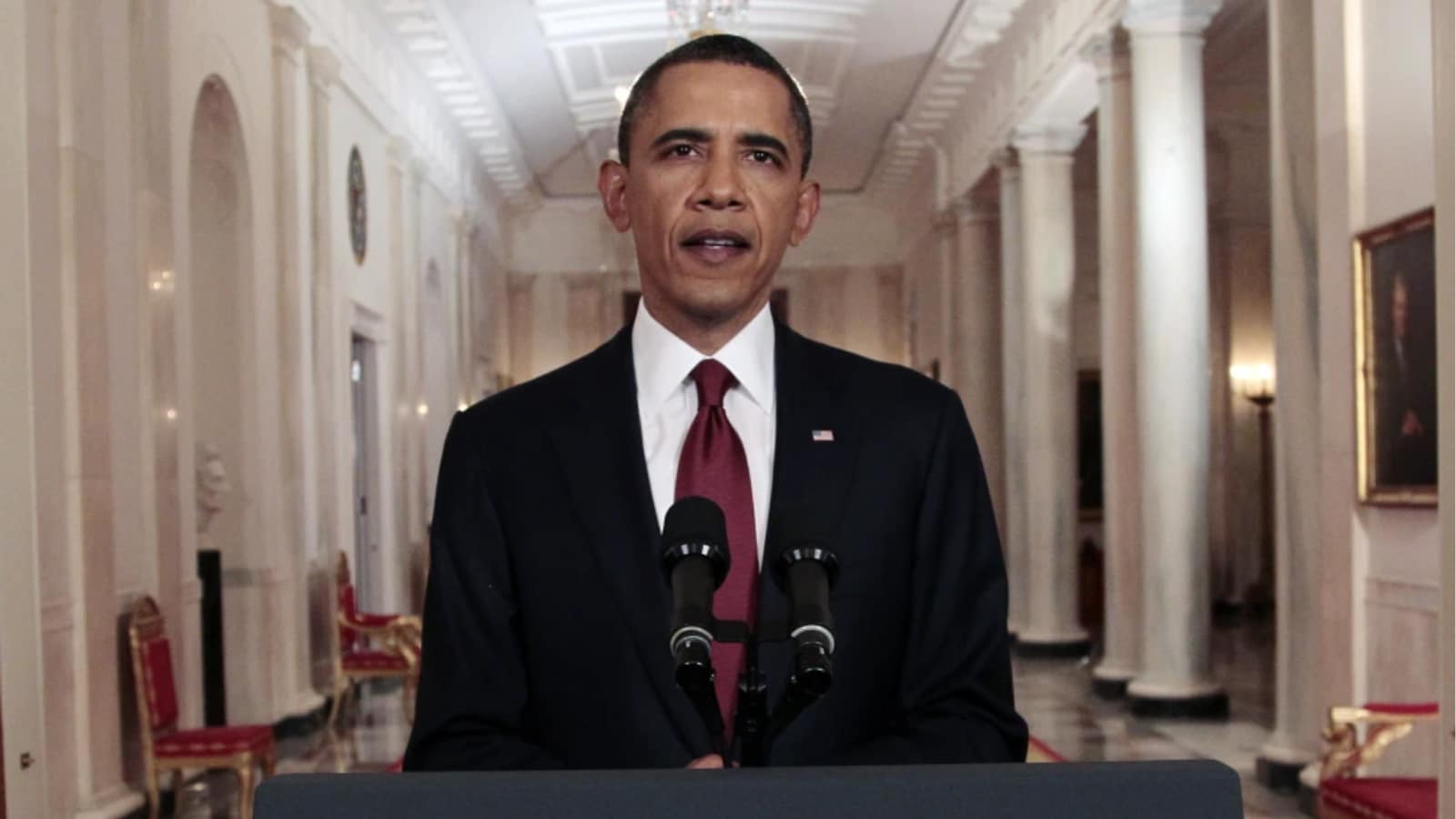
Handing over the reins
Even after bin Laden's death, the Taliban kept up attacks across Afghanistan in its bid to reclaim territory. With secret US-Taliban talks having stalled, Obama announced on June 22, 2011, a phased troop withdrawal: 10,000 soldiers by the end of that year, and the remaining 20,000 "surge" troops by summer 2012.
"We will not try to make Afghanistan a perfect place. We will not police its streets or patrol its mountains indefinitely. That is the responsibility of the Afghan government, which must step up its ability to protect its people; and move from an economy shaped by war to one that can sustain a lasting peace,” Obama had said then.
Canada’s own combat mission, which was wound down according to a timeline set by Parliament in 2008, ended in July 2011. In the weeks that followed, other NATO members, including France, Britain, and Germany, announced their own troop drawdowns.
Return of the Taliban
With US troops drastically reduced in Afghanistan, the Taliban saw a fresh opportunity to return to the country. But insurgency and militant attacks increased during this period, especially with the coming of the Khorasan branch of the Islamic State or ISIS-K.
While ISIS-K militants carried out attacks against the Taliban, sporadic, informal contacts between the Taliban and the US failed to produce any breakthrough. By July 2016, around 20 per cent of Afghanistan was under the control of the Taliban.
In an attempt to fight and flush out the ISIS-K, the Taliban further worsened the state of Afghanistan.
After the arrival of the first Donald Trump administration in 2017, the deployment of US troops in Afghanistan increased, and Washington resumed its strikes on the landlocked nation.
By 2018, a BBC study found the Taliban was openly active in 70 per cent of the country's districts, while the Islamic State's presence had also grown, expanding from a single province in 2016 to seven by mid-2017. Amid this, attacks on civilians and foreign troops increased, causing President Trump to rule out any talks with the Taliban.
Then came an appeal for peace talks with Afghan president Ashraf Ghani over his proposal of recognising the Taliban as a political party. During this, a peace movement began to grow in Afghanistan, and he announced a ceasefire in view of Eid. The ceasefire lasted a few weeks till the Taliban resumed firing.
Biden seals the exit
The US and Taliban continued negotiating in Doha, and in February 2020, Washington signed the Doha Agreement — formally the "Agreement for Bringing Peace to Afghanistan" – with the Taliban. It set a 14-month timeline for a full US troop withdrawal, contingent on Taliban counterterrorism guarantees, alongside a prisoner exchange of up to 5,000 Taliban fighters for roughly 1,000 Afghan security personnel.
The Taliban considered the Ghani government illegitimate and refused to negotiate with it directly, so Kabul was excluded from the talks altogether. The exclusion left the Afghan government to contend with a deal it had no hand in shaping.
When Joe Biden took office in January 2021, he tried to revive the stalled Kabul-Taliban track, including a proposed conference in Istanbul that the Taliban refused to attend. Three months later, he announced the US would withdraw regardless — sealing the timeline that ended two decades of American military presence in Afghanistan.
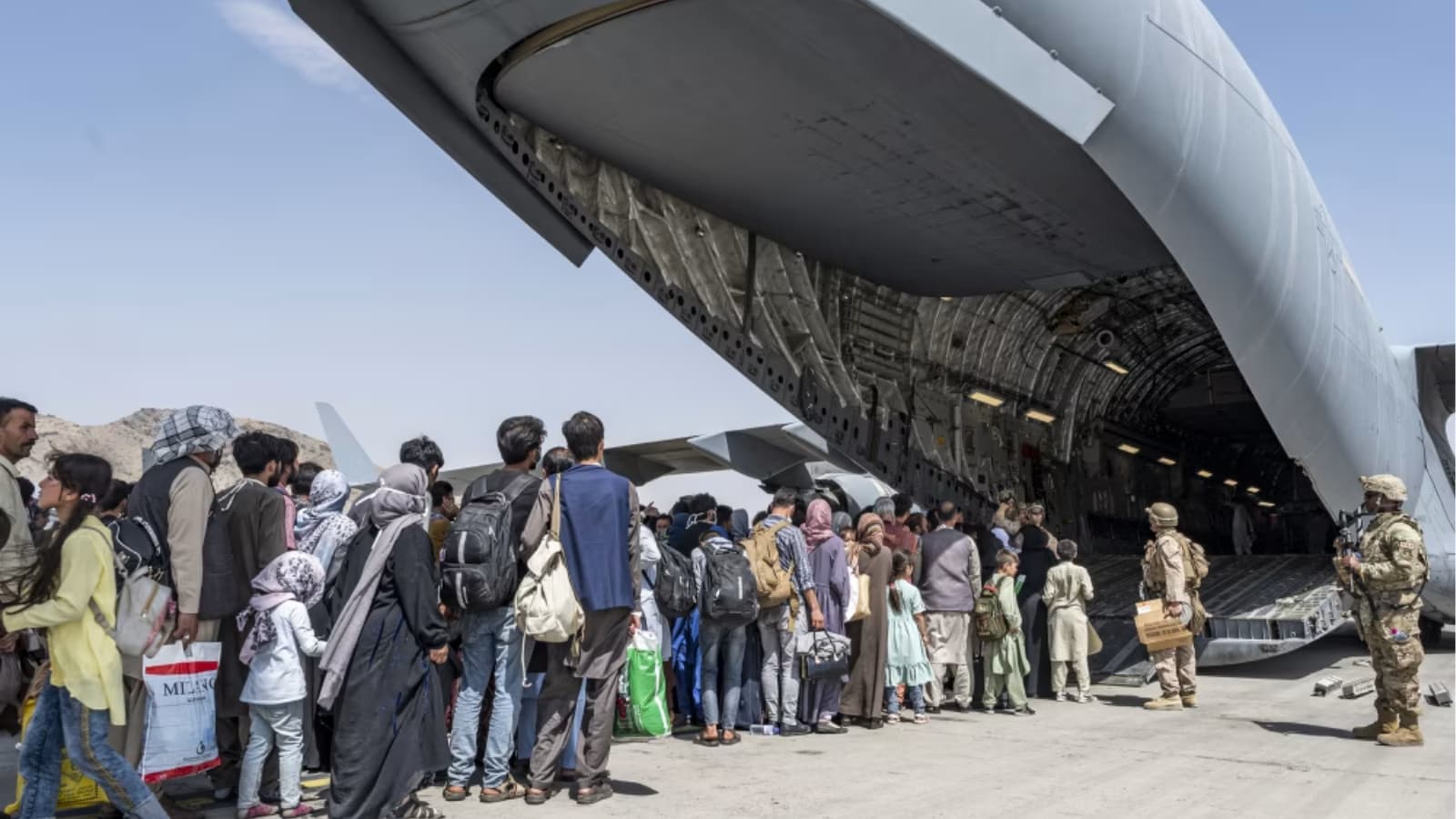
The blowback at home
Not only did the September 11 attacks drastically impact America’s foreign policy as the country expanded its footprint in the Middle East region, it also led to major changes on its own soil.
The Department of Homeland Security was created in 2002 to coordinate the government's response to the threat posed by the attacks. The Congress passed the USA PATRIOT Act — the Uniting and Strengthening America by Providing Appropriate Tools Required to Intercept and Obstruct Terrorism Act — expanding surveillance and investigative powers to help prevent future acts of terrorism.
Also Read | How the Unity of 9/11 Sowed the Seeds of America’s Deep Political Division
However, the US's eventual withdrawal from Afghanistan after decades of war — which ultimately paved the way for the Taliban's takeover — shows, according to George Breslauer, professor emeritus of political science at UC Berkeley, that the US had unlearned the lessons of Vietnam.
"In Vietnam, the US learned through failure that conventional military deterrence…doesn’t work against insurgencies in guerilla war contexts. And by repeating that approach against Afghanistan and Iraq, the US affirmed that it had unlearned the lessons of Vietnam — and that was triggered by 9/11," said Breslauer.


