E-Paper



No romantic notion here, Siachen should be a ‘peace mountain’
Over the past three decades, the Indian Army has lost more than 860 soldiers on the forbidding Siachen glacier, often romantically described as the world’s coldest and highest battlefield.

 Prefer HTon Google


Over the past three decades, the Indian Army has lost more than 860 soldiers on the forbidding Siachen glacier, often romantically described as the world’s coldest and highest battlefield.
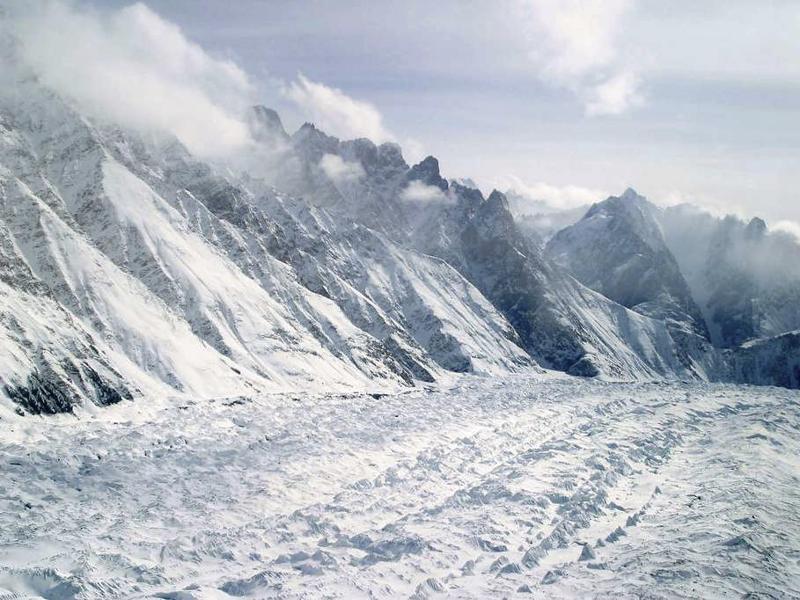
But as Wednesday’s incident involving 10 soldiers being hit by an avalanche at an altitude of 19,000 feet shows, there is very little that is romantic about a deployment on the 76-km glacier where Indian and Pakistani troops have been pitted against each other since 1984.
Soldiers often lose their appetites, are felled by frostbite and ailments such as high altitude pulmonary oedema, a condition in which water collects in the lungs, and remain cut off from the rest of the world for weeks. Given the hardships involved, a deployment on the glacier lasts just three months.
Since the standoff on Siachen began, both India and Pakistan have lost more soldiers to adverse weather conditions than hostilities. The guns have anyway been silent along the 110-km Actual Ground Position Line since the two sides agreed on a ceasefire along the borders in Jammu and Kashmir in 2003.
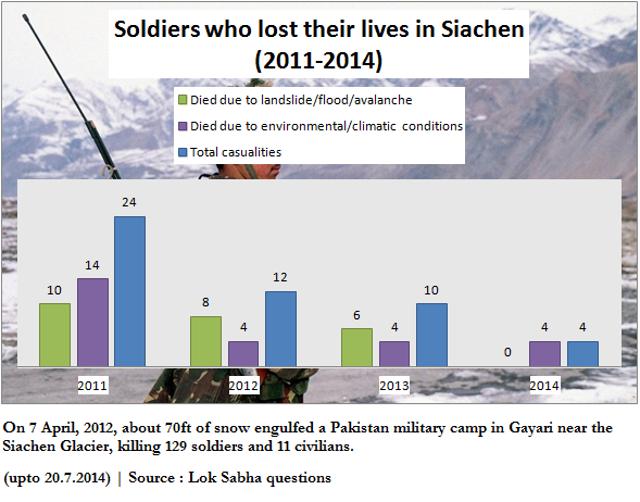
After an avalanche hit a Pakistan Army base at Gayari in Siachen in April 2012 and killed 140 soldiers and civilians, then army chief Gen Ashfaq Kayani called for the demilitarisation of the glacier and said the leadership of the two countries should discuss ways to end the standoff.
But nothing ever came of the suggestion because Pakistan has steadfastly refused to authenticate the actual positions held by troops from both sides. India says this is necessary to prevent Pakistan from occupying any territory once both sides have withdrawn their troops from the glacier.
On the Indian side, policy-makers and experts say, there are compelling reasons to hold on to Siachen. Indian soldiers currently hold the strategic Saltoro Ridge, which overlooks Pakistani positions. Besides, say military officials, vacating Siachen would give Pakistani troops in the Baltistan region a free run to hook up with Chinese troops in the Shaksgam Valley.
Given the huge costs involved, both in terms of lives and the damage caused to the environment, it would be ideal if Siachen is converted into a “peace mountain”, as former prime minister Manmohan Singh had suggested after a visit to the glacier in 2005.
But with the current state of India-Pakistan relations, that is highly unlikely to happen any time soon.
(The views expressed by the writer are personal. He tweets as @rezhasan)