
 E-Paper



Review: Indignity by Lea Ypi
The novel, which was longlisted for the 2026 Women’s Prize, explores the tension between historical truth and lived experience

 Prefer HTon Google


History is often imagined as a record of facts with official archives preserving documents to construct national narratives; and public memory makes up stories. These records tell us what happened, but not always what it meant to those who lived through it. Lea Ypi’s novel Indignity, which was longlisted for the 2026 Women’s Prize, explores this tension between historical truth and lived experience.
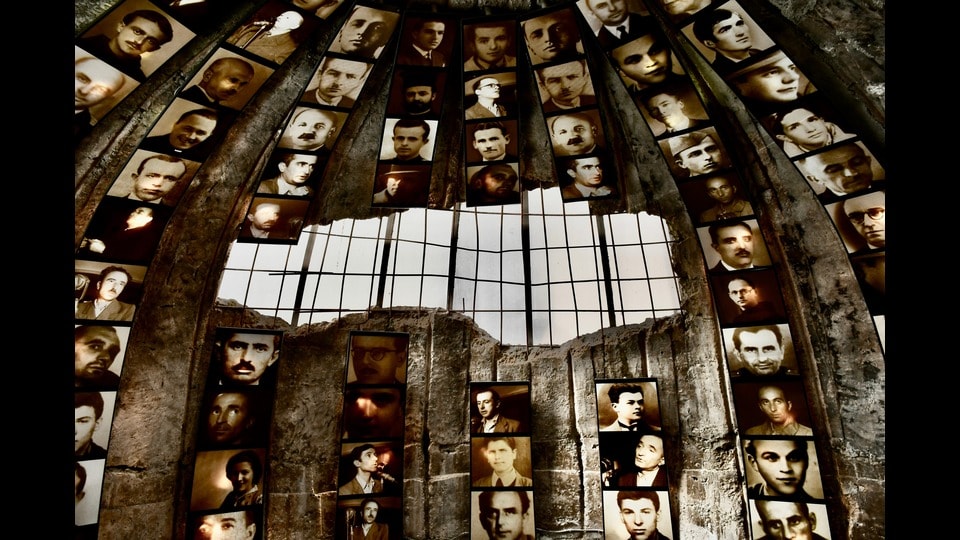
Building on the themes she first explored in Free, the author turns away from her own childhood and towards the life of her grandmother, Leman Ypi. Through one woman’s extraordinary journey, she reconstructs a century marked by the collapse of empires, the rise of fascism and communism, war, political persecution, and the uncertain promises of liberal democracy.
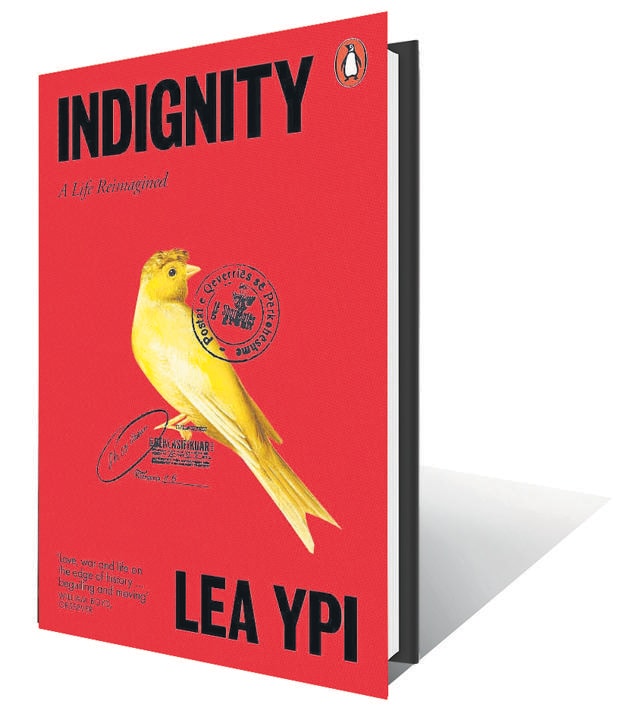
Indignity moves across countries and generations to show how large political transformations reshape the most intimate aspects of everyday life. At the same time, it asks questions that extend far beyond Albanian history. Can the truth about the past ever be fully recovered? Does uncovering historical facts restore dignity to those who suffered? And where do we find hope when every political system eventually reveals its own failures?
Indignity starts as an investigation into memory as Ypi searches for the facts of her grandmother’s life. The memoir begins in the present, with the author travelling to the former Albanian Secret Service archives. She is searching for the files kept on her grandmother, who spent much of her life under state surveillance. The journey itself immediately raises questions about memory and belonging. Although she has lived in Tirana for decades, strangers still ask if she is “from here.” Even before she enters the archive, the search for history becomes intertwined with questions of identity. The taxi driver insists that nothing has changed in Albania. Institutions may have new names, governments may have changed, but power, he suggests, remains remarkably similar. This conversation has one of the book’s important points – history does not end with the collapse of one political system because its structures and habits often survive.
Ypi’s visit to the archive is deeply personal. She wants to understand her grandmother’s life, to discover who betrayed her, to recover lost family photographs, and make sense of stories that have remained incomplete for decades. At the same time, she hopes to answer a broader philosophical question about whether truth can restore dignity.
This uncertainty becomes especially important after a photograph of her grandparents unexpectedly circulates on social media. The image shows a glamorous young couple enjoying their honeymoon in Cortina d’Ampezzo in Italy during the winter of 1941, in the middle of the Second World War. Her grandmother smiles warmly while dressed in an elegant white fur coat, creating an image of happiness that appears completely disconnected from the violence surrounding Europe.
The photograph becomes the starting point for a much larger inquiry into historical interpretation. Instead of defending her grandmother on the basis of family loyalty, she returns to the archives hoping to understand the circumstances surrounding her life. Yet, almost immediately, she discovers that official records cannot simply reveal the truth. Every document is shaped by the political system that produced it, and every archive reflects the priorities of those who controlled it.
Leman Ypi’s life itself mirrors the dramatic transformations of twentieth-century Europe. Born in Salonica in 1918, just before the collapse of the Ottoman Empire, she belonged to an Albanian family that had long served within the imperial administration. She grew up in a multilingual, cosmopolitan environment where French was spoken at home and identities were fluid rather than fixed by modern national borders. Her early life represents a world that disappeared with the collapse of empires and the rise of nationalism.
As a young woman, she moved to Albania and became one of the first women to work in the country’s state administration. She later married Asllan Ypi, a socialist educated in France who believed in democratic socialism rather than authoritarian communism. Their lives, however, were permanently transformed after the Second World War. When the communists consolidated power in Albania, Asllan was arrested, accused of anti-state activities, and sentenced to 15 years in prison. Shortly afterwards, Leman herself came under constant surveillance by the secret police. She was deported, forced into labour camps, repeatedly interrogated, and pressured to become an informant. Much of her extended family was imprisoned, executed, driven into exile, or destroyed by political persecution. Through Leman’s experiences, Ypi demonstrates how totalitarian regimes extend their violence far beyond imprisonment. They reshape families, destroy trust, and transform ordinary relationships into sites of suspicion and fear.
The archive initially appears to offer the possibility of certainty. Instead, the documents expose the instability of historical evidence itself. Files contain factual errors, contradictory statements, fabricated reports, and unexplained omissions. Most startling of all is a death certificate of her grandmother dated 1953.
The archivists treat these mistakes almost casually. They explain that such inconsistencies are common and that people often leave the archives more confused than when they arrived. Ypi discovers that every archive is itself a political construction. The documents reveal the institutions that produced them. Surveillance files were written by informants with incomplete knowledge, officials trying to satisfy their superiors, and bureaucracies whose purpose was not to preserve truth but to exercise power.
The same pattern repeats across the different countries where Ypi conducts her research. In Greece, records have disappeared through decades of nationalist attempts to erase the city’s Ottoman and multicultural past. Street names have changed, neighbourhoods have been transformed, and traces of older communities have been systematically removed. In Italy, she discovers another form of historical absence. Women rarely appear in official records except through their relationships with fathers or husbands because they were not treated as independent legal subjects. Each archive preserves certain voices while silencing others. What survives is determined not only by chance but also by structures of power.
These discoveries fundamentally reshape the project of the book. Ypi realizes that she cannot simply reconstruct her grandmother’s life by collecting documentary evidence. For this reason, Indignity adopts an unusual narrative structure. Alongside the first-person account of Ypi’s research in the present runs a second narrative written in the third person, following Leman’s life from her birth in 1918 through the upheavals of the twentieth century. This second narrative resembles a historical novel, using dialogue, description, and imagination to recreate experiences that no archive could fully document. Ypi uses literary imagination to bridge the gaps left by official records.
This approach raises important philosophical questions about the relationship between history and literature. History often presents itself as objective, yet every historical account is shaped by interpretation, selection, and perspective. Literature, by contrast, openly acknowledges the role of imagination. Ypi argues that imagination allows writers to recover the human experiences erased by official narratives.

Throughout the memoir, Ypi repeatedly returns to the concept of dignity. Unlike truth, dignity cannot simply be extracted from an archive. Official records may reveal who informed on whom or who signed particular documents, but they cannot capture the moral choices individuals made while living under extraordinary pressure. Dignity lies in how people responded to circumstances they did not choose. For Leman, maintaining dignity meant refusing to surrender her moral independence despite constant surveillance, repeated interrogations, and decades of political persecution. She preserved her integrity even when every institution around her attempted to strip it away.
This understanding of dignity also challenges conventional ideas about reconciliation. Many post-authoritarian societies believe that exposing historical truth will automatically heal collective trauma. Ypi questions this assumption. Facts matter, but facts alone cannot produce justice or reconciliation. Historical truth remains contested and shaped by power. What matters equally is how later generations interpret that history and what ethical responsibilities they assume because of it.
The book also treats imagination as playing an essential role in preserving this dignity. The archive cannot recover the emotional texture of a life. It cannot explain why someone smiled in a photograph taken during wartime, what fears remained unspoken, or how love endured through years of separation and imprisonment. Literature becomes necessary precisely because history leaves these questions unanswered.
This emphasis on imagination is also deeply political. States attempt to control historical narratives by deciding what should be remembered and what should be forgotten. Archives, museums, school textbooks, and official commemorations all shape collective memory. Literature, however, retains the freedom to question these narratives and recover voices that institutions have erased.
Indignity argues that hope cannot be found in perfect political systems because such systems do not exist. Hope, perhaps, lies instead in our ability to remember, imagine, and tell stories that restore complexity to lives flattened by history.
Pranavi Sharma writes on books and culture. She lives in New Delhi.


