
 E-Paper



Review: Nainital; Through Memory, Stories & History by Janhavi Prasada
Written with great affection for the charming town in the Kumaon Hills, this book is also packed with information and historical details

 Prefer HTon Google


How does it feel to call a hill station your home rather than a weekend getaway, a summer hideout, or a honeymoon destination? Read Janhavi Prasada’s Nainital through Memory, Stories and History to find out. She writes with affection and insight about her experience of growing up in this charming town in the Kumaon Hills, which is often reduced to an Instagram-friendly spot where holidaymakers chomp on instant noodles and swig cups of steaming hot chai. There is more to Nainital in the archives, and in the hearts and minds of its inhabitants.
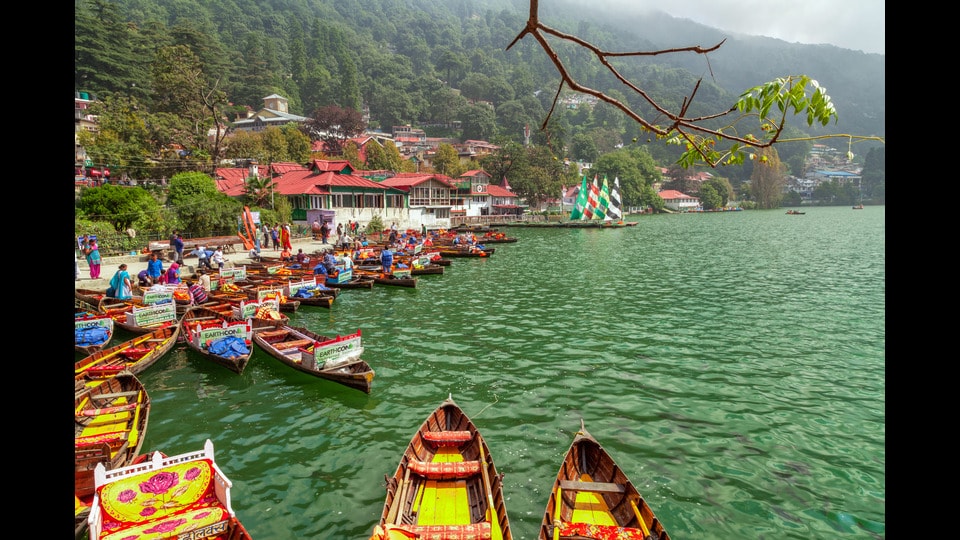
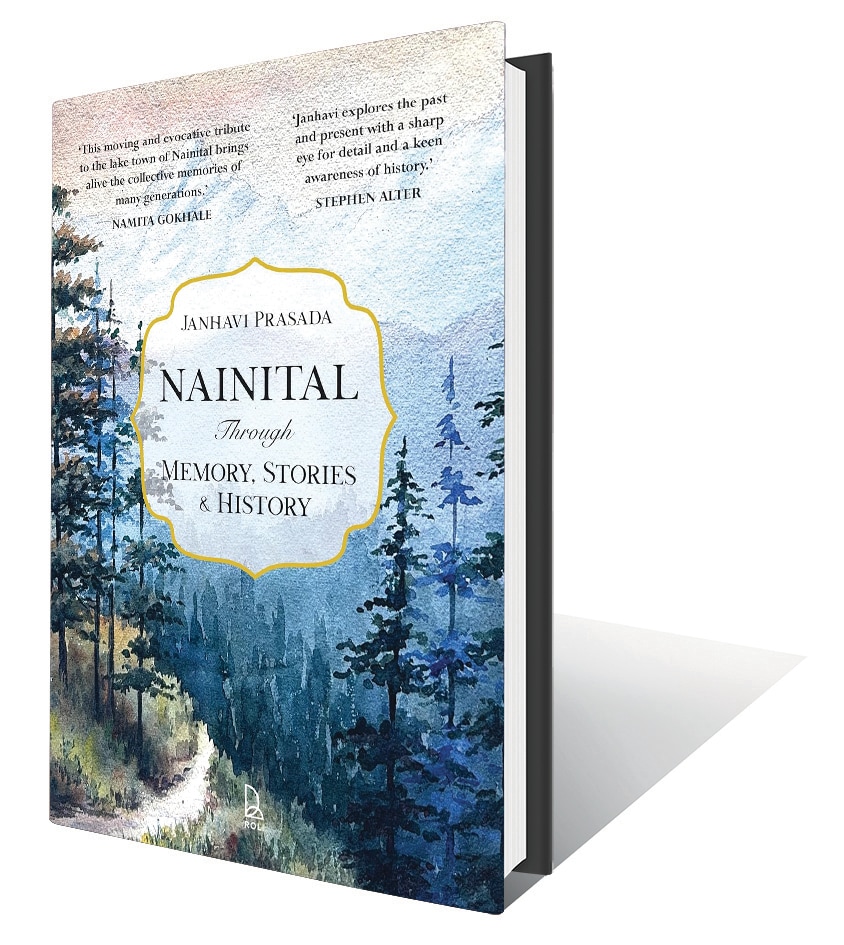
This book is for the curious traveller, who wants to know what this landscape was like before it turned into a must-visit on tourist itineraries. The prose lights up with the warm glow of a sepia-tinted childhood, where children went to school on horseback, climbed trees, foraged for wild berries, breathed unpolluted air, fell into nettle bushes, and quenched their thirst with water that flowed “from the upper reaches of the Deopata hill”.
Simultaneously, the book is packed with information about prominent landmarks and details of historical significance. India’s first Methodist Church was built in Nainital, a year after the First War of Independence in 1857. Novelist George Orwell’s parents, Richard Blair and Ida Limouzin, got married in Nainital in 1897. This is where Mohammad Ali Jinnah and his wife Rattanbai had their honeymoon after they got married in 1918. The property where they stayed was owned by their friend, the Raja of Mahmudabad. Nainital is also where Jawaharlal Nehru and Edwina Mountbatten planted cypress saplings at a boys’ boarding school in 1953.
While the book is most certainly a colourful introduction to Nainital for first-time visitors, and an invitation for those eager to visit again and see it through a fresh perspective, what makes the prose emotionally rich and intellectually appealing is the author’s personal connection to the subject. She writes as an entrepreneur who runs a homestay and cafe, conducts heritage walks, and curates a literature festival. Though she establishes herself as a trustworthy insider, there is no attempt to package her narrative as the definitive account of Nainital. Prasada is aware that her experiences are largely due to her family background and what it represents.
In the introduction, she writes, “I am the fourth generation of the Prasada family that lives at Nainital.” Her great-grandfather, Sir Jwala Prasada, was an officer in the Imperial Civil Service, and his wife Purnima Devi was the daughter of poet Rabindranath Tagore’s elder brother Hemendranath Tagore. This couple bought the four-and-a-half acre Abbotsford estate from British ICS officer John Hope Simpson in 1906, and renamed it Prasada Bhawan.
This is where the author now lives and works. The name Abbotsford, as she points out, “bears Scottish allegiance” since it pays homage to the “country house and estate of the 19th century novelist Sir Walter Scott, which is now a boutique hotel in the United Kingdom.” While she takes pride in the fine late 19th century masonry and carpentry of Prasada Bhawan, her relationship with the heritage home is also shaped by the mighty oaks, deodars, Himalayan cypresses, rhododendron shrubs, chinars, and walnut trees that “have stood like sentinels watching this hallowed land and its people”.
Hunter-turned-conservationist Jim Corbett, also an estate agent, was hired to administer the deed agreement for the sale of this house. The author’s grandfather, Kunwar Jyoti Prasada, was a Member of the Uttar Pradesh Legislative Council, her father was a prominent politician as is her brother Jitin Prasada. The family is also connected to erstwhile royalty.
Given this background, it is understandable that the author’s recollections of Nainital are filled with vintage cars, forest cookouts, garden lunches, jungle safaris, flower shows, and tambola at the club. However, it would be unfair to write off the book as the musings of a person ensconced in privilege. There is plenty of delight to be found in collecting pine cones, swimming, fishing, having chai with sweet buns, and exchanging banter with Pahari shopkeepers while buying fresh vegetables. “Even today, walking in the forest stirs my senses and calms my mind. It is an active, conscious activity that allows me to switch off for a few hours from the onslaught of technology and takes me back to the comfort of growing up in these deep, nurturing woods,” notes the author, who is aware of how crowded and noisy Nainital has become.
Still, in a town that has “changed beyond recognition” with blaring horns, unchecked construction, and water shortages, she continues to find comfort in places and people that “serve as threads of continuity”. She rattles off names of the descendants of illustrious families, but also pauses to recount familiar sights and sounds such as the “rhythmic splash of wooden oars” in the waters of the Naini Lake, cycle rickshaws, bells of the Naina Devi Temple, and the horses trotting on Mall Road.
Here, Nainital comes across as a cosmopolitan place that is home to people from different communities. The reader does notice, though, that those who do not come from old money rarely feature prominently in the narrative.
How people experience a city depends on their sociocultural location. Given this, it is unsurprising that even while Prasada describes the Valmiki Colony as “a visual treat, as it is one of the cleanest inhabited quarters in Nainital”, she does not engage with Uttarakhand’s history of caste segregation and discrimination.
Hopefully, Nainital; Through Memory, Stories & History will encourage writers from less exalted backgrounds to also write their own stories about the place.
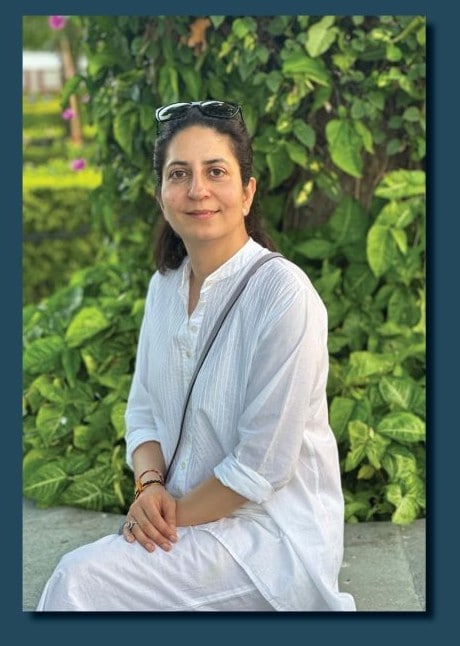
Chintan Girish Modi is a journalist, educator, poet, fiction writer, and literary critic. His work has appeared in anthologies like 101 Indian Children’s Books We Love (2013), Borderlines: Volume 1 (2015), Clear Hold Build (2019), Fearless Love (2019), and Bent Book (2020).


