E-Paper



Lumio’s bookshelf speaker aura, GM Modular’s smart chargers, and expensive tech
Beyond the regular noise, a closer look at personal technology. 12 Nov 2026.

 Prefer HTon Google


Opening thoughts. It is just the state of affairs. Any tech you buy right now, is significantly more expensive than the generation you’re replacing. Phones, computing devices, tablets, consumer appliances—the lot. In fact, they’re now even more expensive than a similar-spec gadget from last year. A multitude of reasons have come together, but you’ve a key reason that’s unlocking the second most important reason. The obsession with artificial intelligence (AI) infrastructure investments, leading to most (if not all) chip, memory and storage inventory being pre-ordered by hyperscalers, is leaving tech brands with very few component stocks for consumer devices. That’s particularly impacting memory and storage.

This is a clear scenario where consumers are paying because of AI, even without actually paying for an AI chatbot. “Consumers are increasingly paying an indirect AI tax. They may not be purchasing AI services or paying for AI subscriptions, but the massive investment in AI infrastructure is creating a supply-demand imbalance in memory semiconductors, pushing up the cost of everyday electronic devices,” Tarun Pathak, Counterpoint’s Research Director, told HT.
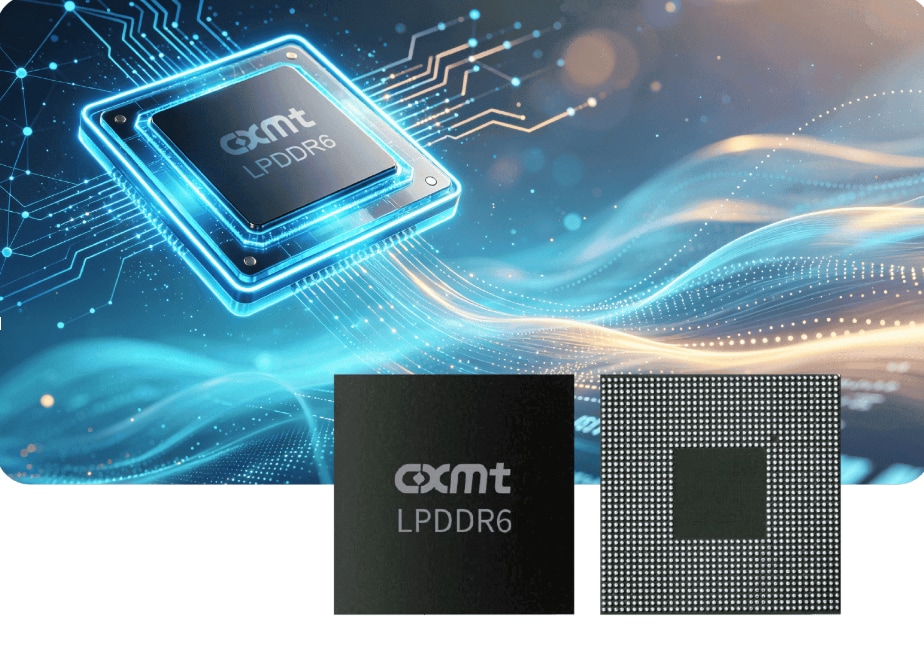
“Given the higher commercial attractiveness of AI-related demand, memory manufacturers prioritised these customers, leading to an increase in memory prices for the consumer electronics segment. This eventually translated into higher component costs for smartphone, PC, and other electronics manufacturers,” Abhilash Kumar, Lead Research Advisor (Director), at SAG, tells us.
Lip-Bu Tan, chief executive of Intel, believes the “industry continues to navigate one of the most significant supply shortages in history”, while Apple CEO says the skyrocketing memory and component prices due to AI infrastructure backorders are a “100-year flood.”
Pathak and Kumar aren’t in any mood to lead us down the garden path. Pathak is clear that pre-AI boom prices of certain components such as memory are very unlikely in the near future. Kumar hopes the rise of Chinese memory companies, CXMT being an example, could be a potential source of relief if they have enough volumes to ease availability pressure in the market.
The hope now is that 2028 will offer an escape route from this dark tunnel. Even then, consumer tech pricing has always exhibited downward rigidity. Once consumers become used to ₹1,50,000 flagship phones and ₹50,000 laptops as usable entry-level price points, any deflation in component pricing will become a thicker margin for brands. That will give them some flexibility to launch ‘discount offers’ from time to time. Yep, that light at the end of the tunnel may actually be an improvement in specs at these prices, rather than your expenses reducing.
💻UNPACKING THE WEEKLY TECH DOWNLOAD
- Adobe turns to agentic AI and popular chatbots to give creatives more control
- India’s smartphone shipments decline 23%, and worse may be ahead: SAG
- Samsung Galaxy Tab S12 Ultra and Galaxy Tab S12+ refine Android productivity
- Silicon meets DNA: AI’s bioscience boom has its creators and researchers worried
EDITOR’S MARGIN: LUMIO AURA 5
It is not often that a fairly young Indian tech company can take on the big names in the home audio space, and emerge on the other side of that conversation with a seat at that high table. Circuit House, founded in 2024 by former Xiaomi and Flipkart executives (I’ve known them for years, and audio is something they do better than most), launched impressive and yet affordable smart projectors and smart TVs under the Lumio brand in 2025. Their first audio product now, is a bookshelf speaker, called the Lumio Aura 5. It is neither tentatively walking down a freshly cobbled path, nor is it a compromise on how you’d expect the sound signature to be.
Bookshelf speakers are serious tech. You have the likes of Polk Audio, Denon, Klipsch, Audio-Technica, and Audioengine, to name a few, just above the price point Lumio sits in. Marshall would get into the equation perhaps. Even Sonos if you want something more modern with the multiple-room system benchmark. Not to forget a burgeoning demographic of ‘Chi-fi’, or Chinese audio brands. To make a space within this congestion isn’t easy, but with the right foundations of audio tuning, just the right connectivity options and a price that exhibits value, that an otherwise difficult job becomes somewhat easier. Lumio has done exactly that with the Aura 5.
Lumio is currently selling the Aura 5 for around ₹22,999 (the actual price is around ₹39,999), and some key headline elements include an acoustic-grade wooden enclosure, dual 4.5-inch woofers, a remote with an OLED display, and HDMI ARC as well as Optical audio connectivity options. The Aura 5 speakers’ enclosures are made of engineered wood, and it feels high quality both in terms of a reassuring weight and how well the case is put together. This doesn’t jar at high volumes or while handling certain lower frequencies.
Lumio is leaving no cards on the table. There is a bespoke front-facing bass port along with a 1-inch silk dome tweeter and a 4.5-inch woofer with an aluminium diaphragm. Also in each bookshelf speaker is a DAC, or a digital-to-analog converter. This is a solid foundation for the audio experience, and that’s exactly how it unfolds. Lumio has given the Aura 5 three sound modes (there’s the DGS button on the Minion remote to toggle), and Studio really has the versatility supremacy over Cinema and Groove across music streaming, TV shows and live sports.
At this point, the variety of connectivity options is bound to impress you. The standout ones, apart from Bluetooth as well as AUX and coaxial inputs (great for turntable connectivity, for example), are the HDMI ARC and Optical connections which will serve well for the Lumio Arc 5 to be part of the TV experience.
This, in a nutshell, delivers expansive sound and the signature feels grown up, and certainly from speakers more expensive than what the Aura 5 will cost you. Place these bookshelf either side of the TV, and be prepared to have a home theatre experience that’s honestly more powerful and versatile than a typical soundbar (no specific targets, just any, going by the default physics of that form factor). HDMI ARC or Optical is the way to go when connecting with the TV, and Bluetooth can take care of the streaming from the smartphone or tablet. The other use-case where the Aura 5 fits magnificently is as the PC speaker link on the work desk.
At medium volume, in Studio tuning, the Aura 5 impresses with the vocal clarity without any uncomfortable sharpness, there is generous replication of lower frequencies but they never overshadow the dialogues and there is a width to the soundstage that only really expensive soundbars can think of replicating. Physical controls for treble and bass are on the right speaker as well, for further tweaking exactly as you’d like it.
There are three key takeaways that underline the Lumio Aura 5 bookshelf speakers. First, no soundbar this side of ₹50,000 can match the dynamism of this sound signature for TV viewing versatility. Secondly, they are built very well and absolutely match the aesthetic when sitting either side of the TV or on your work desk. And lastly, there is the potential with apps for iPhone and Android supposedly in development, and that could further bring along an EQ which will add versatility to how you exactly want these to sound.
PREVIOUSLY, ON WIRED WISDOM: Prepaid voice-only plans, reworked Flex by Google Pay, & analysing Kärcher AF30
TECH SPOTLIGHT: GM DISPLAYPULSE 100W AND G+ MAGSTROM
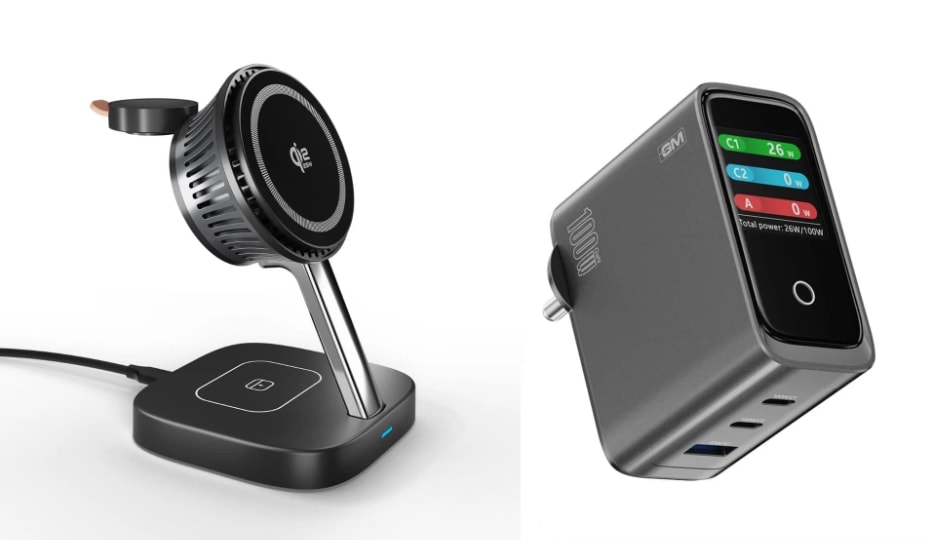
The regulars amongst you would know how easily a good charging accessory gets my attention. After all, our tech lifestyles have ensured that the workstation and the nightstand, both need fast wired or wireless chargers to be working at full tilt. And for some of us, handling more than one gadget at the same time. This week, we must have a conversation about Indian electronics equipment company GM Modular, which is timing a sustained push into the consumer tech space, quite well. The two chargers in question: a fast-charging DisplayPulse 100W, and a multi-device G+ Magstorm Qi2.2 wireless charger.
The DisplayPulse 100W adaptor (priced around ₹2,999) with Power Delivery (PD) standard compatibility is the Gallium Nitride (GaN) based fast charger that should be very relevant if you need to fast charge more than one device at the same time. The fact that it goes up to 100-watts collectively for the three ports, adds the versatility of powering a laptop too, if need be. The two USB-C ports can each deliver full 100-watt individually or divide that equally if you’re using both. The USB-A port tops out at 30-watts, which is still fast enough for older tech, smartwatches and wireless headphones.
The port placement is a little interesting, on the underside as the DisplayPulse 100W is plugged into a wall socket, because of the large display at the front. If this is plugged into a power strip for instance that’s sitting flat on the ground or a table corner, the cables will emerge from a side and not the top. Some ergonomics that one needs to get used to. Speaking of which, the Live TFT display is a nice touch, detailing the power delivery on each USB port at that time. A key takeaway is that as a 14-inch Apple MacBook Pro with M5, a Xiaomi 17 Ultra and a smartwatch were plugged in simultaneously, the DisplayPulse 100W remained cool to touch even after a couple of hours.
📒Scribbling in the notebook: Why is PD (USB Power Delivery) important in a fast charger? Simply because acts as an intelligent communication protocol that dynamically alters the amount of power a device needs at that time, instead of pushing a fixed, high voltage that older generation fast chargers used to.
I have never gotten around to using wireless chargers as a default accessory for charging phones, except occasionally dabbling with the idea from time to time. One of the reasons is that wireless chargers tend to heat up the phone more than the wired route. The GM G+ Magstorm changes that (years after OnePlus made a fast charger with a cooling fan). This is priced at ₹3,499 and there are two key specs to look at—this is based on the newest Qi 2.2 standard which means faster wireless charging speeds (compared with most rivals) of up to 25-watt, and secondly, a fan that acts as an active cooling mechanism.
The net result is, an Apple iPhone 18 Pro Max charged all the way from 20% to 100% was somewhat lukewarm at the end of that session, but nothing close to the uncomfortably hot results other wireless chargers deliver. That heat is bad news for the battery as a component in the long term and for performance in the short term. The fan sits behind the wireless charging base (which GM Modular says is a N52 magnetic alignment) and helps with heat dissipation from there.
THE LATEST, ON NEURAL DISPATCH: Data centres, Meta Muse models and Google criticised for AI in education
This can be a 3-in-1 charger if you need it to be, with the base supporting wireless earbuds such as Apple AirPods with a wireless charging case, and the pop-open dock towards the back, for the Apple Watch. The idea, and the implementation, work. Particularly with the active cooling fan. I’ve always been perplexed why more wireless charger makers don’t think of active cooling as a better way, instead of passive cooling which certainly doesn’t work in Indian summers.