
 E-Paper



Coming soon, a leachate treatment plant at Chandigarh’s Dadumajra
Plant, coming up at the new sanitary landfill site near the Dadumajra dump and the waste processing plant, is set to become operational by May

 Prefer HTon Google


Come May, hundreds of families living near the Dadumajra dumping site can expect major relief from the perennial problem of leachate leaking from the landfill.
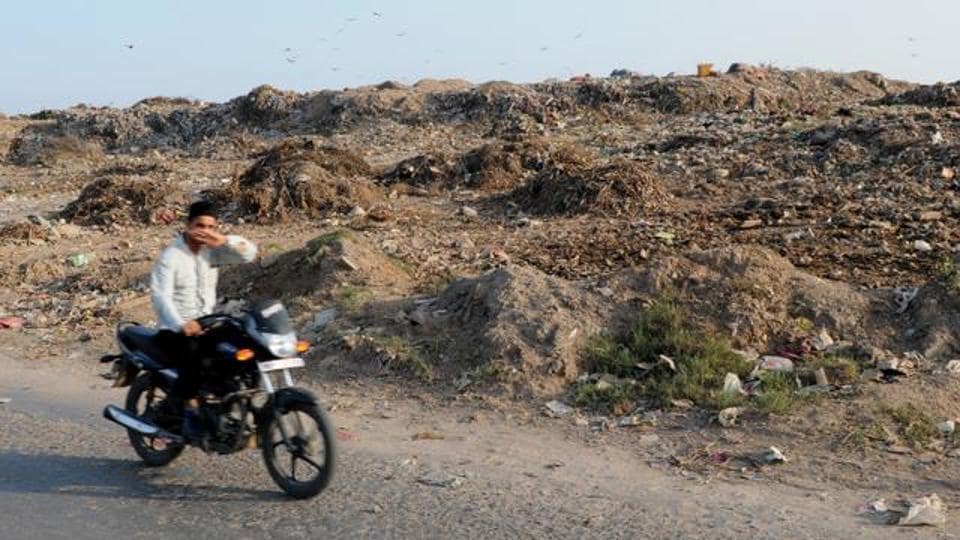
The leachate treatment plant coming up at the new sanitary landfill site (SLS) in Dadumajra is set to become operational in two months, ahead of the monsoon.
“While the plant is designed for processing the leachate generated at SLS, but we will also be using it to process the leachate at the dumping site. The plant has a capacity of processing 30 kilolitres leachate per day,” said an MC official.
The SLS site lies next to the Dadumajra landfill and the waste processing plant.
Leachate is similar to sewage but its BOD (biochemical oxygen demand) is much higher. Unlike sewage, which has a BOD of 200-300 mg per litre, typical leachate is highly toxic with a BOD of over 2,000.
The leachate problem is acute around the dumping site, especially amid the monsoon. Dyal Krishan, president, Dadumajra dumping ground joint action committee, said, “Leachate pollutes the ground water, leading to many diseases among people.”
“During rains, it seeps through the boundary walls of the dumping ground and sometimes the pressure is so much that it penetrates the tiles and houses adjacent to the roads. This makes the roads slippery, leading to accidents. It’s no less than a nightmare and for long, people have been left to fend for themselves,” said Manoj Kumar, a Dadumajra resident.
While Chandigarh’s daily solid waste generation is around 550-600 million tonnes (MT), most of it is dumped at the landfill without processing. Therefore, around 9.5 lakh MT of legacy waste remains piled up at the 25-acre Dadumajra landfill.
“Overtime leachate is produced at the dumping site. It cannot be treated at a regular sewage treatment plant due to risk of damage. So, a leachate plant is required and after processing, it can be forwarded to the regular sewage processing system of the city,” said the MC official.
Of the total legacy waste at the landfill, 5 lakh MT is from before 2005 and is being bio-mined under a Smart City project. Around 3 lakh MT has been removed since December 2019, while the rest will be cleared by December this year.
The ₹77-crore second phase under the Swachh Bharat Mission 2.0 will target the remaining 7.5 lakh MT legacy waste dumped at the Dadumajra site after 2005.
Officials said after the second phase of the legacy mining work starts at the dumping site, leachate will be significantly reduced.
What is leachate
Similar to sewage, leachate is the liquid formed when garbage breaks down in the landfill and water filters through it. On seeping out of the dump site, it can pollute land and groundwater, heightening risk of water-borne diseases. Due to higher toxicity, it cannot be treated at a regular sewage treatment plant due to possibility of damage.


