
 E-Paper



HP’s flower business losing its scent amid pandemic
Cut-flower growers across six districts of Sirmaur, Chamba, Mandi, Kangra, Solan and Shimla have suffered heavy losses due to the pandemic and have now begun to diversify to vegetable growing

 Prefer HTon Google


Two years of Covid pandemic and the subsequent restrictions induced by it have adversely hit the flower cultivation in Himachal Pradesh. The area under floriculture has witnessed a 47% decrease in the last five years.
Flowers were grown on 710 hectares in 2015-16, but the area has now reduced to 373 hectares. Before the pandemic, flowers grew on 705.77 hectares in 2018-19. Cut-flower growers across six districts of Sirmaur, Chamba, Mandi, Kangra, Solan and Shimla have suffered heavy losses due to the pandemic and have now begun to diversify to vegetable growing.
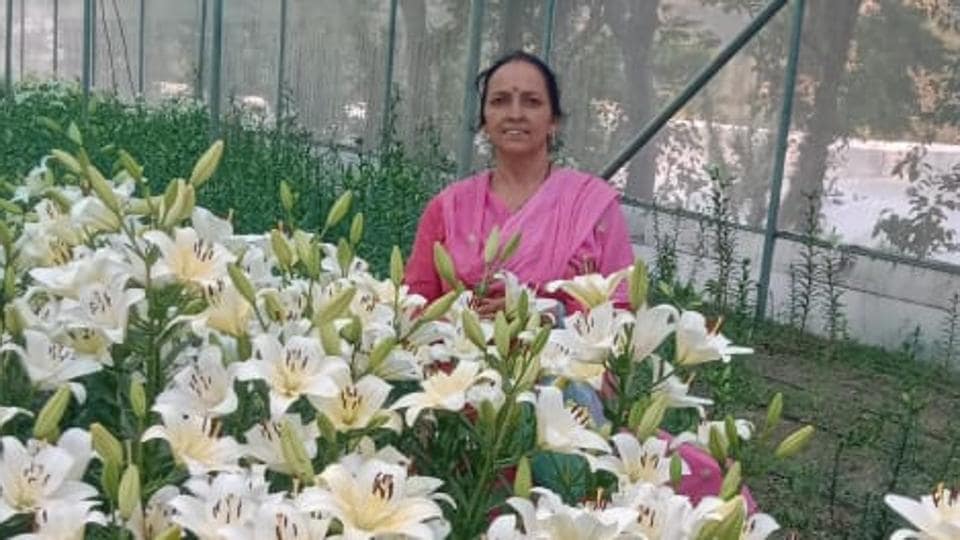
“Flower cultivation is no more profitable,” said Ram Gopal Thakur, a cut-flower grower and president of Flower and Vegetable Growers’ Cooperative Society. Ram Gopal, who’s been in flower cultivation for the last six years, has now shifted to bell pepper growing. “I used to grow flowers, particularly lilies, on 3,000 square metres of land but this year, I am growing them on 1,000 square metres. On the remaining land, I have cultivated bell peppers,” he added. A stick of lily is sold between ₹30 and ₹60 in the wholesale market, while the price ranges from ₹100 to ₹200 in the retail market.
Flower cultivation around Shimla had been gaining ground for the last decade, but farmers are now preferring crops to break even the losses suffered in the last two years. Chrysanthemum, carnation, gladiolus, rose, gerbera, and lilies are grown in villages close to the town’s airport at Jubbarhatti. “In last two years, we have been bearing losses. The government only gave us marginal compensation for one year,” said Khemraj Thakur of Khairi village, while claiming that as they were unable to transport flowers last year, they had to feed them to domestic animals.
Demand for flowers is relatively low after Covid outbreak in Shimla. “Flowers bring happiness, but the environment is gloomy. The pandemic has reduced my sales by 60%,” said Amit Sood, a flower retailer in Shimla’s Lower Bazaar. Sood said he used to earn ₹1.5 lakh per month by selling flowers before the pandemic.
Florists are facing hardships in Chamba’s Churah valley as well, which is known for its exotic flowers. Most of the residents in the backward valley in Chamba are agriculturists. Before Independence, the region was known for producing high-quality honey, grains and milk. In later years, it slipped into backwardness and poverty due to neglect, lack of road connectivity, malnutrition and illiteracy.
Churah Valley Vegetable and Agriculturists’ Cooperative Society was started with 20 farmers in 1995-96, bringing a floral revolution. Nearly 400 farmers grew flowers. But the number of florists is gradually dwindling. “There are lots of the problems being faced by the farmers in the region. We lost nearly ₹25 lakh in flower growing in last two years. I used to grow flowers on five bighas, which has now been reduced to one bigha. Transportation and low demand in the market has hit the flower business hard,” said OP Sharma, a retired customs official and a progressive farmer.
With limited transport facilities, farmers transported their produce in HRTC buses to Delhi’s Ghazipur market. “As public transport had come to an abrupt halt during the Covid-induced lockdown, farmers faced difficulty in transportation and gradually started losing interest in flower growing,” rued Jiya Lal, another farmer from Churah.
A flower grower from Mandi, Bobby Kumar, said he suffered losses as the demand was nil in the market due to the lockdown in 2020. “The situation hasn’t improved much since then. We sell our produce in Delhi markets, but for two years now the business is running into losses. I am considering switching to other cash crops,” he added.
No takers for Pushp Kranti scheme
In 2018, Himachal chief minister Jai Ram Thakur-led government had launched ambitious Pushp Kranti scheme to revolutionise flower growing. The state government drew an ₹150-crore five-year plan to boost floriculture in the state. Various incentives are being provided to progressive farmers to encourage them to adopt this lucrative cash crop venture. The main objective of the scheme is to encourage farmers to adopt commercial cultivation of flowers and ornamental crops under the protected environment with a view to make Himachal a pioneer state in floriculture in near future.
The government aimed to generate employment opportunities for skilled and unskilled labour. The department of horticulture laid stress on encouraging greenhouse techniques and providing post-harvesting facilities, particularly marketing on national and international levels, so that farmers could get the remunerative price of their produce.
However, there are hardly any takers for the scheme. “Covid has hit the floral business hard. The department of horticulture is committed to exploring opportunities of floriculture along with providing better marketing and transport facilities to the flowers. We will also try to place a mechanism to compensate floriculturists for losses due to natural calamities,” said Sudesh Kumar Mokta, director, horticulture.
The department has already set up six nurseries in Navbahar and Chharabra of Shimla, Parwanoo in Solan, Bajaura in Kullu and Dharamshala and Bhatoon in Kangra.
Two model floriculture centres – one at Chail in Solan and one at Palampur in Kangra – with tissue culture labs for quality planting material have also been established.
Currently, marigold, gladiolus, carnation, rose, lily, gerbera and seasonal flowers are being cultivated in the state and there is a potential to grow exotic flowers such as alstroemeria, limonium, iris, tulips and orchids.


