E-Paper



Interstate border checks trigger traffic snarls at Haryana-Delhi border amid BS-VI restrictions
BS-III petrol and BS-IV diesel vehicles barred from entering national capital; border checks trigger traffic snarls on NH-44, commuters advised to take alternative routes

 Prefer HTon Google


Thousands of commuters travelling between Haryana and Delhi are facing longer journeys, traffic congestion and stringent vehicle checks following the implementation of restrictions on vehicles below BS-VI emission standards in the national capital from November 1 as part of its winter pollution-control measures.
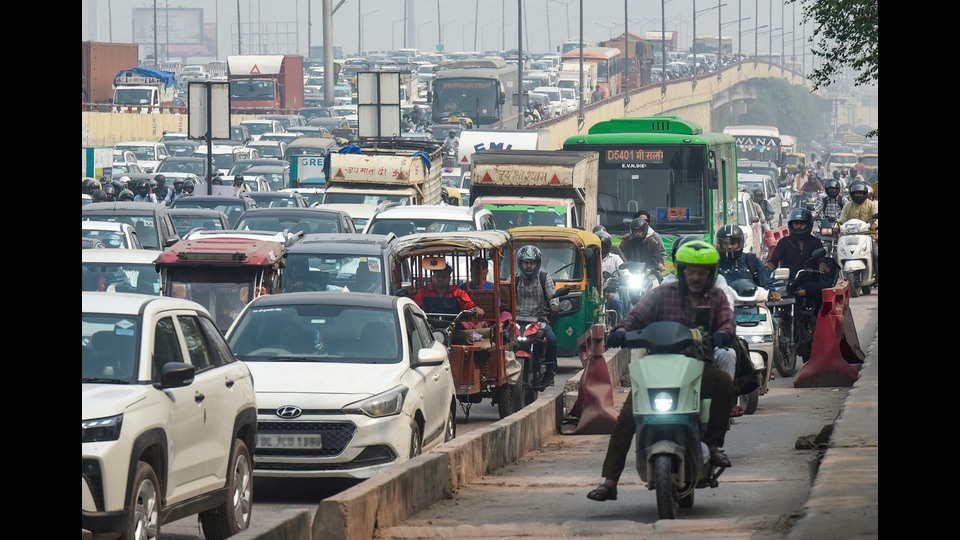
The restrictions, which bar BS-III petrol cars and BS-IV diesel cars registered in other states from entering Delhi, have led to long queues of vehicles at the interstate borders, particularly along the Sonepat-Kundli and Bahadurgarh stretches. Daily commuters, office-goers and passengers travelling to Delhi have to go through stringent police verification.
On the first day of enforcing the new rules, long queues were reported on National Highway-44 as Haryana and Delhi police personnel stopped vehicles for checking and turned back those falling under the restricted categories. However, on Monday traffic remained normal besides some inspection points.
Sonepat police have established checkpoints at 12 locations along the Delhi border, including the Kundli-Singhu, Safiabad and Auchandi routes. According to reports, Delhi Police’s traffic wing and Central Reserve Police Force (CRPF) personnel have also been deployed near the border to assist in enforcement. Automatic number plate recognition (ANPR) cameras installed at Delhi’s entry points will scan registration numbers and match them with official databases to identify vehicles violating emission norms and facilitate electronic challans.
The congestion on NH-44 has been compounded by the diversion of traffic onto a service road at Pyau Manyari due to repair work on a bridge over Drain No 8.
As per the directions BS-IV petrol cars are exempted from the restrictions, while BS-III petrol and BS-IV diesel cars registered in Haryana cannot enter Delhi. Two-wheelers, including motorcycles and scooters, are also exempted. Even, BS-IV vehicles fitted with CNG kits can enter the capital if their registration certificates mention CNG as the fuel type and they have valid pollution under control and fitness certificates. Fully electric and recognised hybrid vehicles are also exempted. The restrictions extend to public and commercial transport, with only BS-VI, CNG and electric buses and taxis allowed entry.
Violators face a fine of ₹20,000, while vehicles repeatedly violating the norms or falling under the end-of-life vehicle category may also be impounded. The curbs are also expected to affect commuters travelling between Gurugram and Bahadurgarh, Rohtak and Sonepat.
Meanwhile, the Jhajjar administration has intensified its anti-pollution drive. Deputy commissioner (DC) Varsha Khangwal has directed departments to ensure regular water sprinkling on dusty roads, prevent open waste burning and conduct inspections at construction sites. She also ordered strict action, including challans and impounding of vehicles, against those violating pollution-control norms. The restrictions are scheduled to remain in force until January 31, 2027, and may be extended depending on air quality conditions.