E-Paper



J&K: Sajad Lone questions ‘regional disparity’ in EWS certificates
On Wednesday, the last day of the autumn session, the government had told the House that 26,544 EWS certificates have been issued across the UT in the past two years — 2,486 in Kashmir division and 24,058 in Jammu division

 Prefer HTon Google


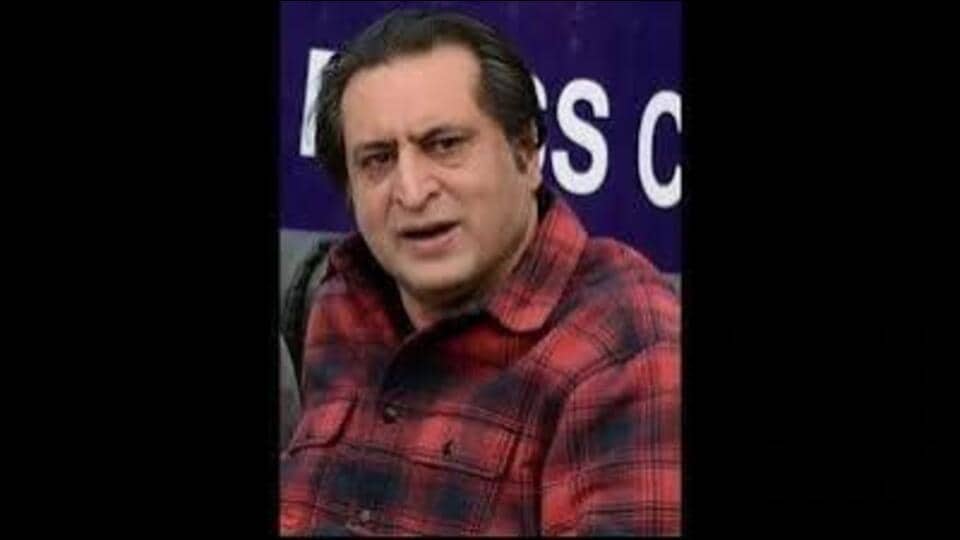
People’s Conference president Sajad Lone has questioned the criteria used to identify economically weaker sections (EWS) in Jammu and Kashmir, citing regional disparity in issuing of EWS certificates.
On Wednesday, the last day of the autumn session, the government had told the House that 26,544 EWS certificates have been issued across the UT in the past two years — 2,486 in Kashmir division and 24,058 in Jammu division.
“How does the government identify the poor? What is the definition of a poor person? We need a uniform definition of poor and poverty,” Lone said in a post on X.
Lone cited ration-card data to question the disparity, saying Kashmir had 37.71 lakh Priority Household (PHH) and Antyodaya Anna Yojana (AAY) ration cards against 29.81 lakh in Jammu. Based on these figures, he argued that 55% of poor people live in Kashmir and 45% in Jammu.
“But as per the definition of EWS criteria, 92% of the poor reside in Jammu region, and 8% reside in Kashmir region,” he said.
Sajad said statistics reveal the difference was impacting the jobs of youth in Kashmir.
Lone said the disparity had implications for government recruitment.
Citing assembly data, he said, 7,580 vacancies have been filled by the government in the last two years.
“With quota set at 10%, 758 are reserved for EWS. This means out of 758 jobs, 697 went to Jammu region and 61 to Kashmir. By PHH/AAY ration card criteria, 341 jobs would have gone to Jammu region and 417 to Kashmir,” he said.
Lone questioned how the government could have two definitions of poverty when the two regions have the same economic indicators.
Lone said that the government was using asset-based criteria, including possession of a residential house, to define poor in issuing the EWS certificates. “Apart from other criteria, anybody having a residential house of more than 3.68 marlas is rich. Even the poorest have a house of this size in Kashmir,” he said, citing an example of Kerala where ration cards are used as indicators of poverty.
The government, in the assembly, has said that they have no proposal “to relax the existing criteria for EWS, including doing away with the prescribed asset-based criteria”.
“Possession of a PHH ration card, by itself, does not substitute the prescribed income and asset criteria for determination of EWS status,” minister Sakina Itoo said.
Lone said that the asset-based criteria has to be changed. “The Speaker has given a direction that the matter merits examination and that the government should study the EWS criteria used by different states. Let us hope the government works on it,” he said.