
 E-Paper



Paddy crop over 34K hectares hit by dwarf disease in Punjab; 5% crop loss likely
Maximum impact of the dwarf disease was reported in paddy crop of Mohali (6,440 hectares), Pathankot (4,520 hectares), Gurdaspur (3,933 hectares), Ludhiana (3,500 hectares) and Patiala (3,500 hectares)

 Prefer HTon Google


In a report compiled by the state agriculture department, the dwarf disease in paddy crop has been observed in at least 34,000 hectares in Punjab with the state agriculture department projecting an average of 5% crop loss in the affected fields, and roughly 1% is the overall impact.
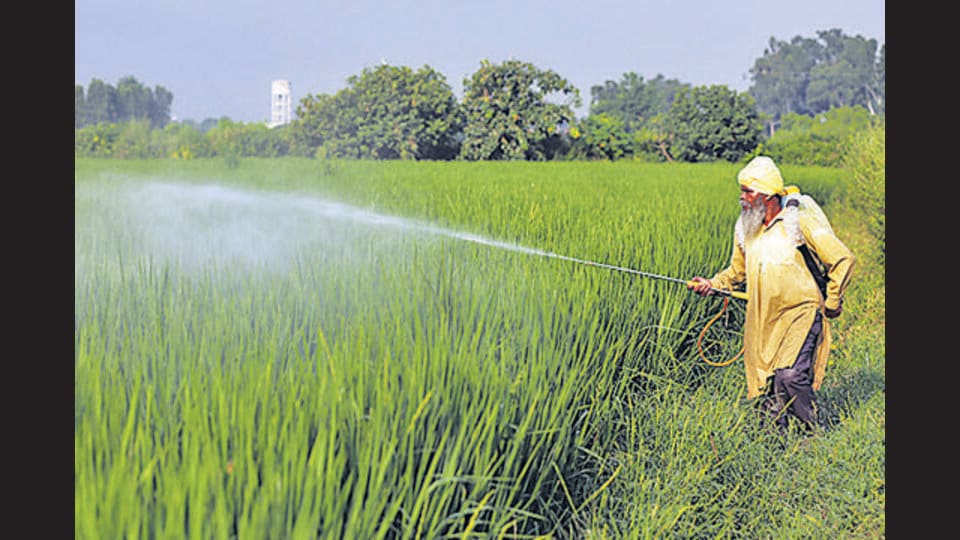
The survey by the department said the maximum impact of the dwarf disease was reported in paddy fields of Mohali (6,440 hectares), Pathankot (4,520 hectares), Gurdaspur (3,933 hectares), Ludhiana (3,500 hectares), Patiala (3,500 hectares) and Hoshiarpur (2,782 hectares), a senior official of the agriculture department said on Monday.
Ludhiana-based Punjab Agricultural University (PAU) had earlier found southern rice black-streaked dwarf virus (SRBSDV), which is also known as the dwarf disease, behind the stunting of paddy plants in many parts of the state.
This was the first time that SRBSDV, which was first reported in 2001 from Southern China, had been detected in Punjab.
Because of the attack of this disease, some plants were dead and some were stunted with height remaining one-third from half in comparison to the normal plants in some paddy fields, farm experts said.
“We have issued an advisory to the paddy growers to spray pesticides over the dwarfed plants and that it doesn’t spread. Moreover, due to fall in the day and night temperatures, the impact of the virus will automatically be reduced,” said director agriculture Gurvinder Singh.
Following the reports of stunting of paddy plants, the state agriculture department conducted a survey to assess the impact of SRBSDV disease on paddy fields in Punjab.
According to the survey, the dwarf disease has been found in the paddy area of 34,347 hectares in Punjab.
“The maximum impact of the disease was seen in Mohali, Pathankot, Gurdaspur and Ludhiana,” added the director. An average of 5% yield loss is expected in affected fields he adds.
Notably, a few growers in Pathankot and Mohali ploughed the three-month-old standing crop as they were dejected because of the stunted growth of paddy.
PAU director (research) GS Mangat said the dwarf disease was visible on early transplanted paddy. “The disease affected the crop which was planted till June 20,” he further said.
According to experts, the maximum impact of the disease was seen in the PR-121 paddy variety as it was sown early by farmers despite the recommendation of planting after June 20. Mangat said among various factors, the high temperature was also conducive to the disease.
According to scientific reports published in other countries, the SRBSDV is transmitted by the nymphs and adults of white-backed plant hopper (WBPH). Once stunted, the disease cannot be managed by any of the agrochemicals, said farm experts. Punjab has recorded 30.84 lakh hectares of area under paddy in the Kharif season.
The Shiromani Akali Dal (SAD) had already sought a compensation of ₹20,000 per acre from the state government for paddy growers whose fields had been infested with the dwarf disease.
(with agency inputs)


