
 E-Paper



725 water bodies in Uttarakhand ‘not in use’, 204 dried up: State census report
The reason for the “not in use” water bodies in the report has been attributed to dried up, construction, siltation, destroyed beyond repair, salinity, due to industrial effluents and others

 Prefer HTon Google


Of the 3,096 water bodies in the state, 23.4% (725) water bodies are ‘not in use’, according to the first census report of water bodies released by the ministry of Jal Shakti.
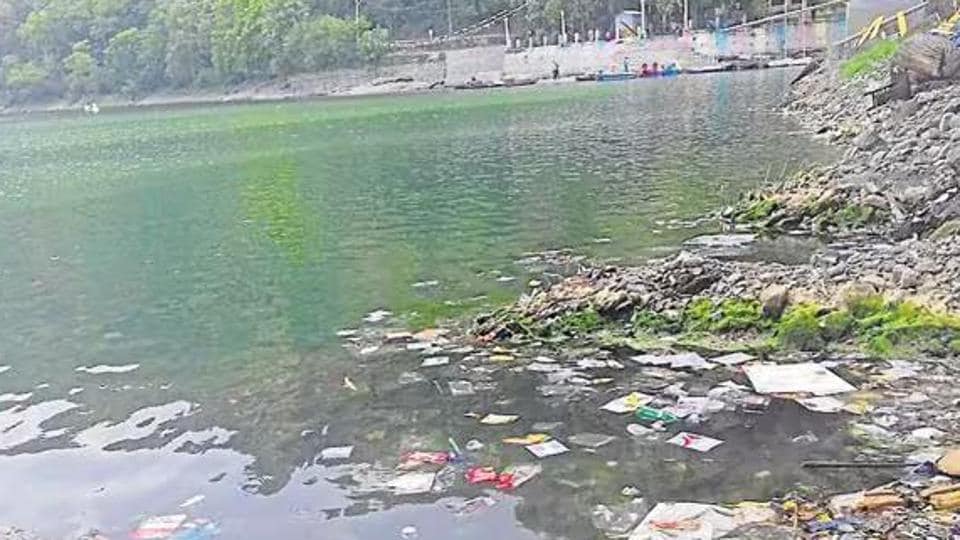
The reason for the ‘not in use’ water bodies in the report has been attributed to dried up, construction, siltation, destroyed beyond repair, salinity, due to industrial effluents and others.
The report stated, “Out of 3,096 water bodies, 76.6% (2,371) water bodies are ‘in use’ whereas 23.4% (725) water bodies are not in use on account of drying up, siltation, destroyed beyond repair and other reasons. Out of ‘in use’ water bodies, 53.4% (1,267) water bodies are used for groundwater recharge, followed by 25.8% (611) for pisciculture.”
Also Read:From polluted Ganga to drying springs: 5 environmental challenges before Uttarakhand
Out of ‘in use’ water bodies, 83.2% (1,973) are benefitting one city/town, 16.2% (383) water bodies are fulfilling the requirements of 2-5 cities/towns and the remaining 0.6% (15) water bodies are benefitting more than five cities/towns.
Among the total water bodies, 81.2% are ponds, 14.9% are tanks.
Meanwhile, 95.9% (2,970) are in rural areas and the remaining 4.1% (126) are in urban areas.
The report also said that 76.3% (2,361) water bodies are public owned whereas the remaining 23.7% (735) are under private ownership.
Most of the public owned water bodies are panchayat owned, whereas most of the privately owned water bodies are owned by individual farmers, the report said.
It further said that there are 1,654 natural and 1,442 man-made water bodies in Uttarakhand.
Out of 1,654 natural water bodies, 94.3% (1,560) water bodies are located in rural areas whereas 5.7% (94) are in urban areas.
Out of 1,442 man-made water bodies, 97.8% (1,410) water bodies are located in rural areas whereas 2.2% (32) are located in urban areas.
Most of the man-made water bodies have original cost of construction up to ₹1,00,000.
Out of 3,096 water bodies, five water bodies are also reported to be encroached, the report mentioned.


