
 E-Paper



An early morning walk in Chittaranjan Park
On the eve of Mahalaya, Method, a contemporary art gallery in Defence Colony, opened its show with a listening of the one-and-a-half-hour audio montage of Chandipath, the recitation of verses from the Sri Sri Chandi or Durga Saptashati, as rendered by Birendra Krishna Bhadra for the early Bengali dawn programme that All India Radio has broadcast in West Bengal since 1931

 Prefer HTon Google


On the eve of Mahalaya, Method, a contemporary art gallery in Defence Colony, opened its show with a listening of the one-and-a-half-hour audio montage of Chandipath, the recitation of verses from the Sri Sri Chandi or Durga Saptashati, as rendered by Birendra Krishna Bhadra for the early Bengali dawn programme that All India Radio has broadcast in West Bengal since 1931. The programme has become synonymous with Mahalaya, which ushers in the Devipaksha lunar fortnight and the Durga Puja, and to this day much of Bengal and eastern India wakes at four in the morning on Mahalaya to tune in to the Mahishasuramardini broadcast.
As the season of the Goddess opens in Delhi, the city’s centre shifts to Chittaranjan Park, where Bengal is invoked through the pandals, the food, the streets and the houses surrounding the public commons. Bengal’s literary habits are no news to the average Indian, who relies, rather proudly, on the caricature of the Bengali Babu, the well-read friend who quotes Shakespeare and Tagore in the same breath.
Early October, when the saptaparni releases its autumn fragrance, is also when we look towards the communities that bring the biggest celebrations to this time of year, since it ushers India into the holiday season of Durga Puja, Navratri, Dussehra and Diwali, when the country glistens and glitters.
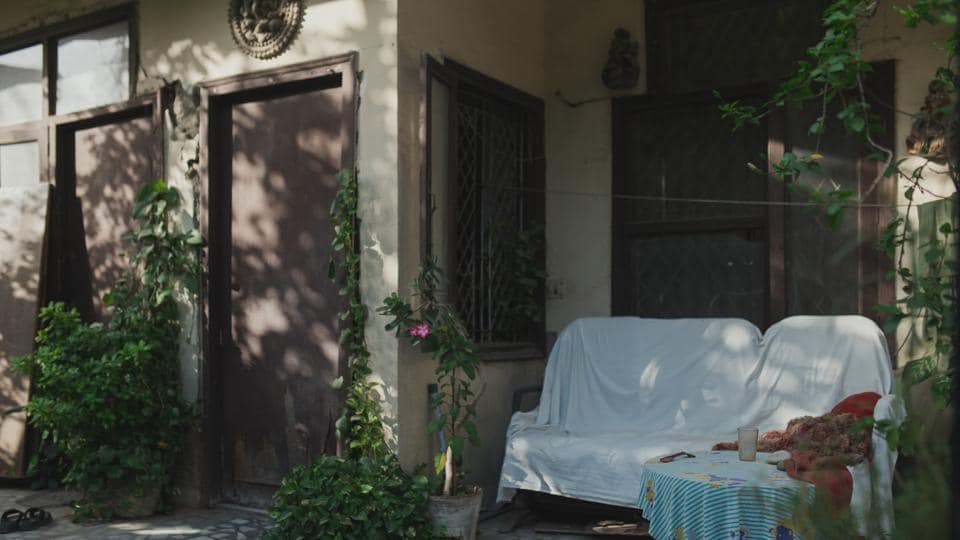
After years of documenting houses and neighbourhoods, I find early morning the best time to understand a place, because people are at their softest then. We went to CR Park at 7am in early October to catch the calm before the storm of festivities and food, just before the area transforms for the season.
The blocks of bungalows and row houses laced around a park held houses much as they were when Bengalis first began to settle in Delhi, a history belonging to the larger story of Partition in South Asia. The East Pakistan Displaced Persons Association was formed in 1954 by displaced persons seeking permanent residential settlement in the city, and in 1966 the Department of Rehabilitation issued its first press note inviting applications for plots in what became the East Pakistan Displaced Persons Colony. By 1970, around 100 houses had been built and the neighbourhood had held its first Durga Puja.
In the morning, the gates and grills are left a little open for the newspaper, the doodhwalla’s packet waits in the bag on the gate, and a garden chair is set beside its side table so that grandmother can come out for her tea. Some houses feel still and others rushed. Mrs Mozumdar opens the door to air out the heavy perfume that Prof Mozumdar has doused himself in before rushing to his lectures in North Campus, while Mrs Basu collects the paper slowly, inspecting her plants and listing the chores for the gardener who comes later in the week. A grandfather carries a grandchild to the bus stop, and two women on their Monday stroll go over the weekend, their opinions and feelings circling the small colony park at the pace of their walking.
Some bungalows never changed, and they would rather sandwich themselves between two towers than build the tower themselves and lose the garden entirely to stolen light. Some young men ran and older men jogged, and we greeted everyone with a cheerful good morning, knowing that in a neighbourhood like this, telling people we were there to document the old houses of CR Park would earn us their commendation. We declared our job unnecessarily, partly to gain access and permission but mostly to get a pat on the back on an early Monday morning.
The single-storey houses were most often painted in light pastels, with side entrances, gardens and comfortable chairs unchanged since they were first bought, which is the thing about much that was bought in the 1970s: it still works, having been built for a sturdy India. The metalwork seems to come from the same period, with wrought iron gates and grills in a few common designs: the sunburst pattern, especially celebrated in eastern India, the floriated grill whose leaves and stalks curve in a dance across windows and gates, and the simpler circle and line grill still seen in the DDA apartments of Delhi.
Functional cubism, stout wide houses and generous rooftops survive in rare pockets while stilted apartments rise where bungalows stood. CR Park keeps some charm in its older houses because of its house-proud Bengalis, where the scent of shiuli flowers and the sting of mustard linger in the morning before the season of the goddess shakes the neighbourhood into cultural fervour.
Anica Mann works on archaeology and contemporary art in Delhi. The views expressed are personal

Stay updated with all top Cities including, Bengaluru, Delhi, Mumbai and more across India. Stay informed on the latest happenings in World News along with Delhi Election 2025 and Delhi Election Result 2025 Live, New Delhi Election Result Live, Kalkaji Election Result Live at Hindustan Times.


