
 E-Paper



At 125, Old Delhi station gets heritage push
Established in 1864 (or 1867), the present-day red-stone building with turreted towers was constructed in 1903 and will soon complete 125 years.

 Prefer HTon Google


Even as construction work is already under way to create a modern and swanky New Delhi railway station, Northern Railways’ plans for the 19th century Old Delhi station are in stark contrast. The Delhi division is coordinating with the railway board for the approval to preserve and protect the station as a heritage structure, while simultaneously upgrading its functionality for the future, officials aware of the matter said.
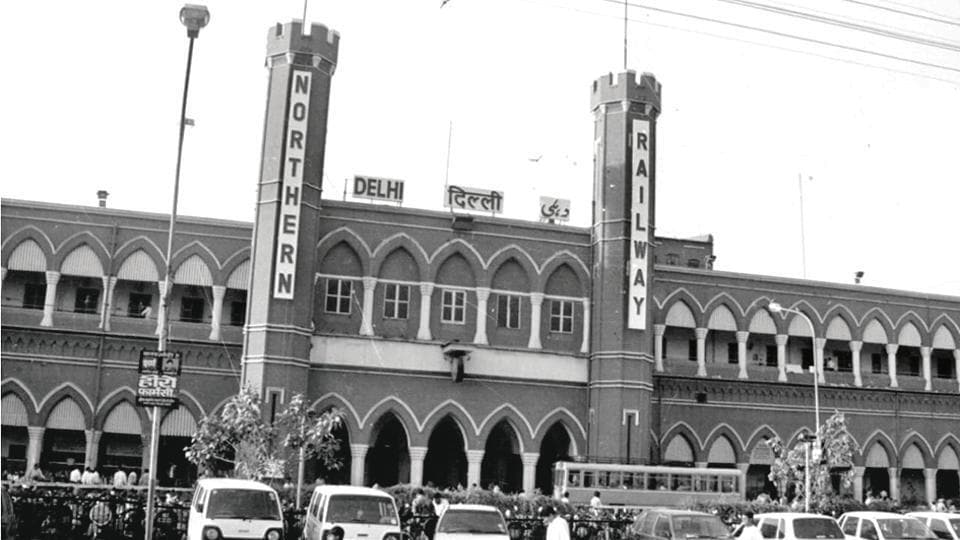
The plan will centre around conserving the station’s distinctive Mughal-style architecture – its red sandstone façade, arched windows and fort-like towers that mirror the grandeur of nearby monuments such as the Red Fort. Restoration work will prioritise structural stability and aesthetic preservation, with strict controls on alterations to the original design, officials said.
“While the Railway station was designed keeping the nearby Red Fort in mind, it was built by the British, so it is not proper Mughal architecture. One can say it is inspired by Mughal architecture, keeping the same theme in mind the Mughals had for the Red Fort. This is the same reason they used Red sandstone,” said a Northern Railways official, adding the same stone is still used for minor structural repairs, whenever required, by sourcing it from Jodhpur.
“So far, we have done our own repairs to the structure, whenever needed. The goal is to create a proper preservation plan. An expert agency may be roped in too,” the official said.
Railways said the preservation will not come at the cost of modernisation. They are working on a parallel strategy to upgrade passenger amenities, streamline entry and exit points, and decongest platforms through redevelopment of adjoining areas. The heritage building itself will be shielded from any invasive changes, even as infrastructure is revamped.
“The objective is to strike a balance between conservation and capacity, protecting the past without constraining the present,” said a second official.
In contrast, work has already begun to develop the New Delhi Railway station into a world class airport-like hub, with twin dome buildings on Paharganj and Ajmeri Gate; an air concourse, redeveloped plazas; and 16 ‘upgraded’ platforms, alongside seven new flyovers on the outside for improved connectivity to different parts of the city. Thus, the original station will no longer be preserved as part of this plan, with demolition to include the State Entry Road, which connects it to Connaught Place.
History, heritage and the present

Also known as “Delhi Junction”, the Old Delhi station is among the oldest and most historically significant railway hubs built during British rule. Experts said it was a key moment in the shift of the city’s character from a Mughal “walled city” to a more developed area with town halls, tracks, hospitals — the markers of a new and eventual Capital in making.
Established in 1864 (or 1867, according to the National Mission on Monuments and Antiquities under the Archaeological Survey of India), the present-day red-stone building with turreted towers was constructed in 1903 and will soon complete 125 years.
“There are also directions to celebrate anniversaries for all major railway stations. We are looking at milestones for Old Delhi, with this being a major one that will come up,” said the railway official.
Located on Shyama Prasad Mukherjee Marg near Chandni Chowk, the station was meant to be an access point for the British – moving from Kolkata to across the Yamuna and eventually further northwest to Punjab and into Lahore. Its integration with the historic core of Shahjahanabad, the walled city founded by Mughal emperor Shah Jahan, was a key point in Delhi’s history, author Narayani Gupta said in her 1981 book ‘Delhi Between Two Empires, 1803-1931’.
“The railway station and the line leading to it rudely distorted the concentric pattern of Shahjahanabad. The traveller who had once approached the city by river or bridge, with the domes and minarets gradually revealing themselves, now descended from the train into a very different environment. The focus of activity shifted: where once the Red Fort and the eastern end of Chandni Chowk had formed the centre, a more prosaic substitute emerged around the station, the Town Hall and the Company Bagh. Here trade coalesced and debouched, and the character of the city began to change,” wrote Gupta.
Parts of the walled city, including gardens developed by Shah Jahan’s daughter, Jahanara, were cleared after the revolt of 1857 to make way for railway infrastructure. The station was constructed by replacing neighbourhoods north of these gardens. The building features an imposing façade with arcaded patterns, deep verandahs across its three storeys, and Gothic elements such as tower-like bastions that form the corners of projecting porches. Painted in brick red with white highlights, it presents a distinctive architectural identity, according to NMMA records.
Historian Swapna Liddle, speaking recently at an Indian National Trust for Art and Cultural Heritage (Intach) exhibition of old Delhi maps, said that an 1850 Shahjahanabad map showed that, while most of the walled city is still intact, widespread changes occurred after the 1857 revolt.
“They then began to demolish Mughal-era structures. Some masjids were demolished. We also had the iconic chowk that gives Chandni chowk its name, which was demolished. Old Mughal lawns, clearly visible in the same map were demolished to built the Old Delhi railway station, for which construction began from 1860 onwards and that was a major change to the walled city structure,” she said.
Over the decades, the station has witnessed several pivotal moments — from the movement of troops and goods during colonial rule to the mass migrations during the Partition of India, when it became a site of both chaos and human resilience. It has also changed ownership at least twice before coming under the present day Northern Railways.
Archive photos accessed by HT show the station depicting a bold ‘Eastern Punjab Railway’ inscribed on its façade, with similar black-and-white photos depicting North Western Railway too as vertical beams on its minarets. “These were both pre-Independence, as Northern Railways came up only after Independence when new railway divisions were created,” the second official said.
Growing footfall and presence

From just two platforms handling around 100 passengers daily at the time of its establishment, the station has expanded to 16 platforms and now caters to over two lakh passengers daily, with more than 200 trains originating, terminating, or passing through it. Until the mid-1990s, it handled both metre and broad gauge traffic.
Officials said congestion remains a problem at present, meaning special festive trains are rarely run from the station. Long-term plans include focus on decongesting the area further. “Old black and white photographs available in Railway archives show the British would come here in horse drawn carts and eventually, the general public did too. The station was not very crowded at all, even in the early 1910s and 20s,” the official said.
At present, the station remains a crucial rail hub connecting Delhi to northern, eastern and northeastern states, while also serving as a gateway to Old Delhi’s Delhi’s bustling markets, religious sites, and culinary heritage.



Stay updated with all top Cities including, Bengaluru, Delhi, Mumbai and more across India. Stay informed on the latest happenings in World News along with Delhi Election 2025 and Delhi Election Result 2025 Live, New Delhi Election Result Live, Kalkaji Election Result Live at Hindustan Times.


