E-Paper



Congested quarters in need of stricter fire rules
The incident, which left seven dead, comes as one of the many such accidents that underline the need to curb illegal activities in congested quarters of the city.

 Prefer HTon Google


As residents of a slum cluster in Gokalpuri tried to escape an inferno on Saturday, all they had access to was one narrow exit route. The cluster also housed a scrap shop, as well as a godown with tyres and tubes, worsening a fire hazard waiting to happen in a congested neighbourhood.
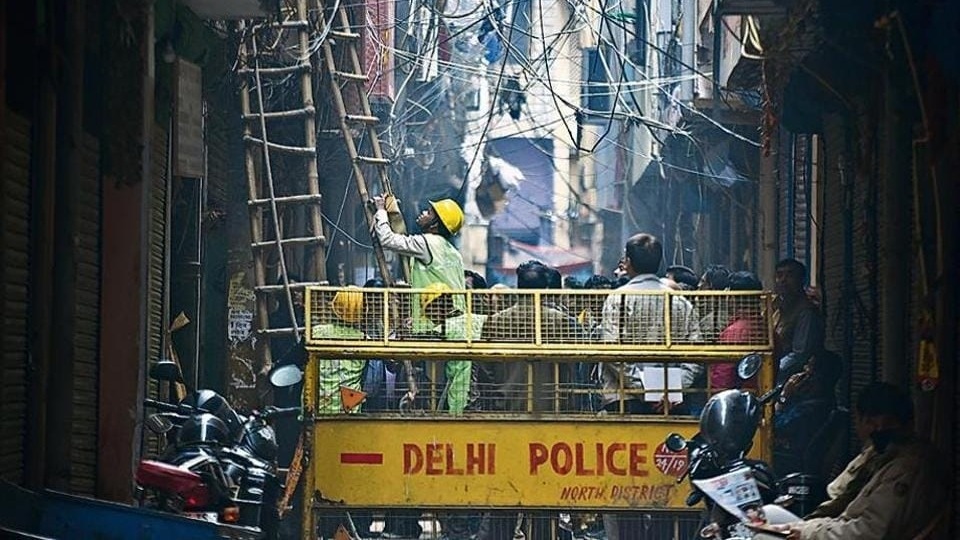
Senior officials of the East Delhi Municipal Corporation (EDMC) said they planned to act against owners of the units.
The incident, which left seven dead, comes as one of the many such accidents that underline the need to curb illegal activities in congested quarters of the city.
An inferno in north Delhi’s Anaj Mandi in December 2019 left 43 dead. There are some parallels between the two fires.
Anaj Mandi is one of the most congested areas in the Capital, and the 2019 fire, in an illegal industrial unit, brought to light lax enforcement of fire safety rules in the Capital.
The five-storey building was not just an illegal factory without requisite clearances; a series of violations made the establishment a dangerous fire hazard, according to the initial findings of the Delhi Police crime branch.
Despite the direct intervention of the National Human Rights Commission (NHRC), agencies in the city have been unable to implement the ‘micro-area plans’ to improve the safety standards of “special areas”, which include the Walled City, its extensions and parts of Karol Bagh and Paharganj.
Taking suo motu cognisance of the matter, the NHRC issued a six-week notice (dated December 9, 2019) to the Union ministry of housing and urban affairs (MoHUA), which entrusted work to a special task force.
A year-long probe later, the committee suggested an action plan, which included formulating detailed disaster management plans for pilot areas, keeping in view Delhi’s 2021 Master Plan.
“For densely populated residential areas, we suggested development of fire hydrant systems with common water tanks, alteration of width of roads at key intersection points, tackling unauthorised constructions and identification of all vulnerable areas among other measures,” the official said, requesting anonymity.
The plans were expected to be made in areas like Anaj Mandi and Sitaram Bazar on a pilot basis, but these are yet to kick off.
Spokespersons of the Delhi Development Authority did not respond to requests for comment.
East Delhi mayor Shyam Sunder Aggarwal, who visited the Gokalpuri site on Saturday, said the city needs to rethink its fire safety policy.
“While the land in Gokalpuri does not belong to us, we plan to take action against the owners who were using it as a storage for storing scraps and recycled material. While the buildings are coming up at a rapid pace, we as a city need to ensure that fire safety is ensured and for that we may have to develop a comprehensive fire safety policy,” he added.
An official from Delhi Fire Services (DFS) on condition of anonymity said large-scale unauthorised constructions and vulnerable areas prevent Delhi from meeting acceptable standards of fire safety.
“Committees were also formed after Anaj Mandi and Arpit case but nothing concrete came of them. New complications will also be created due to the new open-dining policy, which allows restaurants to operate on terraces,” the official said.