
 E-Paper



Delhi Master Plan 2047 builds on rental housing for migrant population
The Delhi Master Plan 2047 focuses on rental accommodation, smaller homes and dormitories as opposed to conventional housing patterns.

 Prefer HTon Google


The Master Plan for Delhi-2047 has laid out a dedicated framework for expanding rental housing in the Capital for the first time, including Affordable Rental Housing Complexes (ARHCs), studio apartments, hostels and dormitories, with a focus on migrants, seasonal workers, students, single working people, and lower-income households.
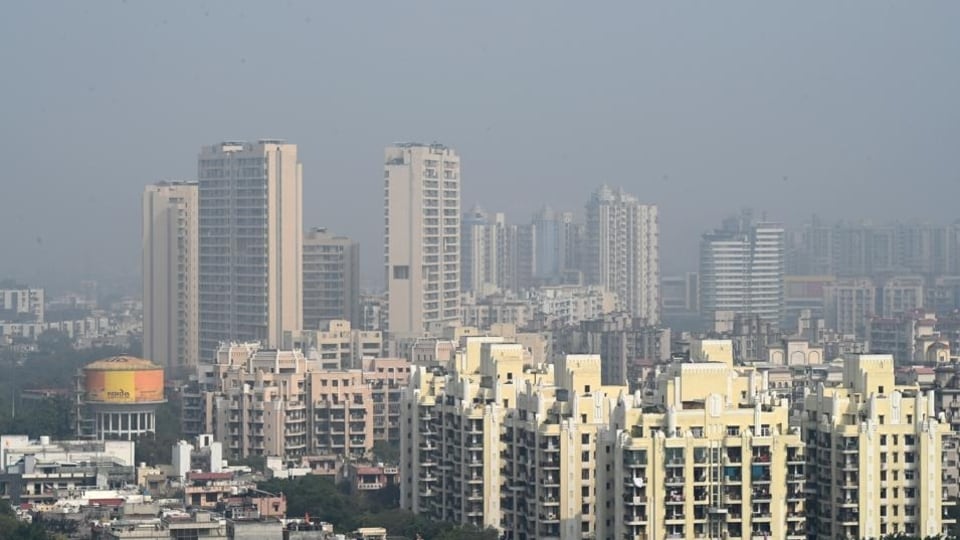
According to the draft plan, rental housing can provide “tenure flexibility, geographical mobility and affordable options (low entry and exit cost)” and proposes using both public and private housing stock to create a larger rental market. It also mentions developing smaller homes and dormitory-style accommodation for people who may not need or be able to afford conventional ownership-based housing.
Housing gap due to migration influx
“The previous plan estimated 50% of the population increase due to migration. The growing needs of the existing population and high land values have led to the growth of unplanned settlements in the city. Migration is estimated to contribute 41% of the population increase during the present plan period,” the document says.
HT had earlier reported that the plan, approved by the Delhi Development Authority (DDA) on Wednesday and accessed by HT, estimates that Delhi’s population could reach around 32 million by 2047. The document states that the projected housing requirement (for 2011-2047) has been calculated based on an average household size of 4.5 persons. This means Delhi would need 7.11 houses for its residents in 2047. Delhi had 3.1 million residential houses in 2011, according to the Census, leaving a projected requirement of about 4 million additional units.
The assessment, the document stated, factors the existing housing backlog, additional demand generated by population growth, replacement of obsolete housing and vacant housing stock.
Also Read I DDA clears Delhi 2047 plan, opens door to development in 70 villages, parts of Yamuna floodplain
ARHCs for workers' rental housing
Under the proposed framework, ARHCs will be permitted either as standalone developments or as part of new projects in Delhi. Industrial plots and industrial parks will also be allowed to develop affordable rental housing for workers, including housing in the form of dormitories and small-format homes.
“The master plan also proposes allowing rental housing under unauthorised colony regeneration schemes. Further, agencies involved in creating public housing have been asked to develop a proportion of their housing inventory as rental accommodation for lower-income groups, wherever feasible. Other rental options such as rent-to-own models may be explored,” said an official aware of the matter.
The document also notes that Delhi has a sizable stock of vacant or unsold public and private housing, citing Census 2011 data that said 11% Census houses in Delhi were vacant.
It also proposes that the DDA and other agencies consider bringing unsold or vacant public housing stock into the rental market to ensure better utilisation of existing assets. Such housing could also be made available on rent to public sector undertakings, private enterprises and government departments.
Norms for ARHC
Existing vacant public housing, it says, may also be converted into ARHCs. DDA and other agencies may develop ARHC projects on public land “preferably close to activity centres (industrial areas, educational hubs, etc.)”, with the objective of improving the availability of affordable rental housing close to workplaces, the document says.
To manage the expanded rental housing stock, public agencies may hire specialised rental management agencies. They may also collaborate with housing aggregators to provide information on availability, location and rents.
The master plan has proposed specific development controls for ARHCs. According to the norms, an ARHC project will require a minimum plot area of 2,000 square metres and a minimum right of way of 12 metres, crucial for developing an adequate number of houses with shared infrastructure as well as movement of emergency vehicles.
Also Read I Delhi Master Plan 2047 floats ‘congestion pricing’ for vehicles entering key city areas
Apart from public and private basis, the MPD also permits for their development on public-private partnership basis with construction, operation and maintenance by government bodies or private concessionaires under the central government’s ARHC scheme.
The prescribed housing mix is also aimed at accommodating different categories of tenants: it can comprise dwelling units of up to 30-60 square metres of carpet area for single- and double-bedroom units, along with dormitories having four to six beds, with up to 10 square metres of carpet area per bed. The maximum carpet area of an individual dwelling unit has been fixed at 60 square metres.
“A single ARHC project must have at least 40 dwelling units or equivalent dormitory beds. The plan allows public and private entities flexibility in deciding the mix of single- and double-bedroom units and dormitories, while retaining restrictions to ensure the complexes are used for urban migrants and EWS/LIG households,” the plan states.
Also Read I Delhi master plan: City plan integrates lessons from Covid pandemic, 2023 floods
The proposed norms also seek to keep ARHCs as rental housing rather than allowing them to become ownership units. Residents will occupy dwelling or dormitory units on the basis of licence rights provided by the owner with the minimum tenure for three months and the maximum up to three years.
The plan further states that owners of ARHCs cannot charge any premium towards the grant of a licence and residents cannot continue occupying a unit beyond the maximum tenure by executing a fresh licence.
The development controls provide for up to 10% of permissible floor area ratio (FAR)to be used for commercial components, while an additional 400 square metres of floor area, or 5% of permissible FAR, whichever is higher, can be provided free of FAR for community requirements such as a community rooms, society offices, anganwadis and milk booths.


Stay updated with all top Cities including, Bengaluru, Delhi, Mumbai and more across India. Stay informed on the latest happenings in World News along with Delhi Election 2025 and Delhi Election Result 2025 Live, New Delhi Election Result Live, Kalkaji Election Result Live at Hindustan Times.


