
 E-Paper





Snehil Sinha is an Assistant Editor with the Delhi Metro bureau of Hindustan Times, where she reports on politics, governance, public policy, urban infrastructure and transport, subjects that shape the everyday lives of millions in the national capital. Over a journalism career spanning 14 years, she has built a reputation for meticulous, data-driven reporting that combines on-ground perspectives with policy analysis. She began her career with The Indian Express before joining Hindustan Times, where she has reported extensively on civic administration and urban governance in Gurugram, Noida and now Delhi. Her reporting is distinguished by its clarity, depth and balance. Whether covering large-scale infrastructure projects, environmental challenges, transport reforms or government policy, she tries to translate complex administrative decisions into accessible, engaging stories without losing nuance. Her work reflects a strong command of public records, official data and field reporting, often connecting policy announcements with their impact on citizens. Her stories go beyond headlines to explain how governance decisions influence the city's growth, mobility and quality of life, making her work an important contribution to informed public discourse.
Delhi’s Jama Masjid revamp gets push
The Delhi Public Works Department (PWD) has invited fresh bids from firms to prepare a detailed project report to redevelop the area around the mosque


In the pipeline for almost two decades, the Jama Masjid redevelopment plan has received a fresh push with the Delhi Public Works Department (PWD) inviting fresh bids from firms to prepare a detailed project report (DPR) even as India’s grandest mosque and the its precincts continue to battle disrepair, chaos, congestion and poor sanitation.
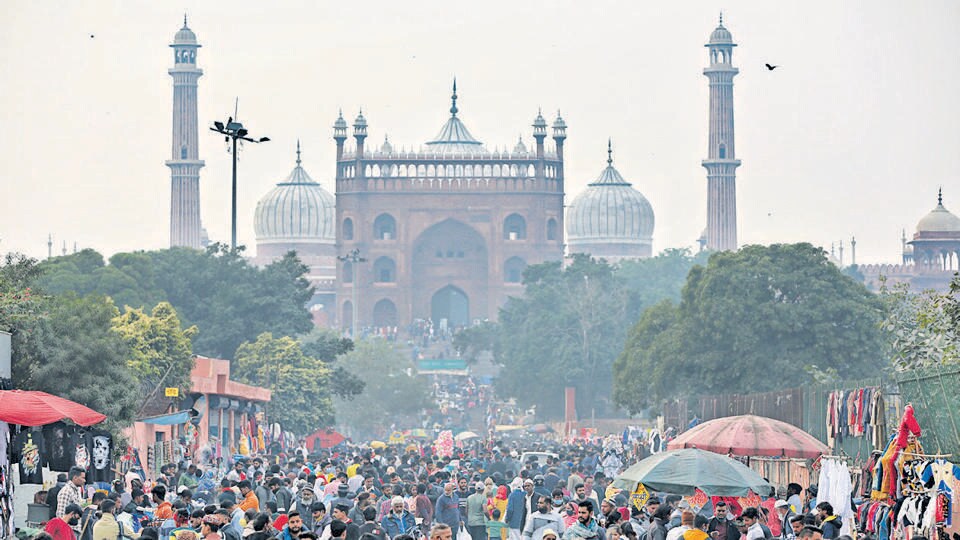
“Last month, we opened the tender for appointing a new consultant for redevelopment of the Jama Masjid precinct,” said a PWD official asking not to be named. To be sure, preparation of a DPR would just mean a layout of the activities that are required to be taken up for the facelift, and it could be years before actual work on the ground starts.
Also read: Mosques urge people to keep Yamuna clean
Jama Masjid is not a protected monument under the Archaeological Survey of India (ASI). The responsibility of the mosque’s maintenance rests with the Delhi Waqf Board. However, as a special case, repairs on Jama Masjid have been carried out, from time to time, by ASI since 1956. In recent years, ASI has not taken up any conservation work at the mosque. The finial of Jama Masjid’s central dome was damaged in May last year following heavy rain and thunderstorm. In June 2021, a slab of red sandstone from the minaret collapsed and ended up damaging the courtyard beneath it.
Other issues that plague the structure include narrow approach roads, and the presence of shops and residential areas opposite Jama Masjid’s main entrance, near gate number 1. With markets and eateries lining the premises, sanitation is also a concern.
Attempts at revamping the mosque, built by Mughal emperor Shah Jahan in 1656, began in 2004 with the Delhi government conceptualising the Jama Masjid area redevelopment plan.

The redevelopment of areas around Jama Masjid was conceived in 2004 by the Delhi government to improve the general condition of the monument and the area around it. Architect Pradeep Sachdeva was entrusted with making a master plan for the area.
After detailed surveys, Sachdeva’s firm formulated a plan, which was discussed and revised as per suggestions from various stakeholders.
The plan was submitted to the Delhi high court in 2006, and ratified by the Delhi Urban Arts Commission (DUAC) in 2009. After the trifurcation of the Municipal Corporation of Delhi -- the nodal agency -- the plan was handed over for execution to the North Delhi Municipal Corporation. In 2012, it was transferred to the Public Works Department (PWD) and then finally to the Shahjahanabad Redevelopment Corporation (SRDC).
As more changes were required, the Shahjahanabad Redevelopment Corporation (SRDC) board in August 2019 decided that to expedite the execution of the redevelopment plan, the detailed project report will be divided into two parts — one concerning the vicinity of the mosque’s precincts, including Meena Bazar, Urdu Bazar and all approach roads leading to the masjid, and the other about the main monument precincts, which means the areas within the walled premises of the main masjid.
The project was yet again put on hold as PWD did not hire a consultant to review and replace aspects of Sachdeva’s plan that were not approved by SRDC.
However, the plan was stuck in limbo as the Covid-19 pandemic added to another two years of inertia.
Five years later, the PWD issued a fresh tender for preparing a DPR in March this year, the PWD official quoted above said.
He said the scope of work entails the redevelopment of the 12.7 hectare area, preparation of DPR, study of site activities on the extended upper plinth of the mosque, redevelopment of the surrounding area and the renovation of several mausoleums situated in the vicinity of the mosque such as Dargah Sheikh Kalimullah, Hare Bhare Shah Mazaar, Ubhre Shah Mazaar, and the mausoleum of General Shah Nawaz Khan of the Indian National Army, and most importantly the refurbishment at Meena Bazaar.
It will also include construction of walkways, plaza, pedestrian passages on all approach roads, common utility duct for services, underground development of drainage, trenches, provisions for illumination of precincts, installation of fire fighting facilities, removal of overhead electric cables , as well as surface development of roads and footpaths, signage, horticulture, street furniture and street art.
Also read: NMA approves Jagannath temple’s reception centre just outside prohibited zone
Officials said Sachdeva’s old design suggested some construction work inside the Tikona Park, located on Kasturba Hospital Road and shifting of the entire Meena Bazar and occupants around the Dargah Shaikh Kalimullah, which according to SRDC was unfeasible according to the provisions of the Delhi Master Plan and the Ancient Monuments and Archaeological Sites and Remains Act, 1958.
“We have asked the PWD to provide timelines for implementation of the first part regarding redevelopment of the Jama Masjid vicinity and the second part which will require a new DPR for revamp within the premises. Once we get the details, we can arrange for the funds required for redevelopment,” said Nitin Panigrahi, deputy general manager, SRDC.
Historian Swapna Liddle said that while planning for the redevelopment of the area, the original design aspect and the current use of the area should be kept in mind. “There are two important aspects: design and the usage. It is very important to see what was the original alignment between the Jama Masjid and the Southern Gate of the Red Fort. The spirit of that alignment and the fact that this was an important public space, a cultural hub should be kept in mind while planning for the area. The other aspect is about its current usage.”


