E-Paper



Maximum temperature in parts of Delhi dips below 13°C
IMD has forecast the maximum temperature on Thursday will be around 21°C, while the minimum will hover around the 6-degree mark

 Prefer HTon Google


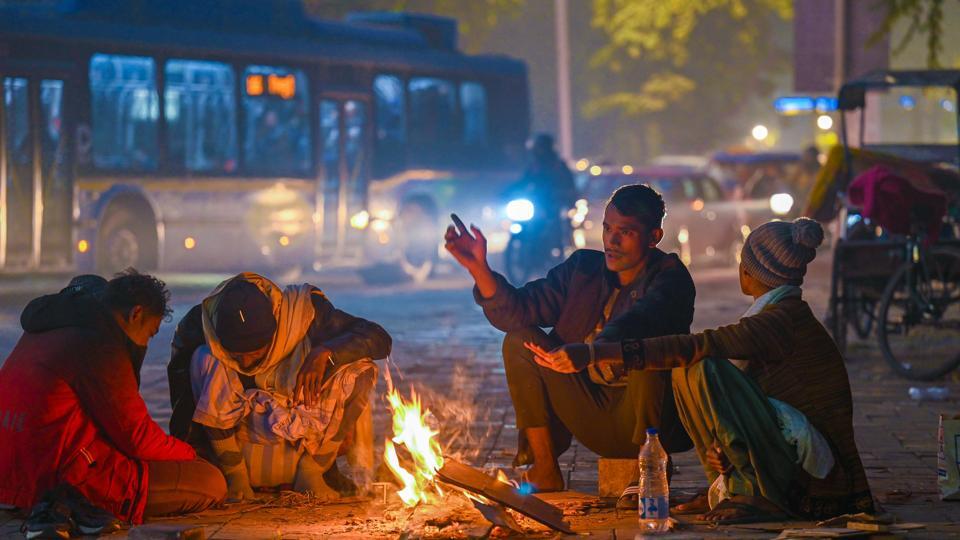
Delhi was wrapped in a blanket of fog on Wednesday as the maximum temperature in parts of the Capital fell below 13 degrees Celsius (°C) — eight less than normal for this time of the year, India Meteorological Department (IMD) officials said.
Read here: Dense fog blankets Delhi; airport issues advisory, several trains cancelled
To be sure, the Safdarjung observatory, which is representative of Delhi’s weather, recorded a maximum of 22°C degrees Celsius – two degrees above normal — as the fog broke and the sun came out post noon. But many other parts of the Capital remained shrouded under a grey haze, with the weather station at Mungeshpur in northwest Delhi recording a high of 12.5°C, while the observatory at Jafarpur in southwest Delhi logging a maximum temperature of 12.8°C.
The maximum at the Narela station was 14.5°C, while it was 16.2°C at Palam, 19.2°C at Ridge, and 19.5°C at Pitampura.
“Dense fog prevents sunlight from penetrating through to the surface, which in turn does not allow the ambient temperature to rise sharply. The maximum rises in the presence of sunlight, but this did not happen at these stations,” said Kuldeep Srivastava, scientist at IMD.
In terms of minimum temperature, the Safdarjung weather station recorded a low of 7.8°C — one notch above the normal. Other observatories across the city logged a similar minimum mark.
Srivastava said cloudiness and fog has the opposite effect on the minimum temperature. “It does not allow surface heating, but also does not allow any heat to be lost into the atmosphere, meaning the minimum does not dip sharply, even at night,” he said.
IMD has forecast that the maximum temperature on Thursday will be around 21°C, while the minimum will hover around the 6-degree mark.
Delhi’s air remained in the “very poor” zone on Wednesday, with a 24-hour average air quality index (AQI) reading of 380, according to the Central Pollution Control Board’s national bulletin. It was 377 (very poor) at the same time on Tuesday.
Forecasts show Delhi’s air quality is likely to remain “very poor” over the next three days.
Read here: 12 vehicles pile up on Delhi-Agra Yamuna Expressway amid season’s worst fog
“Delhi’s air quality is likely to remain in the ‘very poor’ category from December 28 till December 30. The outlook for the subsequent six days shows the air quality is likely to remain between ‘very poor’ and ‘severe’,” said the Early Warning System (EWS) for Delhi, a forecasting model under the ministry of earth sciences.