E-Paper



Yamuna water level see-saws, people in camps told to stay for now
Change due to local contributions from drains and regional rainfall, no need to panic, says Delhi government

 Prefer HTon Google


After a steady drop in the water level of the Yamuna for three days, there was a slight uptick on Monday as the level increased from 205.45m at 6am to 206.01m at 11pm. But the Delhi government and the irrigation and flood control (I&FC) department asserted that there was no need to panic, with officials attributing the change to local contributions from drains and regional rainfall.
Also read: Plantation drives along Yamuna halted, Delhi govt to assess damage to saplings
The water level, which hit a record high of 208.66 last Thursday, is yet to drop below the danger mark of 205.33m.
Revenue minister Atishi said the water levels in the Yamuna area are witnessing a minor increase due to heavy rainfall in parts of Haryana. “The Central Water Commission (CWC) has estimated that the water level can reach up to 206.1m tonight. People of Delhi do not face any danger due to it but the people staying in relief camps are requested not to go back. They should return when the water level falls below the danger mark,” she said.
I&FC minister Saurabh Bharadwaj said the general trend for the Yamuna’s water levels in Delhi can be gauged from the levels at Palla (on the Delhi-Haryana border).
“We have seen Palla levels, which have increased by merely 0.2m between 1am and 8am. This has increased because the entire north India has witnessed rains over the last two days. Many drains fall in Yamuna from Sonepat, Ambala, Panipat. Delhi has also observed rains,” he said.
“We have seen data from Hathnikund barrage and we have not observed any rising trend. The central government has said that it will increase further by 0.1-0.2m but there is no danger as the drains are getting emptied in Yamuna,” he added.
Delhi’s drains are divided among the Najafgarh, Barapullah, and Shahdara drain networks. Among these, 18 major drains fall directly into the Yamuna, with a capacity to carry 664.4 million gallons per day of sewage and stormwater. These start from the Magazine Road drain and Khyber Pass drain in north Delhi, and end up at the Tughlaqabad drain in southeast Delhi.
An I&FC official said the quantum of water released from the Hathnikund barrage in Yamunanagar in Haryana remained between 40,000-50,000 cusecs -- continuing with the trend observed over the last three days. A flood alert is issued when the quantum of release goes beyond the 100,000-cusec mark.
“The CWC has told us that the water levels will increase tonight and then it will start falling. The situation is not alarming and people should not panic,” the official said.
Earlier in the day, Delhi CM Arvind Kejriwal had stated that the water level has gone down and now people will start returning from relief camps to their houses. “We will help to restore normalcy to life. I appeal to everyone to help these people,” he said.
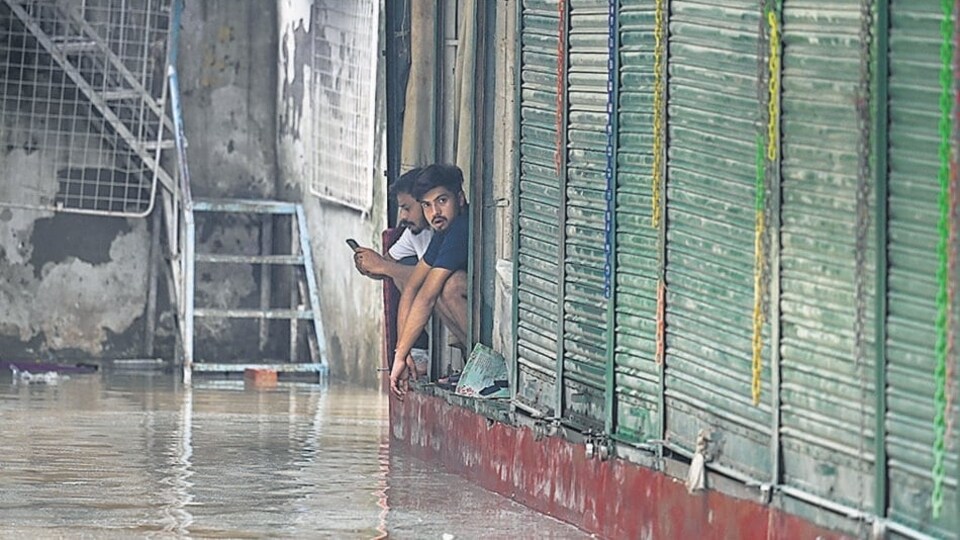
With flood water receding from inundated parts of the city such as Jaitpur Extension, Yamuna Bazar, Monastery Market, Majnu Ka Tilla, residents of these areas have started shifting back to their homes, even as clean-up operations are being carried out in these areas.
Also read: More routes open for traffic movement as Yamuna water recedes in Delhi. Details
The focus has also shifted to preventing a public health crisis in low-lying areas.
Mayor Shelly Oberoi said that after clearing waterlogging, steps are being taken to clear silt from the roads, carry out insecticide spraying operations, and prevent mosquito breeding in these areas. Bharadwaj, who also holds the health portfolio, said that cases of conjunctivitis and skin allergies and fungal infections were observed in relief camps. “The government is not lowering its guard and after floods such diseases are observed. We are taking steps in all flood affected areas and relief camps,” he said.
Meanwhile, the Municipal Corporation of Delhi’s veterinary department removed 277 animal carcasses from the streets on Monday.