
 E-Paper



Monsoon departs from Delhi in earliest withdrawal in 24 years
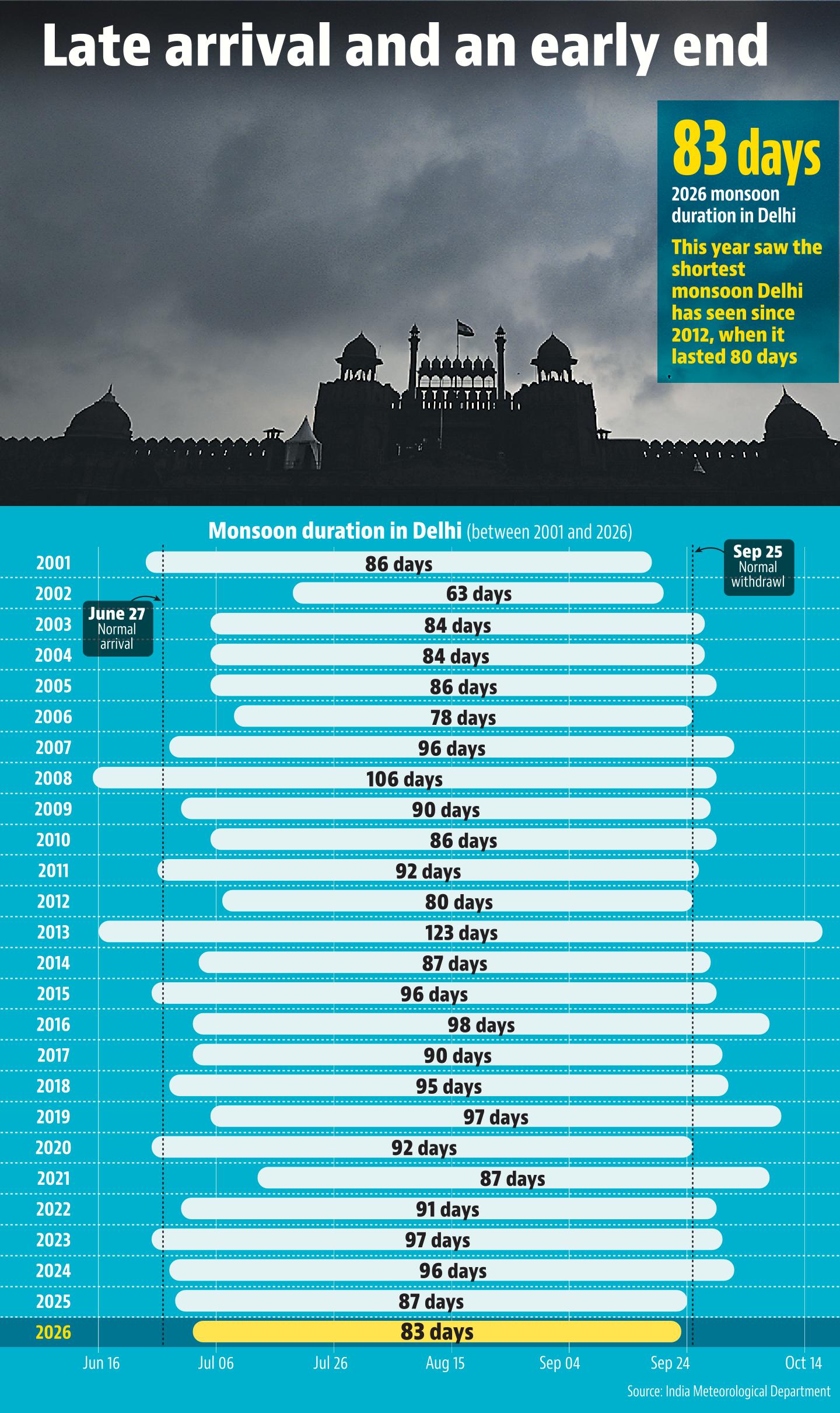
The monsoon lasted 83 days this year, after arriving in Delhi on July 2, making it the shortest monsoon the Capital has seen since 2012.

 Prefer HTon Google


The Southwest Monsoon withdrew from Delhi on Wednesday, two days before its normal date of September 25, the India Meteorological Department (IMD) said. This was the earliest monsoon withdrawal from the Capital in 24 years, since it withdrew on September 20 in 2002, data showed.
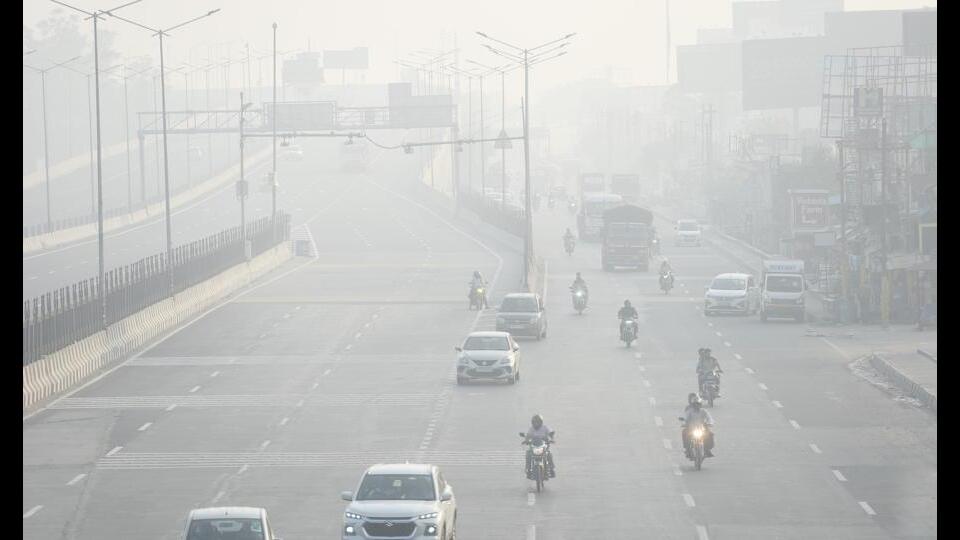
The monsoon lasted 83 days this year, after arriving in Delhi on July 2, making it the shortest monsoon the Capital has seen since 2012, when it lasted 80 days, from July 7 to September 25.
“The Southwest Monsoon has further withdrawn from most parts of Punjab, Haryana, Rajasthan, entire Delhi, some parts of Uttar Pradesh and Gujarat today,” the IMD said in a statement on Wednesday.
IMD said September 25 is the normal withdrawal date of the Southwest Monsoon from Delhi, based on data for the 1971-2019 period. Last year, the monsoon withdrew from the national capital on September 24.
Monsoon made its onset over Delhi on July 2 this year, against its normal onset date of June 27, the IMD said. Overall, the monsoon lasted seven days less than normal.
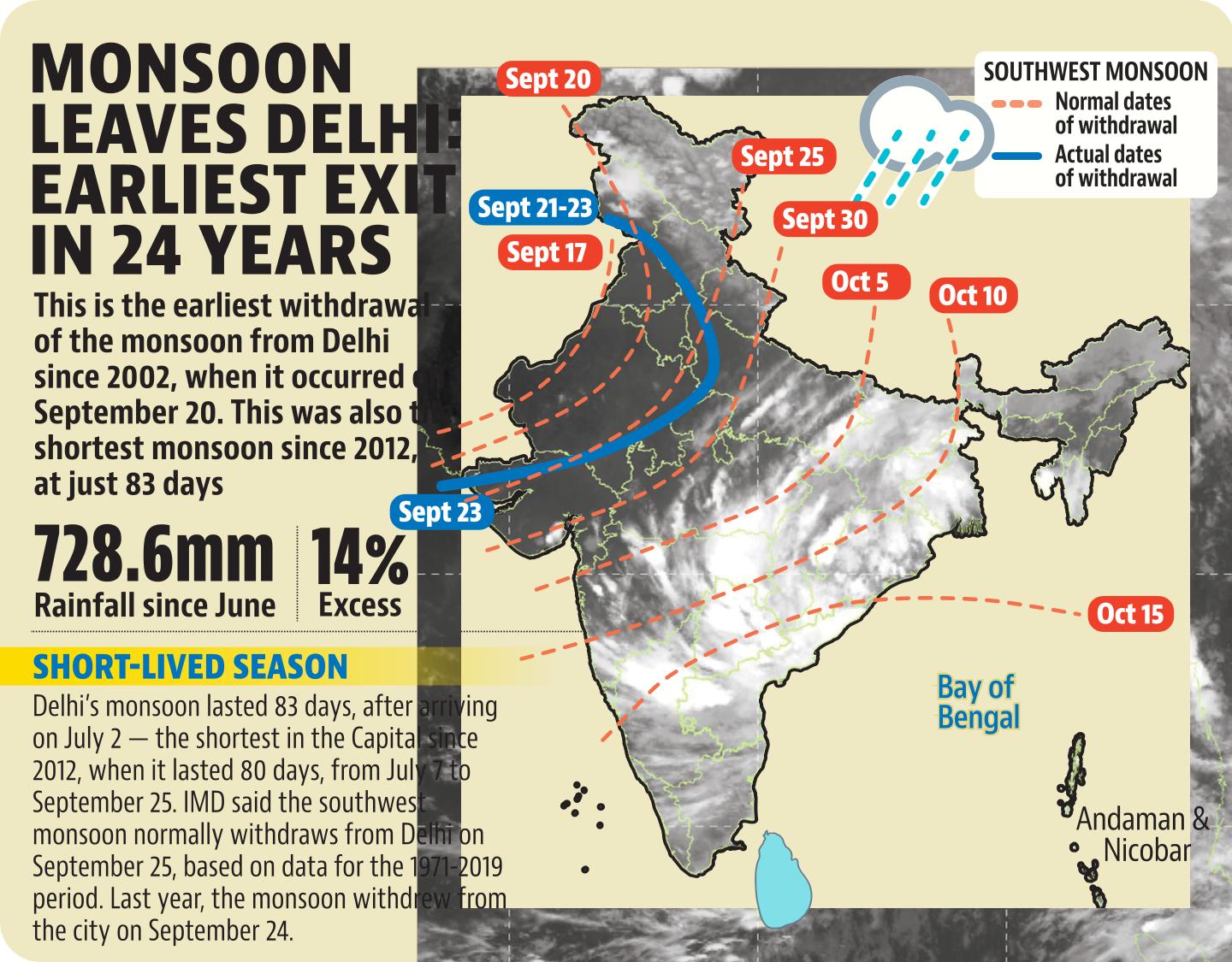
Delhi recorded 728.6mm of rainfall at Safdarjung from June 1 to September 23, against the normal 629.7mm, the IMD said. The rainfall was 16% above normal and fell in the “normal rainfall” category. The southwest and northeast districts were exceptions, recording deficits of 23% and 22%, respectively.
The earliest withdrawal of the monsoon from Delhi since 1961 was recorded in 1982, when it withdrew on September 3, while the most delayed withdrawal was recorded in 2013, when it withdrew on October 17, according to IMD data.
This year, withdrawal from west Rajasthan commenced two days late, on September 19, against the normal date of September 17.
To be sure, the withdrawal from Delhi comes even as a “deep depression” over the Bay of Bengal continues to move westwards and is expected to bring intense showers to parts of Andhra Pradesh and Odisha. Track updates here
“The deep depression over westcentral and adjoining northwest Bay of Bengal moved westwards with a speed of 5 km/hr during the past six hours, and lay centred at 8:30 am on September 23, 2026. It is very likely to move west-northwestwards, and cross North Andhra Pradesh-South Odisha coasts between Visakhapatnam and Gopalpur, close to Kalingapatnam as a Deep Depression by the night of September 23,” the IMD said.
The all-India monsoon rainfall stood at a 15% deficit as of September 22, with the country receiving 706.9mm against a normal 832.4mm for the period June 1 to September 22.
Region-wise, the deficit was highest in east and northeast India at 27%, followed by the south Peninsula at 26%. It stood at 6% in central India and 10% in northwest India. The IMD said the line of withdrawal was passing through Gurdaspur, Chandigarh, Muzaffarnagar, Aligarh, Dholpur, Udaipur, Deesa and Naliya on Wednesday.
State-wise data showed significant deficits in several parts of the country. In northwest India, rainfall was 40% below normal in Punjab, 24% below normal in Haryana and 21% below normal in Rajasthan. In east and northeast India, the deficits were 37% in Bihar, 26% in Assam, 42% in Arunachal Pradesh, 43% in Manipur and 60% in Meghalaya. In southern India, Karnataka recorded a 30% deficit, Telangana 21%, Andhra Pradesh 38% and Kerala 27%.
Mahesh Palawat, vice president at Skymet said northwest India, including Delhi had already begun to see dry northwesterly winds, however, the deep depression over the Bay of Bengal may impact northwest India. “Wind direction may change to easterly and Delhi and its surrounding region can possibly see some rain around September 26 and 27,” he said.
The monsoon has largely been impacted by a strengthening El Niño. On September 3, the World Meteorological Organisation (WMO) said El Niño had firmly established and was expected to intensify into a “very strong” event in the coming months, with significant impacts on rainfall and temperature patterns and associated risks of floods, drought and extreme heat.
WMO forecasts showed a near-100% likelihood that the El Niño would persist through February 2027. For India, experts said this could translate into a milder winter with reduced rainfall for Rabi crops.
IMD had on August 31 forecast below-normal rainfall, or less than 91% of the long-period average (LPA), for September. Two weeks earlier, private forecaster Skymet Weather had revised its southwest monsoon forecast, saying rainfall was likely to be 85% of LPA, with a 70% probability of drought. Its initial forecast in April had put monsoon rainfall at 94% of LPA.
IMD’s April forecast had projected monsoon rainfall at 92% of LPA. In its June outlook, it revised the forecast to 90% of LPA and assigned a 60% probability to a deficient season.


Stay updated with all top Cities including, Bengaluru, Delhi, Mumbai and more across India. Stay informed on the latest happenings in World News along with Delhi Election 2025 and Delhi Election Result 2025 Live, New Delhi Election Result Live, Kalkaji Election Result Live at Hindustan Times.


