E-Paper



Old jamun trees preserved; over 4,000 trees now under revamped Central Vista
While 69 trees in total had to be transplanted for the project, 47 of these were transplanted within the Central Vista Avenue, with 22 being transplanted outside

 Prefer HTon Google


The newly revamped Central Vista Avenue (CVA), which is set to be inaugurated by Prime Minister Narendra Modi on Thursday evening, will consist of over 4,000 different trees, with the original Jamun trees preserved under the plan, officials said.
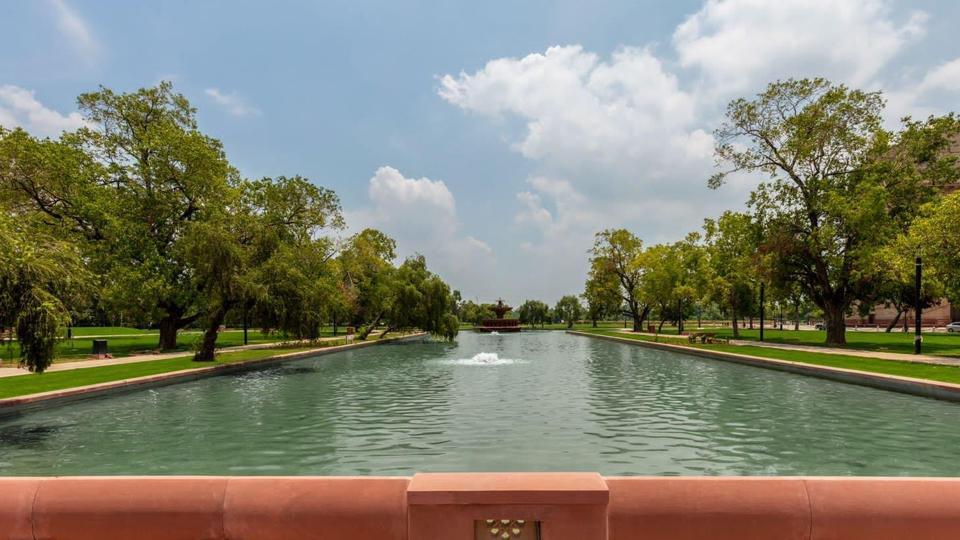
While 69 trees in total had to be transplanted for the project, 47 of these were transplanted within the CVA, with 22 being transplanted outside.
However, the plan includes the addition of 191 new trees, out of which 140 have already been planted in the avenue, Central Public Works Department’s (CPWD) project plan shows.
The original species palette at the Central Vista Avenue (CVA) only consisted of jamuns, pine species and topiaries of Bistendu and Moulsari.
Also Read: DMRC to provide bus services from tomorrow for those visiting Central Vista
According to a 1930 image plan, the original tree landscape consisted of only 454 trees in all and the trees were planted in an array of crosses on both sides of the Rajpath crossing, creating a serrated pattern along CVA.
CPWD said comprehensive planting strategy has been developed, based on the original formal planting pattern and 140 new trees have already been planted.
“The idea is to replicate the same pattern as the original, but with more trees. A total of 191 new trees will also be added to the Central Vista,” said a CPWD official.
During the project, all existing trees had to be surveyed, with each tree subsequently being geo-tagged, mapped and catalogued as per species, size, health and age.
Earlier, CVA had 3,890 trees in total, with the addition of new trees, already taking the total to 4,008, officials added.
The total green area in Central Vista Avenue is around 3,60,809sqms, out of which around 1,56,823sqms have Nilgiri grass. Around 3,000sqms will meanwhile consist of flower beds on the canal edge, officials said.
“A total of 101acres of lawns have been replanted with different species of grass, appropriate to the location,” the official added.
Proper slopes and drain channels have been integrated to minimise any damage that may be caused by stagnation of water, the plan revealed.
Following apprehensions that the original jamun trees would be felled or transplanted for the project, union minister Hardeep Singh Puri had clarified last year that no jamun trees will be uprooted.
The union minister had also said only a few trees will be transplanted as part of the project, with that the overall green cover that increases under the plan.