
 E-Paper



SC panel on Aravallis seeks stakeholder inputs for final report on definition of range
New DelhiThe Supreme Court-appointed High-Powered Committee (HPC) on the Aravallis on Tuesday sought suggestions, representations and inputs from stakeholders within 21 days, following which it will submit a detailed report on the Aravalli hills and ranges, covering all its issues, including its definition, by August 31

 Prefer HTon Google


New Delhi
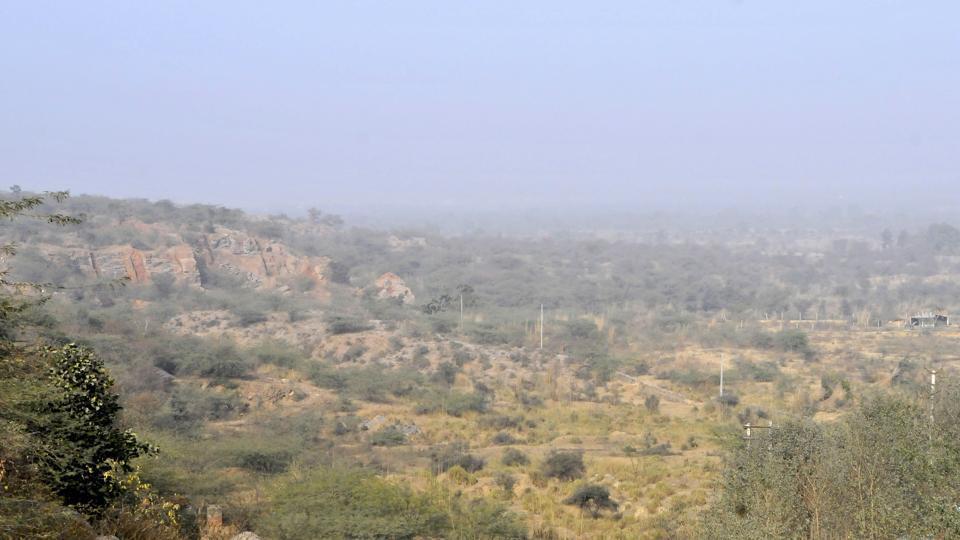
The Supreme Court-appointed High-Powered Committee (HPC) on the Aravallis on Tuesday sought suggestions, representations and inputs from stakeholders within 21 days, following which it will submit a detailed report on the Aravalli hills and ranges, covering all its issues, including its definition, by August 31.
The environment ministry issued a statement to this effect, which read, “From the states of NCT of Delhi, Rajasthan, Haryana, Gujarat or any other such State(s); environmentalists; conservationists; not for profit organisations; mining lease holders; project proponents; villagers; farmers; mine workers and local communities, whose livelihoods and wellbeing may be intrinsically linked to the ecosystem and biodiversity of the region; and interested persons/entities who may be affected by, or have a legitimate interest in the issues under consideration.”
It called for the submissions to be supported by documentary evidence or other verifiable material, and be communicated through email or through Google Forms.
Neelam Ahluwalia, activist and founder of the group People for Aravallis, said while seeking inputs was a good start, it is important for the committee to make ground visits to assess the damage across the Aravalli landscape and meet residents of mining-affected districts.
“The rural people are not email or technology savvy to send written representations. They want to be meaningfully consulted in-person, before any decision is taken that has far reaching consequences on their lives, way of existence, culture, health and traditional livelihoods,” she said, while also calling for the date of submission of the committee’s report to be extended for a comprehensive assessment.
In November 2025, the Supreme Court adopted a uniform recommendation from the environment ministry, proposed by an eight-member committee headed by the MoEFCC’s secretary, to define an Aravalli hill as any landform rising to at least 100 metres above the surrounding local terrain, and grouping hills within 500 metres of each other as a “range”. This led to widespread pushback from activists and experts, who said this would omit 90% of the Aravalli hills and leave them vulnerable to mining and construction.
On December 29, 2025, the top court stayed its previous November 20 judgment, keeping the recommendations and directions in abeyance pending final resolution, while also prohibiting mining.
On May 25, it appointed a new five-member committee, headed by the director general of the Indian Council of Forestry Research and Education (ICFRE), Kanchan Devi.
On June 20, HT reported that activists and environmentalists wrote to the Chief Justice of India calling for a fresh and Independent new high-level committee, contending that the latest committee appointed on May 25, by the position of its members, was weaker than the previous committee and also had multiple members, directly or indirectly, reporting to the Union environment ministry, making it biased.


Stay updated with all top Cities including, Bengaluru, Delhi, Mumbai and more across India. Stay informed on the latest happenings in World News along with Delhi Election 2025 and Delhi Election Result 2025 Live, New Delhi Election Result Live, Kalkaji Election Result Live at Hindustan Times.


