
 E-Paper



Police chalk out safety plan after snatchers repeatedly target foreign nationals arriving for treatment
At least 1,200 foreign patients visits Gurugram hospitals every month for treatment mostly from Iraq, Iran, Yemen, and Sudan, said police and their numbers are dwindling of late owing to security concerns said hospital sources

 Prefer HTon Google


The Gurugram police on Tuesday mapped the most unsafe stretches in the city from where foreign nationals were frequently targeted by unidentified suspects posing as policemen who allegedly snatched their cash and valuables on the pretext of a “checking drive”.
Police said unidentified suspects posed a policemen and stopped the foreigners near hospitals in Sector 38 and Sector 51 on the pretext of checking their passports and cash.They then snatched the cash and valuables and fled the spot.
Eight such cases have been reported between August and January this year, police said, adding that the victims were mostly from countries in the Middle East. They also admitted that they have not been able to arrest even a single suspect in any one of these cases.
Last November, 63-year-old Iraqi man visiting Gurugram for a cardiac surgery died while allegedly chasing the con men who drove away with $15,000 ( ₹12.4 lakh) that he had set aside for his treatment.
On Sunday, two brothers from Kenya were allegedly robbed of US $1,800 from Sector 52 by three men posing as policemen . The foreign nationals have been staying in the city since January 1 for medical treatment, police said.
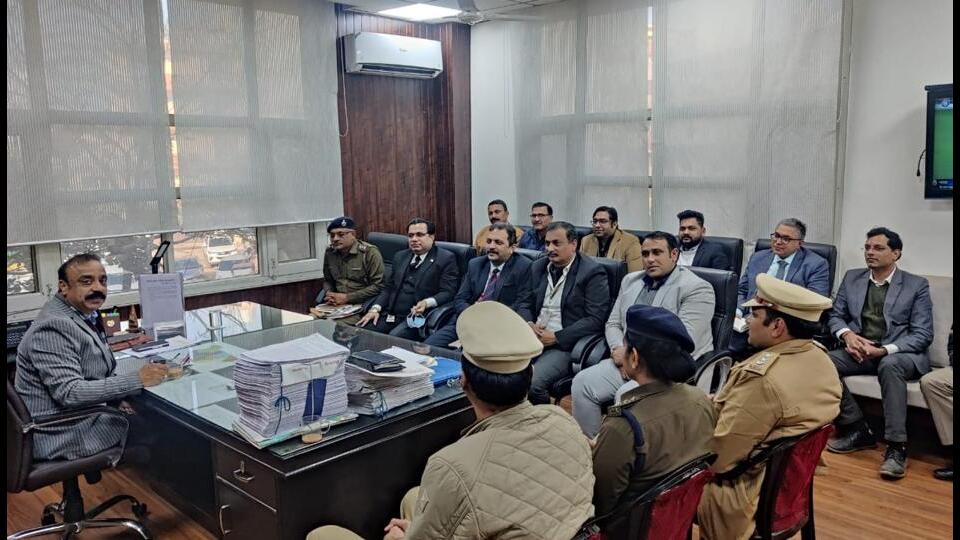
On Tuesday, police held a meeting with the senior security heads of private hospitals after the latter claimed that many patients from foreign countries are not willing to come to Gurugram for treatment because of the snatching menace.
At least 1,200 foreign patients visits Gurugram hospitals every month for treatment mostly from Iraq, Iran, Yemen, and Sudan, said police and their numbers are dwindling of late owing to security concerns said hospital sources.
During the meeting on Tuesday, police told hospitals to start awareness campaigns to sensitise foreign patients about such crimes and the precautions to be taken.
Vijender Vij, deputy commissioner of police (east), said, “We have identified the stretches from where these incidents were reported. We are tallying cases reported between 2018 and 2022 and the suspects who were arrested for similar crimes. We suspect that a single gang is behind all these incidents,” he said.
Police also asked the security heads to prepare a list of cab drivers entering the hospital premises so that they can be questioned if needed.
Vij said hospitals have also been directed to inform their patients that police do not stop and check passports on the road. “Patients must raise the alarm if they find themselves in such a situation so that suspects can be caught red-handed,” he said.
Vij said the hospitals have been asked to display hoardings and distribute pamphlets to all patients asking them to remain cautious. “We have asked hospitals to train their help desk staff, interpreters , cab drivers, and other assisting staff who interact with foreign patients. Hoardings will be displayed outside the hospitals, guest houses and hotels warning foreigners of the possibility of such crimes within a week,” he said.
Police have also formed a special investigation team led by an assistant commissioner of police, which is coordinating with crime teams to identify the suspects involved in these cases.
The station house officers of Sadar, Sector 50 and Sector 53 have been asked to increase patrolling in their areas and to deploy policemen in plainclothes. “Also, hospitals have been asked to inform the embassy and patients beforehand not to carry cash on their person and to pay hospital bills through cashless transactions. Lockers will be provided by the hospital for foreigners to store their cash and belongings,” said Sanjeev Balhara, assistant commissioner of police (Sadar).
Six police teams visited at least 50 guest houses and five hotels and have briefed the teams regarding the precautionary measures, said police.
Senior officials who attended the meeting said the CCTV footage of the incidents were widely shared in their countries by the victims due to which people are now afraid of visiting Gurugram. “It took several years of hard work to build this network and these incidents are giving the city a bad name. The frightened victims often stop their treatment midway and leave for their countries,” said a senior security head of a private hospital, asking not to be named.
Jai Pahwa, a private firm executive who assists foreign nationals with the medical treatment, said he had helped a few victims get FIRs registered. “Earlier, we used to receive at least five queries a day and we used to assist over 200 patients a month, but now that has reduced to about 20 a month. The family members and patients are fearful to go to eateries or medical shops outside the hospitals. All agencies connected to hospitals have borne the burnt of this menace,” he said.
.


