
 E-Paper



Protest by Ahir community jams Delhi-Gurgaon expressway
Commuters were stuck on the Gurgaon-Delhi Expressway and the traffic spilled over to other roads on Wednesday as police diverted the routes due to a march that was to be taken out by members of the Ahir community from the Kherki Daula toll plaza to Hero Honda Chowk--to press their demand for a separate regiment in the Indian Army--but was cancelled on account of the humongous turnout of protestors

 Prefer HTon Google


Commuters were stuck on the Gurgaon-Delhi Expressway and the traffic spilled over to other roads on Wednesday as police diverted the routes due to a march that was to be taken out by members of the Ahir community from the Kherki Daula toll plaza to Hero Honda Chowk--to press their demand for a separate regiment in the Indian Army--but was cancelled on account of the humongous turnout of protestors.
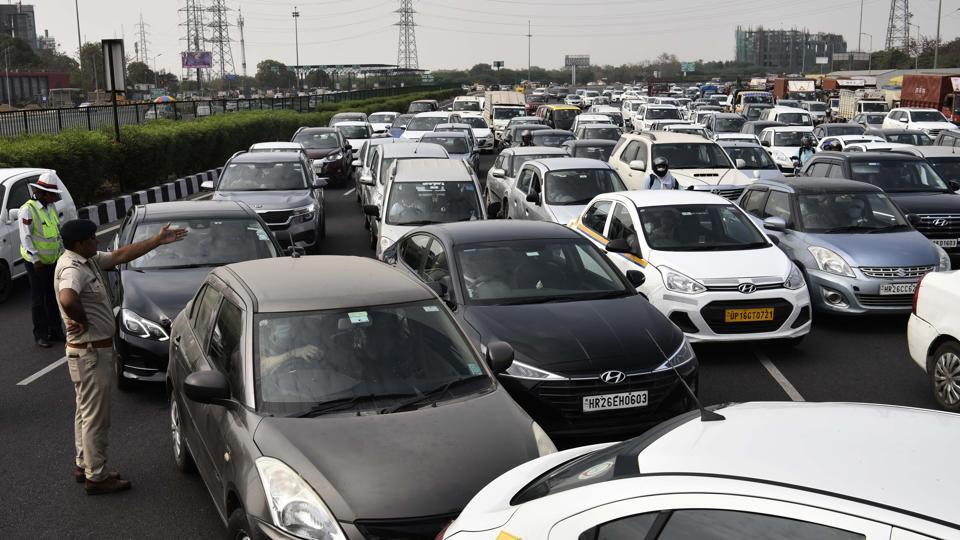
Hundreds of people from across Haryana, Uttar Pradesh, Bihar, Gujarat, Rajasthan and Madhya Pradesh, led by the Sanyunkt Ahir regiment Morcha, gathered at the Kherki Daula toll plaza on Wednesday, causing a traffic jam that extended for up to 6km till Hero Honda Chowk. Members of the Ahir community said more than 50,000 people, including opposition leaders, joined the protest on Wednesday but the march was cancelled due to the unexpected turnout of protestors.
Commuters travelling from Rajasthan and Manesar towards Delhi between 11.30am and 5pm were the most affected as they had to wait for nearly an hour to cross the stretch or take a detour. The service lanes were also blocked and the protestors did not allow vehicles to cross the toll plaza.
Heavy vehicles coming from Bilaspur, which connected with the highway at Hero Honda Chowk, were diverted towards Pataudi. Other vehicles going towards the toll plaza were diverted towards the Southern Peripheral Road connecting Vatika Chowk, said police.
The stretch between Rajeev Chowk and Hero Honda Chowk, and from Sohna Road to Golf Course Extension Road were the worst affected due to the diversions. Commuters travelling on these stretches too were stuck for over an hour.
Shruti Mittal, a resident of South City-2 and a daily commuter to Manesar, said she had a smooth ride in the morning but it took her two hours to reach home in the afternoon due to the traffic congestion. “The protestors were taking rounds on motorbikes; they parked their vehicles on the expressway and blocked the stretch. I took the main carriageway as there was no traffic in the morning but had to take U-turn before the toll towards the Southern Peripheral Road and got stuck at several points,” she said.
Mohit Singh, a senior manager with an educational institute, said he was stuck for more than an hour on Sohna Road. “First, I got stuck at Hero Honda Chowk for more than 40 minutes. Then, I took a detour towards Sohna Road but there was high traffic there too. All the pressure was on Sohna Road; the ongoing construction of the elevated road compounded the woes of the commuters,” said Singh.
Residents on Sohna Road said cab drivers refused to take rides and cancelled their trips at least six to seven times. Crossing a 1km stretch took more than 40 minutes.
Sangeeta Singh, a resident of Sohna Road, said she had to visit her office on the other side of the road but no cab was ready to come due to the traffic congestion. “I had to request one of my neighbours, who dropped me after six cab drivers refused to accept my ride. It took more than an hour to reach my office, which is barely 2km away from my home,” she said.
Gurugram traffic police blamed the commuters for the traffic congestion in the expressway stating that they had already issued an advisory in advance and posted about the road stretches to avoid on all social media platforms. “We informed people about the route diversions in advance; still they took the expressway and were stuck for hours. We deployed 1,100 personnel at 20 locations to monitor traffic,” said Ravinder Singh Tomar, deputy commissioner of police (traffic).
Tomar said the traffic was brought under control by afternoon as they diverted vehicles to alternative routes to ensure smooth flow of traffic. “Police teams were deployed at all stretches and ensured no heavy vehicle entered the city. Teams kept a track on traffic movement starting from Bilaspur. Our prime focus was on Kherki Daula as thousands of people use this stretch and if any congestion is reported here, it reflects in the entire expressway,” he said.
Leaders of the Ahir community said their demand for a regiment exclusively for Yadavs is long pending and should be met as other castes too have regiments named after them. The protestors have been camping at Kherki Daula toll plaza for close to two months to press their demand.
Satish Yadav, president of Yadav Maha Sabha Haryana, said they have planned another protest after two months and are yet to decide on the date. “We have to continue to build pressure on the government else they will not pay heed to our demand. Though we had to cancel our march, we will plan another protest after two months and organise a march with at least 100,000 members. We will continue with our sit-in agitation at Kherki Daula toll plaza but will not disrupt traffic movement,” he said.
Rajya Sabha MP Deepender Singh Hooda, who reached the protest site on Wednesday, said he will move a private member’s bill in the Rajya Sabha seeking formation of an Ahir regiment in the Indian Army. “Farmers’ agitation was successful because it was democratic, constitutional, peaceful and apolitical. For any agitation to be successful, it is important that these values are imbibed,” said Hooda.
The traffic situation was back to normal by 6pm after the protestors from other states left the site, said police.
Two injured in accident on expressway
Two members of the Ahir community were grievously injured after a speeding car hit the motorcycle on which they were sitting in front of the Sanyukt Ahir Regiment Morcha’s picket on the Gurgaon Delhi expressway on Wednesday.
The two men were rushed to a hospital for treatment. Police have recovered a knife from one of the injured men.
No case has been registered and neither have any arrests been made so far. “We are trying to trace the I-10 car, which rammed into the motorcycle and investigation is underway,” said police.


