
 E-Paper


Lko-Knp E-way probe: CRRI roped in as IIT inquiry into defects drags on
Fresh samples being collected for comparative testing after IIT Kharagpur sought additional material

 Prefer HTon Google


Nearly three months after the newly inaugurated Lucknow-Kanpur Expressway developed serious potholes, the technical investigation into the premature deterioration has been expanded, with the Central Road Research Institute (CRRI) also being roped in to examine fresh samples.
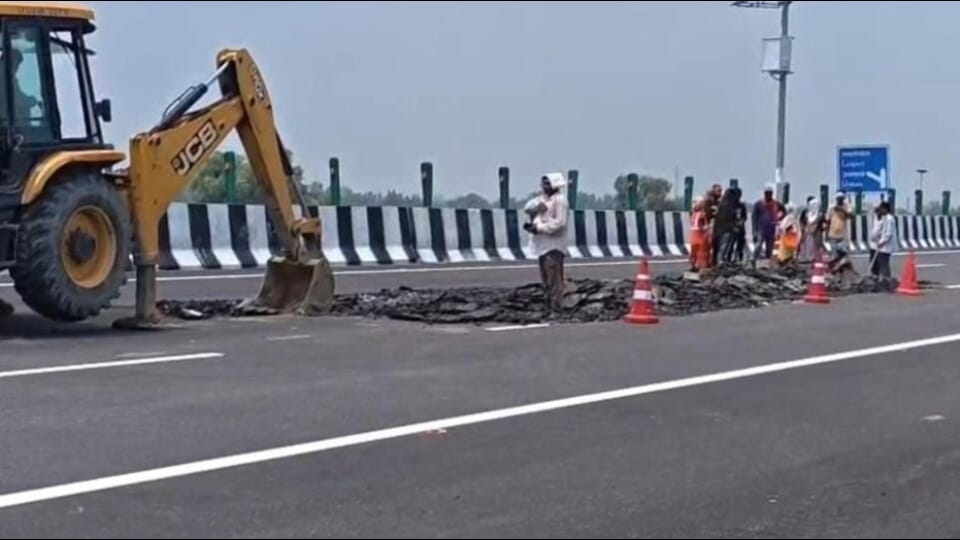
The move comes even as the report of IIT Kharagpur, which was entrusted with identifying the causes of the damage in August, continues to be awaited, leaving critical questions over construction quality and accountability unanswered.
The involvement of a second technical institute indicates that the investigation requires further examination, particularly as the original samples were collected during the monsoon. Fresh samples are now being taken to compare the condition of the road and its underlying layers with the earlier findings.
Confirming the development, NHAI Lucknow regional officer Abdul Basit said the IIT Kharagpur team had sought additional samples for comparative analysis.
“The IIT Kharagpur team collected samples during the rainy season. It has now sought fresh road samples to compare with the earlier ones. The CRRI has also been called in to collect additional samples, examine all technical aspects and recommend measures for the future. This has resulted in some delay, but both institutes are expected to submit their reports soon. The findings will be made public, as there is nothing to hide,” he said.
The delay, however, has prolonged uncertainty over why a major highway project developed defects within days of its inauguration on July 13, 2026. The investigation is expected to establish whether the damage was caused by deficiencies in the pavement design, substandard materials, inadequate soil compaction, poor workmanship, drainage problems or shortcomings in quality supervision.
The expanded investigation raises several important questions: Were the prescribed construction specifications followed? Did the contractor and independent engineering consultant adequately monitor the quality of work? Were potential weaknesses detected before the expressway was opened to traffic? And are the repairs undertaken so far sufficient to ensure long-term durability, or will some stretches require reconstruction?
Meanwhile, NHAI initiated action against the concessionaire, independent engineering consultant and officials associated with the project. Toll collection has also been suspended until the affected stretches are rectified, with the revenue loss to be recovered from the concessionaire.
The findings of IIT Kharagpur and CRRI will now be crucial not merely for identifying the engineering failures but also for establishing responsibility and determining whether the corrective work can prevent a recurrence.


