
 E-Paper



Crying foul: HC orders, but where’s the action?
Even as HC warns that “mere filing of affidavits won’t suffice”, Mumbai’s pollution monitors hit new highs

 Prefer HTon Google


MUMBAI: As winter approaches, Mumbai’s air quality starts dipping, but the city’s pollution troubles extend well beyond the winter months. Only last week, the Bombay High Court referred to the pall of haze over the city as an “emergency situation”, asking state authorities what they were doing to tackle it. Yet, despite repeated court directions over the years to rein in pollution of various kinds, there is little change on ground.
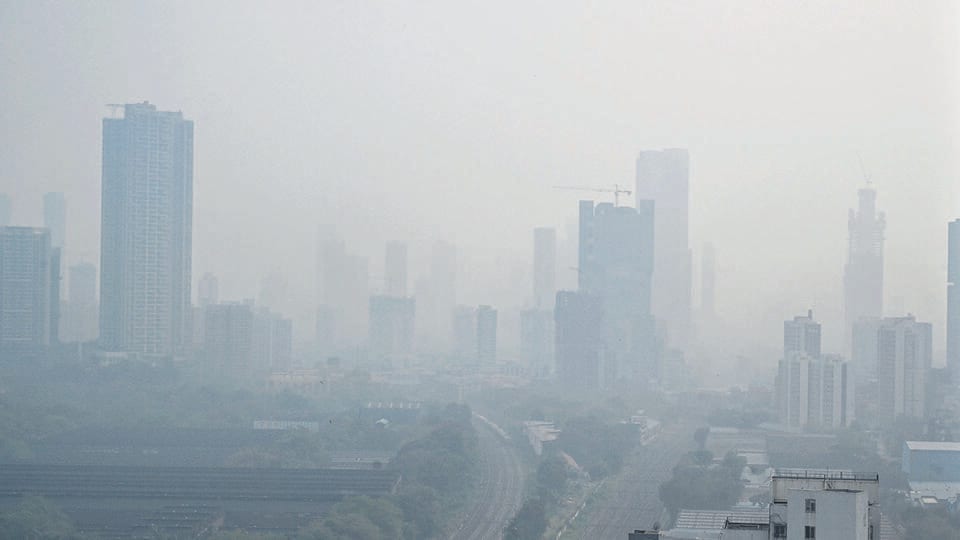
Air pollution: Legal directives but AQI still high
In 2023, the high court acted on its own to address the concerns over the city’s poor air quality index (AQI) following media reports about Mumbai’s ranking as the seventh most polluted city in the world by Swiss air monitor IQAir. In December 1999, while hearing a petition by the Smoke Affected Residents’ Forum, the court issued instructions on remedial measures to reduce vehicular emissions, including examining cleaner fuels. A quarter century later, the challenge has only increased, with traffic emissions to construction dust, industrial pollution, and burning of firecrackers.
The BMC had told the court that construction sites contributed 9% to the city’s pollution. About 30% is contributed by resuspension of road dust due to vehicular movement, 20% due to industrial emissions or fossil-fuel combustion, and 14% due to vehicles.
Construction sites have been a matter of concern due to the copious amount of dust they produce. Last year, the court directed the BMC to implement the Mumbai Air Pollution Mitigation Plan, which included enclosing construction sites with high metal sheets, regular water sprinkling, and covering construction material. The air pollution monitors we see at construction sites today were installed on the court’s directions in January 2025.
However, as reported by HT on October 27, the readings from these monitors – currently, there are 3,166 such monitors at 3,200 construction sites in the city – are at complete variance with the findings of the Central Pollution Control Board’s SAMEER app.
Air pollution took another form before the high court in a PIL filed by NGO Vanashakti in 2013, where residents of Kannamwar Nagar in Vikhroli highlighted a rank odour emanating from the Kanjurmarg garbage dumping ground. The court has issued several directions to curb the odour, which are yet to be complied with.
Advocate Abhijeet P Rane, representing the residents, said the authorities act only after judicial intervention. “The authorities deploy machinery to carry out precautionary measures only when the court passes orders against them, but that is not enough. The CPCB also issues vague notifications that do not clearly specify which pollutants need to be detected or monitored,” he said.
Rapping the authorities’ for their laxity in reining in air pollution, the court in January 2026 said, “Mere filing of affidavits won’t suffice. They might have taken serious steps, but results are not reflected,” the court said.
In the 2023 suo motu PIL, the BMC had told the court in January this year that it had intensified enforcement, issuing 409 show-cause notices and stop-work notices to non-compliant construction sites between December 29, 2025, and January 13, 2026.
Avinash Kate, the BMC’s chief engineer (environment and climate change) said the civic body had operationalised an action plan, which necessitates immediate action against repetitive, non-complying sites, inspections and submission of reports on the daily action taken, including intensification of road cleaning and washing.
Noise pollution: Vested interests undermining the law
On October 15, this year, the high court ordered a year-round ban on bursting firecrackers in public places, saying they contribute to “toxic air pollution”. It directed the authorities to enforce decibel limits during religious processions, to take action against violators, and spread awareness on noise and air pollution.
After the court noted on October 21 that the BMC and MPCB had failed to issue public notices, they appeared in newspapers a day later.
“The wheels of the official machinery appear to be turning too slowly to comply even with the basic preliminary compliances as ordered,” the court observed recently. It specifically mentioned the police’s failure to enforce restrictions on noise pollution, particularly during religious processions.
Rather, Sumaira Abdulali’s Awaaz Foundation told the court that on the day of idol immersion after Navratri celebrations on October 20, they recorded noise pollution levels ranging from 82 to 110.8 decibels at four locations. Permissible levels in residential areas are 55dB in the day and 45dB at night.
“Many officers are aware of the ill effects of pollution and environmental destruction, but enforcement is sporadic and depends on several factors, including the political and commercial interests of those violating court orders. More people need to learn how to complain effectively and to have their voices heard,” said. Abdulali told HT
Light pollution: Neon lights to floating billboards
Despite a 1998 direction passed by the Bombay High Court requiring neon lights to be switched off by 11 pm, a division bench of Chief Justice Mahesh Chandra Tripathi and Justice Advait Sethna recently reiterated strict compliance amid allegations that authorities have failed to curb light pollution caused by high-intensity floodlights and illuminated billboards across Mumbai and Thane.
Earlier, in 2018, the city collector had issued an order directing all gymkhanas along Marine Drive to switch off high-intensity lights or floodlights after 10 pm. However, residents claim the orders are blatantly violated.
Now, the Maharashtra Maritime Board is on the verge of allowing intensely illuminated floating billboards along Mumbai’s coast, potentially harming coastal ecosystems and contributing to light pollution in parts of the city.
Water pollution: POP idols
The state has shown little resolve in directing Ganesha idol makers to switch from plaster of paris (POP) to clay and other eco-friendly materials, to reduce the impact of immersing idols in the sea and other water bodies.
In July 2025, the Bombay High Court ordered that idols taller than 6 feet can be immersed in natural water bodies; the rest must be immersed in artificial tanks or ponds due to their environmental impact on water bodies.
However, on August 4, 2026, the Maharashtra government sought three more years to phase out PoP idols. When the court asked why the state had not acted sooner despite the issue pending for years, advocate-general Milind Sathe said the state “could not impose a complete ban this year as PoP idols had already been manufactured”.
HT contacted MPCB chairperson Siddhesh Kadam, PRO Sanjay Bhuskute, joint director (air pollution control) Satish Padwal, advocate Mihir Govilkar, who represents the MPCB in the Kanjurmarg dumping ground matter, and MPCB legal officer Netra Chaphekar for their comments. They either did not respond or declined to comment.
Stay updated with all the Breaking News and Latest News from Mumbai. Click here for comprehensive coverage of top Cities including Bengaluru, Delhi, Hyderabad, and more across India along with Stay informed on the latest happenings in World News.


