
 E-Paper



Wettest August day since 2020: Mumbai records 200mm rain overnight, 2 dead in Vikhroli landslide
Between 1am and 4pm on Saturday, Marol recorded 207 mm, Santacruz 202 mm, and Vikhroli 196 mm. In the island city, Sion’s Pratiksha Nagar logged 134 mm rainfall


MUMBAI: The city woke on Saturday to the aftermath of one of its wettest nights in recent years, as torrential rain battered Mumbai while most were asleep.
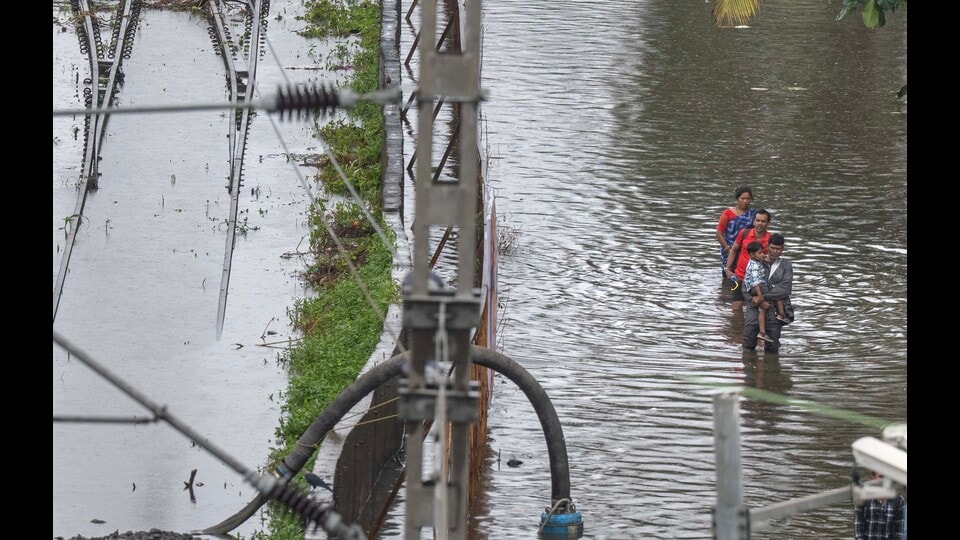
Between late Friday night and early Saturday morning, several neighbourhoods recorded over 200 mm of rainfall, prompting the India Meteorological Department (IMD) to upgrade its warning from orange (heavy to very heavy rain) to red (extremely heavy rain, likely to cause disruption and damage).
In the 24 hours between 8:30am on Friday and Saturday, Santacruz had logged 244.7 mm—the city’s heaviest single-day rainfall recorded by the observatory since 2020. In contrast, Colaba recorded 83.2 mm.
But the downpour, as is often the case in Mumbai, brought tragedy with it. Around 2.30AM, a landslide at Parksite in Vikhroli claimed the lives of two members of a family and left two others injured.
Rainfall intensified after 11PM on Friday, peaking between 1AM and 4AM. In those three hours, the eastern and western suburbs bore the brunt: Marol recorded 207 mm, Santacruz 202 mm, and Vikhroli 196 mm. In the island city, Sion’s Pratiksha Nagar logged 134 mm.
“The warning was updated due to the strengthening of synoptic conditions earlier than expected,” said Shubhangi Bhute, head of the Regional Meteorological Centre (RMC), Mumbai. “A low-pressure system created an east-west trough along the Arabian Sea, which triggered heavy rainfall across the Konkan. The entire west coast can expect more intense showers in the coming days.”
Streets under water
By morning, several areas were inundated. In Chunabhatti, a scooter was found overturned and submerged, while a rickshaw’s front end dipped into the floodwaters. At Sakinaka, residents waded through waist-deep water; Jogeshwari West resembled a pool; and Hindmata in Dadar once again turned into a lake, forcing the Brihanmumbai Municipal Corporation (BMC) to deploy dewatering pumps.
Waterlogging was also reported in Bandra West, Chembur, Juhu, Vile Parle, Ghatkopar and on the Santacruz–Chembur Link Road. Predictably, the Andheri subway and Aarey underpass were shut due to flooding. In Navi Mumbai, streets too were submerged in knee-deep water.
Transport hit across city
The deluge disrupted road and rail traffic. Central and Harbour Line train services slowed down, while waterlogged roads threw BEST buses off schedule. At Mumbai airport, at least 15 flights were forced into go-arounds before landing safely, including an IndiGo Airbus A321 that had a tail strike on touchdown. Two flights were diverted to Nagpur and Ahmedabad before eventually returning.
Fortunately, as most of the downpour occurred overnight, floodwaters gradually receded through the morning. Janmashtami celebrations went ahead largely unhindered, though the BMC kept pumping stations and disaster management teams on high alert.
Municipal commissioner Bhushan Gagrani said he was monitoring the situation from the control room. By noon, rainfall activity had eased, prompting the IMD to downgrade Sunday’s warning back to orange.
Between 8AM and 6PM on Saturday, the island city recorded 54.59 mm of rain, the western suburbs 39.02 mm, and the eastern suburbs 19.37 mm.
According to the IMD, the city remains under an orange alert till Tuesday, before a downgrade to yellow (moderate rainfall) on Wednesday. By 6:45PM, the Tulsi Lake in the SGNP started overflowing, having reached its maximum capacity of 8,046 million litres. The dams that supply water to Mumbai are currently at 90.16% capacity.

Stay updated with all the Breaking News and Latest News from Mumbai. Click here for comprehensive coverage of top Cities including Bengaluru, Delhi, Hyderabad, and more across India along with Stay informed on the latest happenings in World News.


