
 E-Paper



Pune Metro double-decker flyover designs finalised for Karve Statue, Ambedkar Chowk
Designs for two double-decker flyovers in Pune have been finalized, aiding the Metro extension. Cost estimated at ₹404 crore; PMC must confirm funding.

 Prefer HTon Google


Designs for two proposed double-decker flyovers at Karve Statue and Dr Babasaheb Ambedkar Chowk in Warje have been finalised, clearing a key hurdle for the proposed extension of the Pune Metro from Nal Stop to Manikbaug.
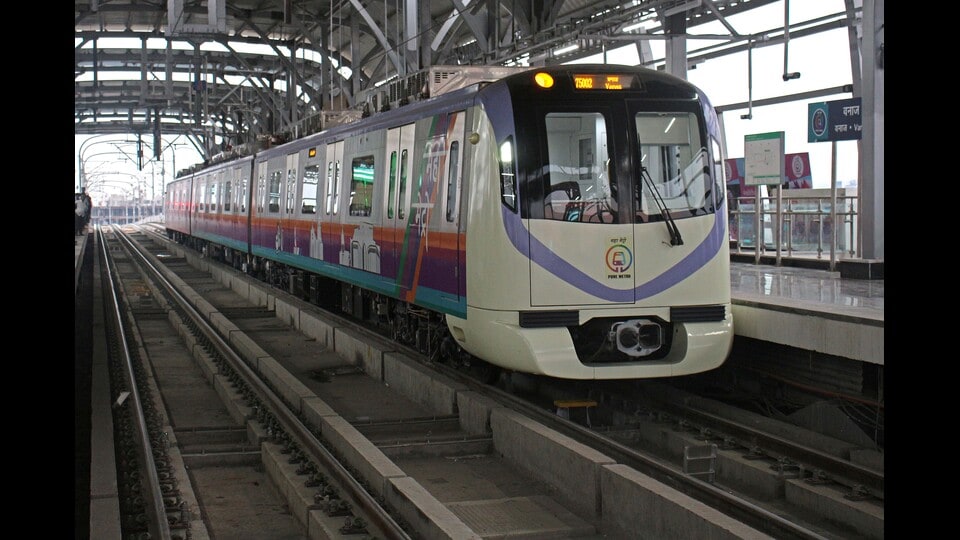
MahaMetro has been working on the designs since last year, but the process was delayed after the Pune Municipal Corporation (PMC) sought several changes. The delay has affected the Metro extension despite the project receiving approvals from the Centre and state government.
The two structures will have road flyovers at the lower level and the Metro viaduct above them. The combined preliminary cost of the road flyovers and associated Metro viaduct works is estimated at ₹404 crore.
MahaMetro officials said the estimate covers both road flyovers and the associated viaducts and is not the cost of the road structures alone. The estimate is based on 2021 construction rates, with escalation factored in up to 2026. The final cost could vary by up to 10%, depending on the rates received through the tender process.
The two structures are part of the proposed Metro alignment, making their design finalisation significant for the extension.
Karve Statue flyover
The proposed flyover at Karve Statue will be around 1.6 km long, beginning near the Hanuman temple at Karishma Chowk on Karve Road and extending to the Hotel Mirch Masala area near Dahanukar Colony.
The preliminary cost is estimated at ₹327 crore. Road widening will be required at some locations to facilitate construction, with the Metro viaduct incorporated into the double-decker structure.
Ambedkar Chowk flyover
The proposed flyover at Dr Babasaheb Ambedkar Chowk in Warje will be around 500 metres long. It will begin near D-Mart Chowk and end around 50 metres before Canal Road.
The preliminary cost is estimated at ₹77 crore. Together, the two structures account for the estimated ₹404 crore cost, including the associated Metro viaduct works.
MahaMetro seeks PMC commitment on additional cost
Atul Gadgil, Director (Works), MahaMetro, said the civic body had proposed the two double-decker flyovers and MahaMetro had asked the PMC to bear the additional construction cost.
“We have received the corporation’s letter and have responded, asking it to bear the additional cost of construction since the flyovers will ultimately belong to the corporation,” Gadgil said.
He said the two proposed stretches are from Karishma Chowk to Vandevi Temple and from Ambedkar Chowk, with both planned as double-decker structures.
MahaMetro is now awaiting a formal financial commitment from the PMC towards the project expenditure.
“We are waiting for a formal financial commitment from the corporation regarding the expenditure. So far they have instructed us to execute the work but have not confirmed the cost-sharing arrangement,” Gadgil said.
With the designs finalised, MahaMetro is expected to move to the next stages, including approvals and tendering. The extension is proposed to take the Metro network beyond Nal Stop towards Manikbaug while integrating the road flyovers with the Metro infrastructure.
The proposed double-decker flyover on Karve Road is likely to receive official approval within a week, said Dinkar Gojare, chief superintendent of the Pune Municipal Corporation’s (PMC) project department. The civic body will bear the cost of the project but will scrutinise the design and cost estimates to prevent cost overruns, he said.
Gojare said PMC has already shared its baseline plan with Maha Metro for the proposed infrastructure.
“Even if Maha Metro prepares the design, PMC will not accept the cost estimates without scrutiny. As was done for the Nal Stop project, the design will be verified by a third party mutually agreed upon by both agencies. We will cross-check every design proposal before proceeding,” he said.
Gojare added that Maha Metro’s estimates are generally higher than PMC’s standard project estimates. “We will not pay blindly based on the estimates. Every component of the design and cost will be examined before the project is approved with a third-party inspection.” he said.


