


 Live Score
 Cricket Teams
 Cricket Players
‘All-rounders are going out of the game’: Ajinkya Rahane’s concerns about IPL's Impact Player rule. Why captains want it removed?
Ajinkya Rahane joins IPL captains in opposing the Impact Player rule as data reveals a sharp fall in all-rounders' bowling overs despite record-breaking scores.

 Prefer HTon Google


In 2023, the Indian Premier League introduced a tactical dimension in the T20 format: the Impact Player rule. The idea was to introduce tactical flexibility to an already interesting format and make it even more appealing to viewers. The rule has made IPL more entertaining. However, many former players have expressed reservations about its implications and explained why they want it removed.
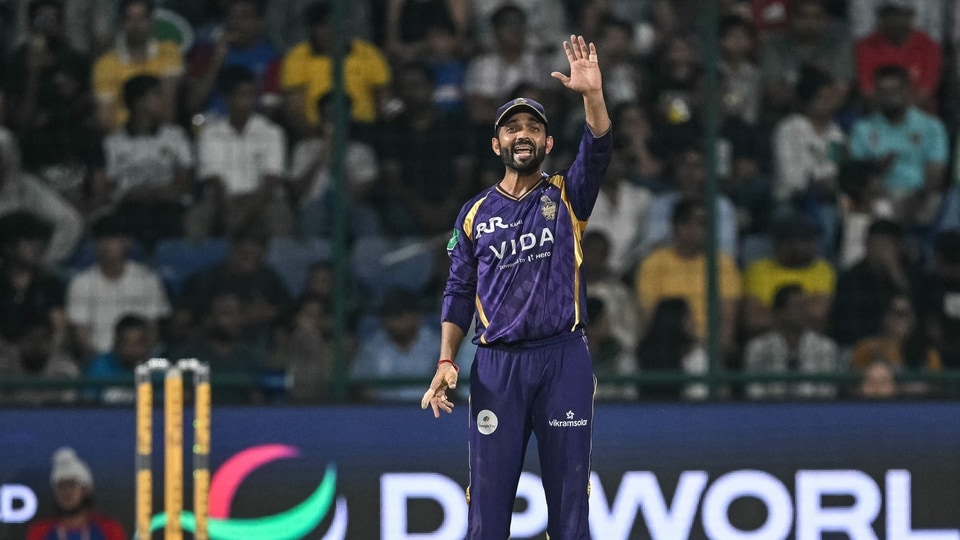
Ajinkya Rahane has now spoken about the need to remove the Impact Player rule from IPL. In an interaction with Cricbuzz, Rahane, who captained Kolkata Knight Riders in the last two seasons and has since announced his retirement, said that most captains had opposed it before last year’s captains’ meeting.
“All-rounders are going out of the game, especially in IPL,” he said. He argued that the rule discourages captains from turning to batters who can also be effective with the ball. Rahane believes India need players who can contribute in both disciplines, and the substitute player rule is proving counterproductive to their development.
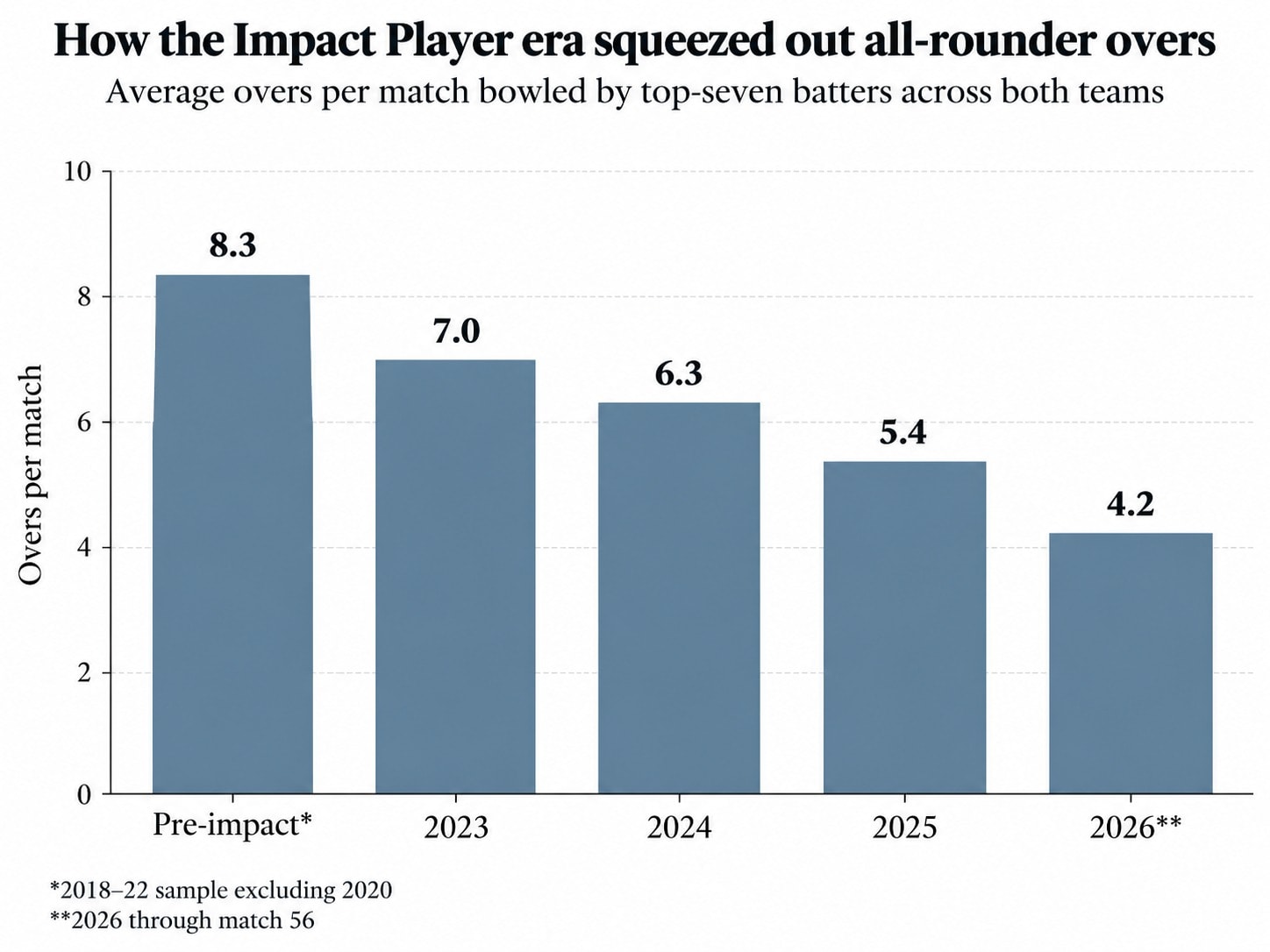
A particular statistic offers an insight into the diminishing role of all-rounders in IPL. In IPL 2022, 21 of every 100 overs bowled were delivered by players batting in the top seven. In the last edition, that number dropped to 10.
The all-rounder overs that have disappeared
A ball-by-ball analysis revealed that before the rule was introduced, players batting in the top seven bowled around 8.3 overs per match across the two teams, in a sample from 2018 to 2022. This number slipped to seven overs in 2023, 6.3 in 2024 and 5.4 in 2025. The analysis was updated through the 56th game of IPL 2026, and it showed that the edition saw only 4.2 overs from players batting in the top seven. The new rule has significantly reduced franchises' dependence on overs from batters who can bowl. In other words, the traditional all-rounder’s role is gradually diminishing because of the Impact Player rule.
Former India captain Rohit Sharma, who led Mumbai Indians to all five of their IPL titles, had warned about this. “Cricket is played by 11 players, not 12 players,” he said on the Club Prairie Fire podcast. Rohit cited the examples of Shivam Dube and Washington Sundar losing bowling opportunities. His concern was as much about India’s future as it was about individual selections.
In IPL 2019, there were 11 players who batted in the top seven and averaged at least two overs per game. That number slipped to four in IPL 2025. Hardik Pandya encapsulated the predicament of all-rounders in this new era: “It becomes difficult if you are not completely a 50-50 allrounder to find your place.” One of India’s premier spin-bowling all-rounders in the current scenario, Axar Patel, was more direct. “Now, team management goes with a particular batter or bowler; they say, ‘Why do we need an allrounder?’” he said.
Interestingly, Washington Sundar, whose USP was his ability to bowl in the Powerplay, bowled just nine overs in 17 matches for Gujarat Titans in IPL 2026. He was increasingly entrusted with a more prominent batting role, sometimes even being promoted to No.4. Naman Dhir offers an even more intriguing example. In his IPL career, Dhir has bowled just 8.4 overs, while on his T20I debut against West Indies this month, he picked up 3/31. The MI allrounder acknowledged that his bowling opportunities have been curtailed. “In IPL, yes, there’s an Impact Player rule, so you see me bowling less.”
Runs gained, balance lost
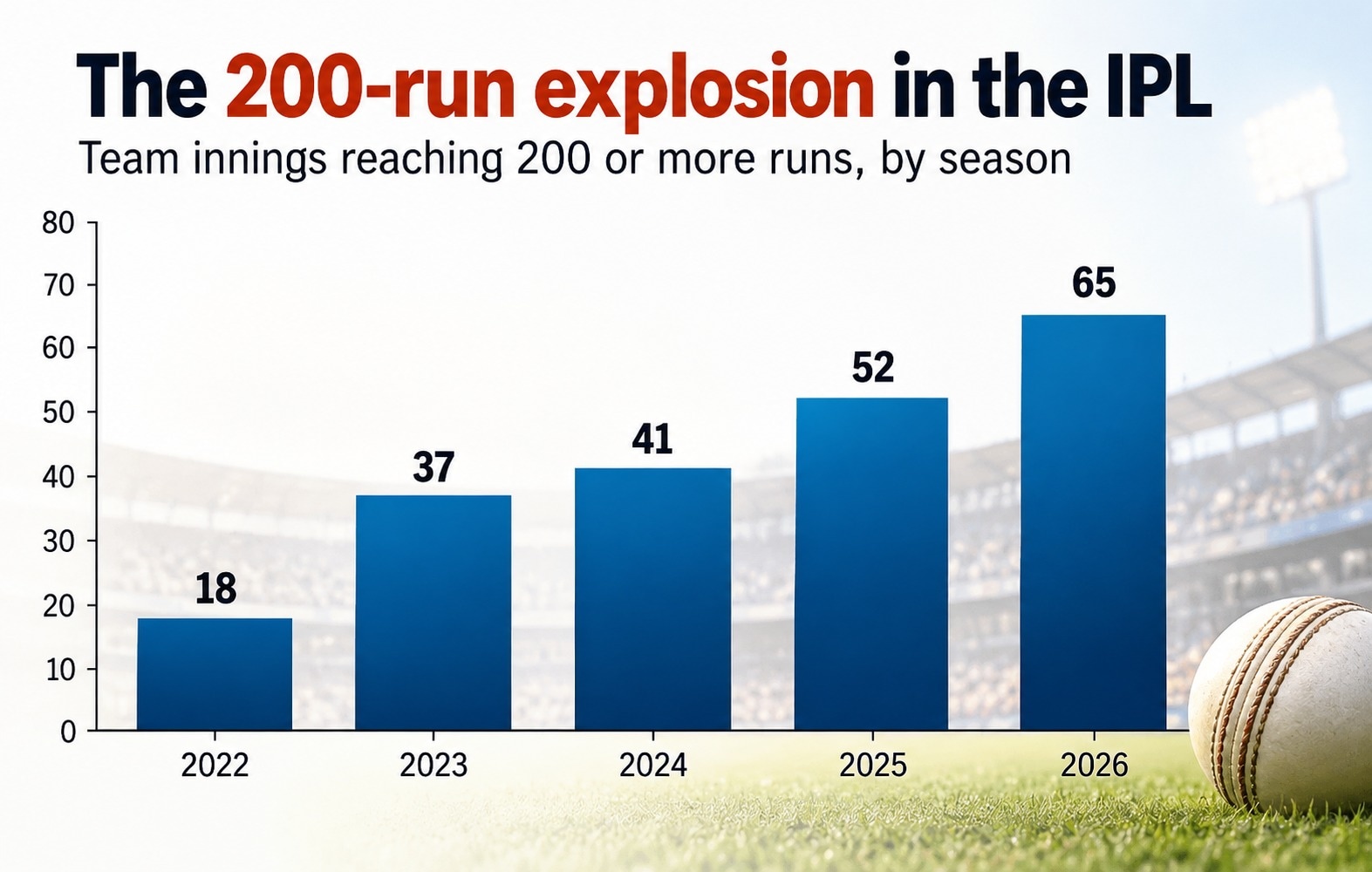
An even bigger concern is the game becoming one-dimensional. The presence of an extra batter in the line-up has emboldened batters to take greater risks, contributing to a surge in scoring rates and making the once-formidable 200-run barrier appear increasingly attainable. The scoring rate in the tournament has risen dramatically from 8.54 runs per over in IPL 2022 to 9.88 in IPL 2026, while the number of 200-plus totals has skyrocketed from 18 to 65.
Virat Kohli spoke of this during IPL 2024. “I know there is a batsman waiting at No.8 as well.” He questioned whether the rule was disrupting the equilibrium of the game, tilting it further towards the batters: “There is a beauty about having an equal balance between bat and ball.”
The Impact Player rule alone can’t be blamed for rising totals and batting aggression. The pitches and the evolution of modern batters' mentality have also played a role. Still, the concerns raised by Rahane and others point to the implications for Indian cricket’s future.


