


 Live Score
 Cricket Teams
 Cricket Players
Gambhir reveals sleepless night over Samson call as Sooryavanshi forced dilemma: ‘Toughest decision of my tenure’
Gautam Gambhir reveals the sleepless dilemma behind dropping Sanju Samson for Vaibhav Sooryavanshi and why the youngster must now wait.

 Prefer HTon Google


Some selection calls are settled by numbers while others follow a coach out of the dressing room, remain with him long after the team meeting has ended, and refuse to disappear when the lights go out. For Gautam Gambhir, one such decision involved Sanju Samson and Vaibhav Sooryavanshi. On one side stood a batter whose performances had earned considerable credit within the India T20 setup; on the other was a prodigiously gifted youngster whose form had become increasingly difficult to overlook. It was not simply a question of choosing between two players, but of deciding how long past achievement should protect a cricketer when someone outside the XI is demanding admission through present form.
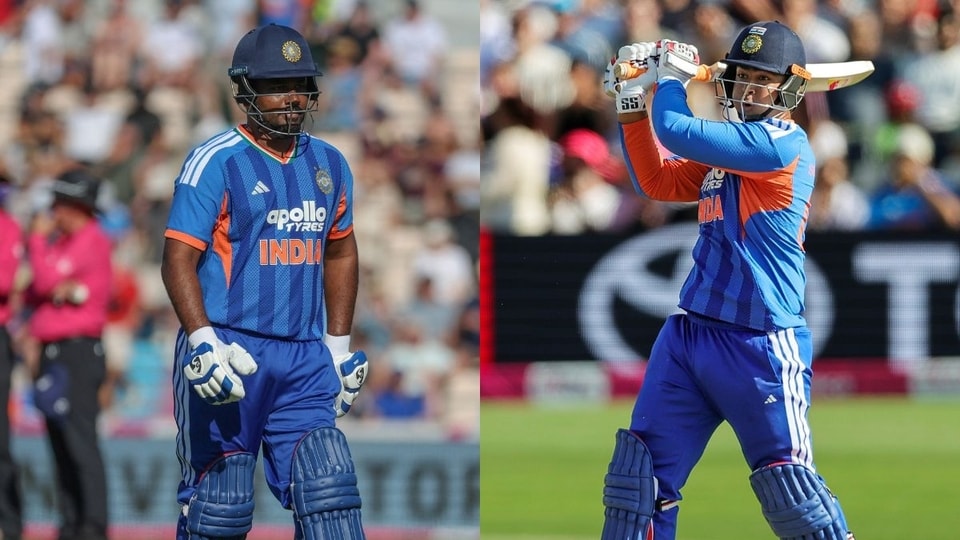
Gautam Gambhir has now revealed the extent to which that dilemma weighed on him. Speaking to JioStar ahead of India's upcoming home season, the head coach admitted that the decision to leave Samson out remains perhaps the most personally difficult call of his tenure. “Probably that was, I’ll be honest with you, in two years of my journey, that was the only night I could not sleep.” Gambhir said. “And I told this to Sanju. Because I knew that it was probably the toughest decision in my coaching tenure in a T20 format.”
The discomfort was understandable. Samson had been Player of the Tournament and had accumulated the sort of performances that ordinarily purchase a player patience, yet a handful of quieter outings coincided with Sooryavanshi producing the kind of form that makes selection debates increasingly difficult to postpone. “Someone who was player of the tournament, and then you have to leave him out after three or four games,” Gambhir said. “The reason was probably Vaibhav was in that kind of form as well, and we had to win the series.”
Gambhir said the conversation with Samson was direct rather than evasive. India needed greater impetus at the top, and Sooryavanshi, at that particular moment, appeared capable of supplying it. “I had a very, very honest conversation with him,” Gambhir said. “Vaibhav was in that kind of form, and we needed someone to score runs at the top, we needed that little bit of platform at the top as well. And he was fine with it.”
When the same dilemma turned in the opposite direction
The more intriguing element of Gambhir’s explanation, however, lies in what happened afterwards. The logic that once worked in Sooryavanshi’s favour has subsequently required the youngster himself to exercise patience. Gambhir’s argument is that exceptional immediate form cannot permanently override the credit accumulated by players who have delivered over a substantial period. Samson and Abhishek Sharma, therefore, cannot be treated as disposable simply because a younger player is producing compelling performances elsewhere.
“I made him understand that sometimes, I know you’re in good form, but sometimes, the players who have done well for a long time, you will have to wait for your opportunity,” Gambhir said. That philosophy becomes especially significant in the case of Sooryavanshi because the clamour surrounding his selection can easily acquire a momentum of its own. Gambhir, however, made it clear that public enthusiasm will not determine India’s XI. “Social media or outside noise doesn’t decide the playing eleven,” he said, stressing that the ultimate call rests on the combination the captain and the coach believe gives India the strongest chance of winning.
There is, consequently, no painless version of the decision. Selecting Sooryavanshi means displacing somebody who has already contributed substantially; leaving him out means asking one of Indian cricket’s brightest young talents to remain patient despite doing almost everything possible to force the door open. “If Vaibhav plays today, then its going to be a tough conversation between me and whoever we leave out, whether its Abhishek or whether it’s Sanju,” Gambhir said.
That is perhaps the most revealing aspect of India’s selection problem. The dilemma is no longer merely Samson versus Sooryavanshi, but immediate form against institutional memory; how aggressively should a team reward the player knocking hardest at the door without creating an environment in which established performers fear that three different matches can erase two years of excellence?
Gambhir’s answer is unmistakable. Popularity, noise and novelty may intensify the debate outside the dressing room, but continuity must retain value within it. “It is very easy for me to take popular decisions, but is probably the toughest thing for me to take the right decisions,” he said. “And we’ve taken the right decision of continuing with Sanju and Abhishek.”
For Sooryavanshi, that may occasionally mean waiting despite irresistible form. For Samson, it means receiving the security that his earlier body of work has earned; and for Gambhir, it means accepting that the most consequential selection calls are rarely those for which there is a painless answer.
Watch the three-match ODI Series of the West Indies tour of India, from September 27 to October 3, 2 PM onwards, LIVE on JioHotstar and Star Sports Network.


