


 Live Score
 Cricket Teams
 Cricket Players
Heir to Gavaskar’s throne, missed a 100 against Warne-McGrath, Sachin’s advice couldn’t save him, was replaced by Sehwag
After 18 Tests, he averaged 40.06; five poor matches changed everything. Even a 250 in England could not revive a career that ended at just 24.

 Prefer HTon Google


For years after Sunil Gavaskar, India kept searching for somebody who could make opening the batting feel settled rather than temporary. By early 2002, they seemed to have found one. Eighteen Tests had brought 1,202 runs at 40.06, a century in only his third match, runs in Zimbabwe, Sri Lanka and South Africa, and enough technical assurance for him to be described as one of India's most dependable opening options.
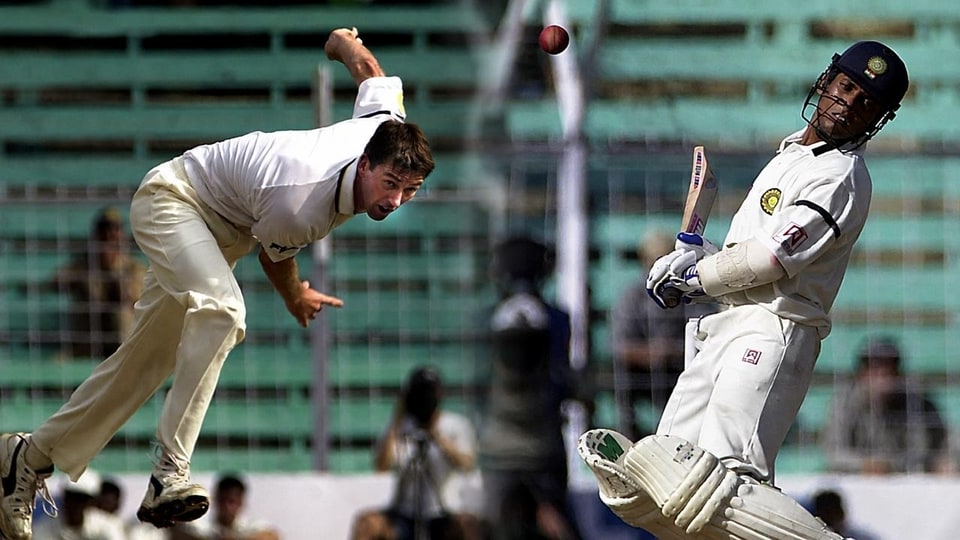
Five Tests changed almost everything. Then came the crueller part. After losing his place, the discarded opener responded in England with 250 from 380 balls. It was the sort of innings that should have reopened the door to Test cricket. Instead, another batter had begun redefining what India expected from an opener.
The player was Shiv Sunder Das, whose international career lasted only 23 Tests but briefly appeared capable of becoming far more substantial.
From Odisha to India's opening position
Das had been marked out unusually early. He made his first-class debut for Orissa while still only 16 and, after scoring nine in the first innings against Madhya Pradesh, responded with 98 in the second.
By the end of the 1990s, his domestic performances had firmly put him on India's radar. A 1999-2000 first-class season containing 799 runs at 49.93 helped earn him a place in the first intake of the National Cricket Academy. He was also among the inaugural recipients of the Border-Gavaskar scholarship, travelling to the Australian Cricket Academy alongside Mohammad Kaif and S Sriram.
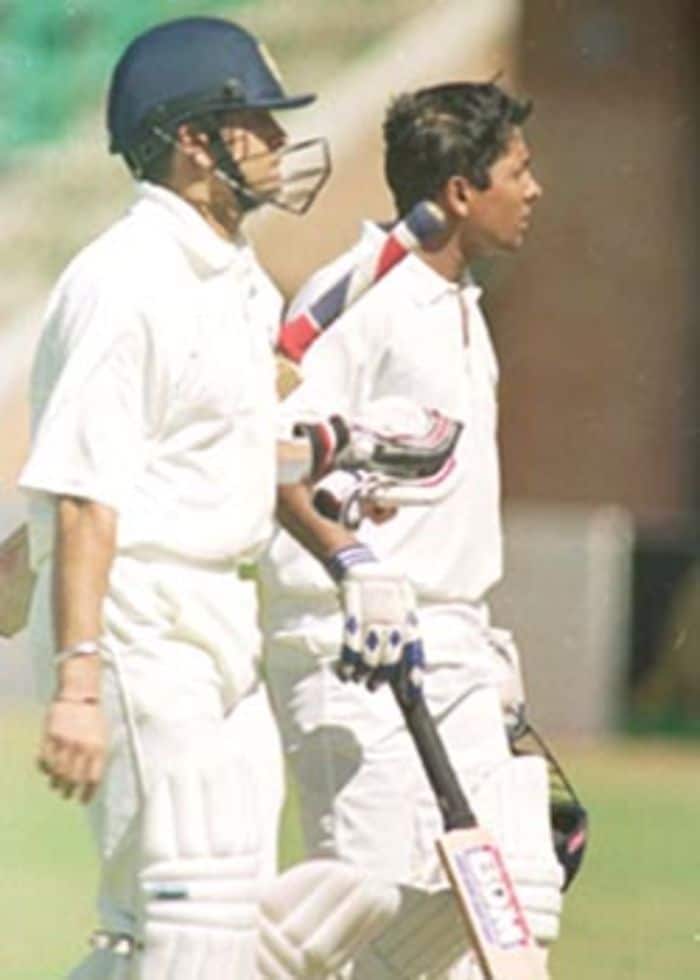
When India handed him his Test debut against Bangladesh in November 2000, the opening position remained a recurring problem. Das did not take long to suggest that the search might finally be approaching an answer. In his third Test, against Zimbabwe at Nagpur, he scored 110 from 175 balls. After his first eight Tests, he had accumulated 635 runs at close to 50. Against Australia in Chennai in 2001, Das made 84 and helped put on 123 for the first wicket with Sadagoppan Ramesh. It was India's first century opening partnership in 12 Tests. Before the innings, Sunil Gavaskar had advised him to shift his guard from middle stump towards leg, while Sachin Tendulkar encouraged him to trust his natural game rather than become consumed by the quality of Australia's attack. Das listened.
Eight fifties in a year, but a warning hidden within
The year 2001 was the strongest of his Test career. Das scored 830 runs and produced eight half-centuries. In Zimbabwe, he made 30 and an unbeaten 82 in the first Test before adding 57 and 70 in the second. His 239 runs across the series came at an average of almost 80 and earned him the Player of the Series award.
There were runs in Sri Lanka too, including 59 and 68 in the final Test, and a 62 against South Africa at Bloemfontein. Yet those numbers also contained the weakness that would eventually hurt him.
Eight Test fifties in a calendar year did not produce a single century. Das was getting starts with remarkable regularity but was rarely converting them into match-defining innings. Across his entire Test career, he passed fifty 11 times and converted only twice. Still, by the time India travelled to the Caribbean in 2002, his position looked reasonably secure. Eighteen Tests had brought 1,202 runs at 40.06. Even more remarkably, India had already paired him with seven different opening partners. Das had become the relative constant amid the experimentation. Then the West Indies happened.
Five Tests that changed the hierarchy
Across the 2002 series, Das managed only 124 runs at 15.50. His eight innings produced 33, 10, 0, 0, 35, 3, 33 and 10. There was no fifty, no substantial recovery innings and no indication that the slump was ending.
India travelled next to England, and Das lost his place. The immediate reason was form. The permanent consequence, however, was Virender Sehwag. India wanted Sehwag in a middle order already crowded by Rahul Dravid, Tendulkar, Sourav Ganguly and VVS Laxman. The solution was to send him to the top, despite opening being largely unfamiliar territory.
Sehwag made 84 at Lord's. Then he scored 106 at Trent Bridge. In two Tests, what might initially have looked like an experiment began resembling a long-term solution. Das, meanwhile, produced an extraordinary answer of his own.
250 runs — and still no way back
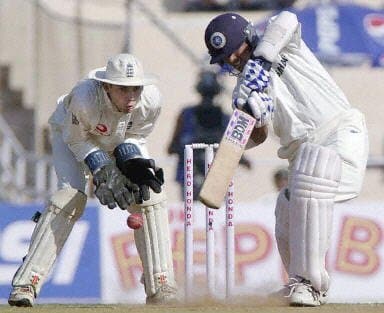
Playing against Essex at Chelmsford, Das scored 250 from 380 balls, striking 32 fours and four sixes. Wasim Jaffer had been struggling, and there was a genuine route back into the XI. India could have paired Sehwag with Das and restored the specialist opener after the biggest innings of his tour.
Instead, Ganguly and John Wright selected Sanjay Bangar. The decision was tactical. Bangar could open while also supplying useful seam bowling, an especially attractive option for the Headingley Test.
Bangar made 68. India won by an innings. Soon afterwards, Sehwag and Bangar shared a 201-run opening stand against the West Indies in Mumbai. Sehwag's transformation into a Test opener was accelerating, and Das's window was narrowing.
His last Test had already been played at Sabina Park in May 2002. He was only 24. Das remained around the national set-up for a while and was included in subsequent squads, including the tour of New Zealand. But another Test never came.
More than 10,000 runs after the India dream faded
International disappearance did not mean cricketing decline. Das continued to accumulate heavily in domestic cricket. He had already made 253 against Bengal in January 2002, combining with Sanjay Raul in a mammoth 456-run partnership.
Later came the largest innings of his career: 300 not out against Jammu and Kashmir in the 2006-07 Ranji Trophy. By the time his first-class career ended, Das had played 180 matches and scored 10,908 runs, with 24 centuries and 52 fifties.
His final Test record remained frozen at 23 matches, 1,326 runs, an average of 34.89 and two hundreds. Numbers that appear modest without their context. Because after 18 Tests, Das was averaging 40.06. Then came one disastrous tour, followed almost immediately by the emergence of a man who would become one of the most revolutionary opening batters Test cricket had seen.
Das did not simply lose an opening position. While he was trying to win it back, India's idea of an opening batter changed.


