


 Live Score
 Cricket Teams
 Cricket Players
Jofra Archer fumes at Riyan Parag for not giving him the desired field; Gets Priyansh Arya four balls later
Jofra Archer's frustration over a missed slip vs Priyansh Arya highlighted Rajasthan's tactical errors.

 Prefer HTon Google


Punjab Kings arrived in Mullanpur with the confidence of a side that had not yet been beaten in IPL 2026. Shreyas Iyer’s team had already built the most intimidating batting identity of the season, powered by fearless starts from Priyansh Arya and Prabhsimran Singh and sharpened further by their record chase of 265 against Delhi Capitals.
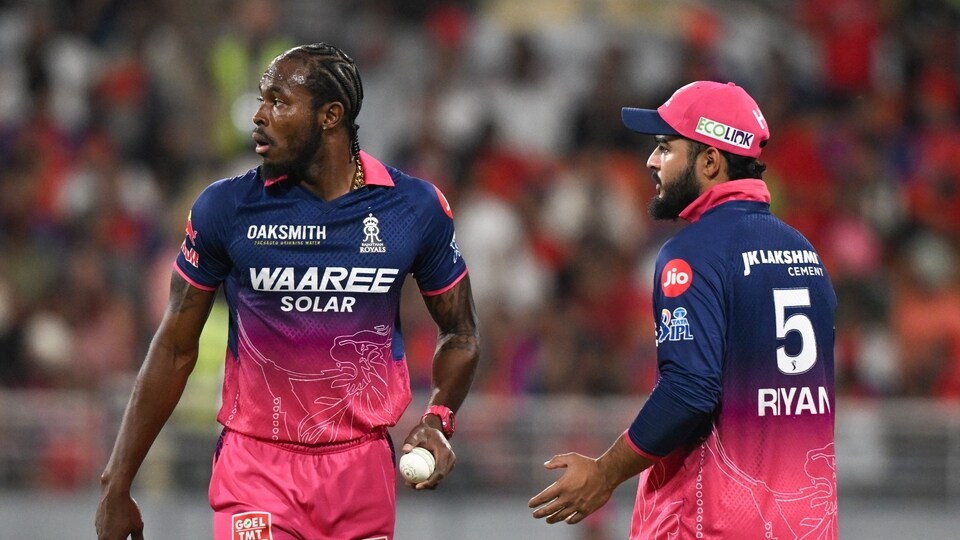
For the Rajasthan Royals, this was not just another league game. Riyan Parag’s side needed early control against the table toppers, and with Jofra Archer taking the new ball, the plan had to be precise. Against Punjab’s openers, one missed attacking point could become expensive very quickly.
Archer’s frustration exposes RR’s early powerplay confusion
That point arrived almost immediately. Priyansh Arya had already taken 21 runs off Nandre Burger’s opening over, and Punjab were flying at 29/0 after two overs. Archer returned for the third over and immediately found the response Rajasthan needed. On the first ball of the third over, he hit a hard back-of-a-length area around the off-stump channel. Arya, cramped for room and forced to play away from his body, produced a thick outside edge.
The ball flew to the left of wicketkeeper Dhruv Jurel. Jurel dived desperately, but the chance was too wide for him. There was no first slip in place.
How Jofra Archer reacted after this became the real story. The England fast bowler immediately turned towards captain Riyan Parag in visible frustration, asking for the slip fielder. Soon after, the broadcast showed Archer saying, “I didn’t even see that,” indicating he had not even realised before delivering the ball that Rajasthan had left the catching position vacant.
Also Read: PBKS vs RR IPL 2026 LIVE Score: Archer gets early breakthrough for RR, removes Priyansh for 29
The irritation was understandable. Archer had done everything a new-ball fast bowler is asked to do. He had found the line, forced the mistake, and created a genuine dismissal opportunity against a batter who was already scoring at extreme speed. The field, however, had not matched the threat.
A first slip was placed after the incident, but the moment had already exposed a tactical lapse from Rajasthan. Against a player like Arya, who had raced to 21 off 6 balls but was operating with visible risk, Rajasthan had a window to attack. Archer saw it immediately. The field setting did not.
Four balls later, Archer still got his reward. He pushed the pace up to 150.1 kph and attacked a similar uncertainty zone, angling the ball across the left-hander. Arya attempted another aggressive stroke but failed to control the drive, sending a simple catch to Burger at mid-on.
The wicket ended a flashy cameo, but it did not erase the earlier error. For Parag, the visual was uncomfortable: his premier fast bowler creating pressure, then openly questioning why the most basic attacking catcher was missing.


