E-Paper



Supreme Court allows Sunday respects to Ganga crusader at AIIMS
The Supreme Court has allowed followers of save-Ganga crusader GD Agarwal, popularly known as Swami Gyan Swaroop Sanand, to pay their respects to his embalmed body at AIIMS, Rishikesh, for 10 consecutive Sundays.

 Prefer HTon Google


The Supreme Court has allowed followers of save-Ganga crusader GD Agarwal, popularly known as Swami Gyan Swaroop Sanand, to pay their respects to his embalmed body at AIIMS, Rishikesh, for 10 consecutive Sundays.
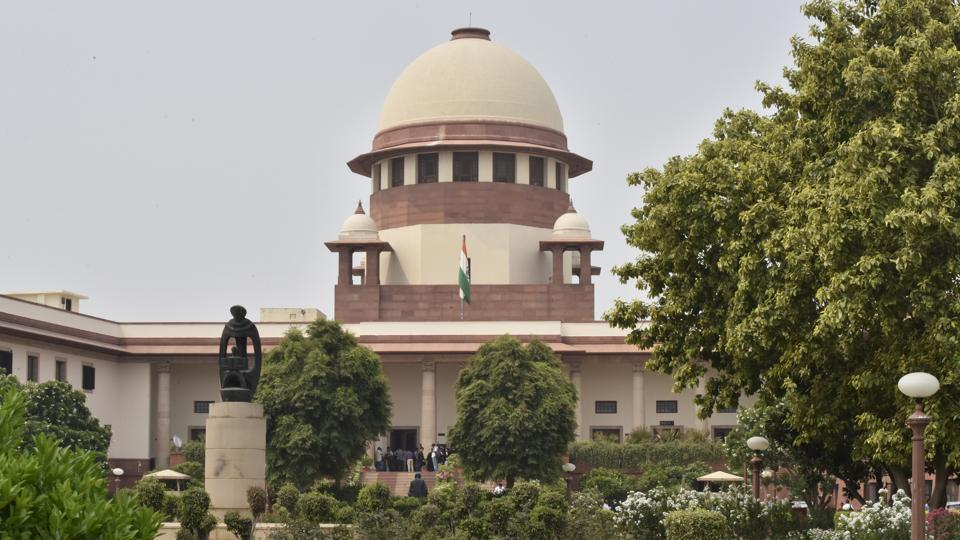
The followers will be allowed in batches of 10 subject to a maximum of 50 people every Sunday, ordered a bench of Chief Justice of India Ranjan Gogoi, Justice KM Joseph and Justice Hemant Gupta on Friday while disposing of a special leave petition filed by AIIMS Rishikesh.
The former IIT Kanpur professor, who was on a fast-unto-death since June 22 at Maitri Sadan, Haridwar, died on the 112th day of his fasting on October 11. Agarwal had earlier wished that his body be donated to AIIMS Rishikesh after his death. His last rites couldn’t be performed as the body was sifted to AIIMS and. The activist’s followers have been demanding viewing of his body, leading to a petition in the Supreme Court.
The SC said, “This arrangement can adequately safeguard the wishes of the respondent-writ petitioner (Dr Vijay Verma, respondent in SC and petitioner in HC in the matter) and other followers without causing any damage to the body so far as the medical research is concerned.” AIIMS has embalmed the body and kept it in a formalin tank, SC said.
On October 26, responding to a petition of Verma, a Haridwar-based child specialist, HC had ordered that the body of the Ganga crusader be shifted from AIIMS, Rishikesh within 8 hours to Matrisadan, Haridwar for public homage and post-death rituals and the same be returned in 72 hours to AIIMS. But within hours the apex court stayed the HC’s order after AIIMS filed an SLP.
The SC said the wishes of Swami Sanand’s followers “will have to be respected, at the same time, the death wish of the deceased that his body is to be used for medical research also has to be respected.”
The apex court said that to strike a balance it interacted with Dr Mrinal Barua and Dr Vivek Mishra, associate professors of the anatomy department, AIIMS, Rishikesh.
“The doctors have stated that the body if disturbed from its present location and if the outer cover in which the body is preserved is to be removed, decomposition will set in,” the SC said. “On a pointed query by the court, the doctors have submitted that on a Sunday when no teaching activity is undertaken, 10 followers subject to a maximum limit of 50 followers may be allowed to have ‘darshan’ within the hospital premises and such ‘darshan’ can be for a period of one hour.”
Ajay Veer Pundir, counsel of Verma, said, “After the apex court’s decision, Swami Sanand’s followers can have some peace in their hearts. At least they can now pay their last respects to their departed spiritual leader.”