
 E-Paper



How Delhi can get rid of its annual pollution mess
Experts say that this is significant because it suggests the hectic efforts that were put in place in response to the pollution crisis in 2016 have failed to make any impact and that improvements have mostly been due to meteorological factors that are outside of human control.


The national capital region (NCR) and much of the Indo-Gangetic plains were shrouded in a toxic haze since last week, a rerun of an annual pollution crisis that is turning into a headache for policy makers and administrations.
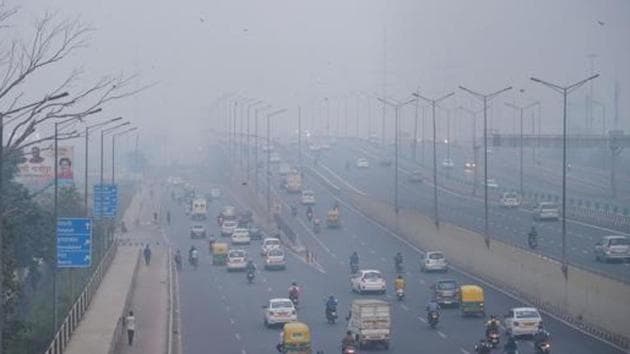
While the average annual air quality index readings have shown a slight decline since 2017 – it was 165 that year, 154 in 2018 and 135 in the months till now –the improvement appears to be largely due to weather conditions in summer months while winter pollution has shown little change.
Experts say that this is significant because it suggests the hectic efforts that were put in place in response to the pollution crisis in 2016 have failed to make any impact and that improvements have mostly been due to meteorological factors that are outside of human control.
Also Watch | Delhi’s air quality dips to ‘severe’ category despite mild showers
Insights from efforts that did not work, and some that did, in the past couple of years can largely be distilled into the following action plans, experts and scientists told HT.
IMPROVE GRAP
The graded response action plan (Grap), the sets of curbs that are meant to be automatically implemented when pollution levels cross certain thresholds, has not been effective due to a combination of factors. Experts have said the plan is not pre-emptive and some additional measures, such as beefing up public transport infrastructure, should have been taken to make it successful.
“Grap of the CPCB (Central Pollution Control Board) has not had impact since the government failed to increase parking fees, augment public transport, increase metro frequency and put a check on vehicle registration,” said Ritwick Dutta, a Delhi-based environment lawyer.
A former official of the CPCB said one of the problems is a lack of focus in seasons when pollution is not an apparent problem. “This is primarily because the work on combating air pollution starts just when there is a spike instead of working going on around the year,” said this former scientist, who asked not to be named.
FIRE CRACKERS MUST GO
This year’s air quality crisis in the capital began following Diwali celebrations on October 27, when people defied restrictions on how long and what kind of firecrackers they could burst, leading to an almost immediate build-up up of toxic air that lingered on for most of the week. By midnight on the night of Diwali, the concentration of PM2.5 pollutants – the most harmful of all aerosols -- shut up almost 16 times.
“Our analysis clearly showed that bursting of crackers on Sunday night had spiralled the pollution curve to nearly the same severe levels that was observed during 2018 Diwali. This happened despite the fact that 2019 Diwali was warmer and windier than 2018. This temporarily undid the comparatively better air quality gains of this season due to favourable weather, on-going pollution control action, and preventive emergency measures,” said Anumita Roy Chowdhury from the Centre of Science and Environment.
A day after Diwali, there was an increase in patients coming to hospitals with breathing ailments. “We are increasingly seeing healthy people who have no previous history of chronic respiratory diseases coming in with asthma-like symptoms. Many of these patients now have to use steroids inhalers for up to four weeks,” said Dr Karan Madan, associate professor of pulmonology at All India Institute Medical Sciences (AIIMS).
In 2018, the Supreme Court ordered that only so-called green firecrackers – which are made without certain chemicals and emit 30% lower pollutants – should be used in the Delhi-NCR region, and firecrackers can only be burst between 8pm and 10pm.
According to Dutta and Roychoudhury, implementation of such curbs is difficult and the solution may lie only in a complete ban on sale of firecrackers in the NCR area for all of winter.
COMPLETE STOP ON FARM FIRES
According to ministry of earth sciences’ air pollution monitoring body System for air quality and weather forecasting and research (SAFAR), stubble burning contributes 8% to 50% to capital air pollution load between mid October and mid-November. A day after Diwali, its contribution was 35% to Delhi’s air pollution, SAFAR website said.
On average, around 70-80 million tonnes of paddy straw is burnt every year in Punjab, Haryana and western Uttar Pradesh every year to clear fields for winter crop, according to an IIT, Kanpur, study. “Emissions from stubble burning can certainly impact air quality in Delhi and other cities in Gangetic plain,” the study on sources of air pollution released in 2016, said.
Despite the National Green Tribunal asking Punjab and Haryana governments to prevent burning of stubble, data recorded by NASA website on Thursday showed that number of fire incidents (mostly farm fires) till October 30, 2019, were higher than what was seen in 2018 and 2017.
Over 52,352 incidents of fires have been recorded by NASA as compared to 45,736 in 2018 and 52,136 in 2017 during the same period, according to information analysed by HT.
Since 2017, authorities have attempted to coax and punish farmers into quitting the practice, but the efforts fall short of ground realities, where it is still financially more viable for farmers to continue burning crop residue and paying the ₹2,500 fine instead of spending more money on machinery that can prevent the need for it.
Farmer unions have said government subsidies for the machinery have either been inadequate or have not reached farmers at all.
MANAGING HOTSPOTS
The Environment Protection (Prevention and Control) Authority (EPCA) has identified 14 pollution hotspots in Delhi-NCR. These are areas where air pollution levels are highest and contribute heavily to the overall pollution levels of the city.
Hotspot management is consistent with global regulatory trends and is based on the principle that if cities are safe for the most vulnerable, it will be safe or all, Roychoudhury said, explaining that it was crucial to focus on people who were affected in hotspot areas.
In Delhi, effective hotspot management will need collaborative effort between the Delhi government and the three municipal corporations. CSE estimates that hotspot management can lead to a 65% cut in local emissions, which contributes about 70% to Delhi’s base air pollution.
FIGHTING DUST
The 2015 IIT study that identified sources of pollution said road dust was a prominent contributor pollution. “The top four contributors to PM10 emissions are road dust (56%), concrete batching (10%), industrial point sources (10%) and vehicles (9%); these are based on annual emissions…The top four contributors to PM2.5 emissions are road dust (38 %), vehicles (20 %), domestic fuel burning (12 %) and industrial point sources (11%),” the study said.
Fighting sources of dust alone can cut Delhi’s pollution by a third, said Mukesh Sharma of IIT, Kanpur, who anchored the study.
The CPCB and the national green tribunal (NGT), through several orders in the last three years have focused on landscaping of all roads to reduce dust recirculation.
In 2016, the CPCB issued comprehensive rules for dust management including construction and demolition sector to the state governments and asked them to put in place effective monitoring system in place in three years.
The EPCA report of October 18, 2019, said the rules had no impact as developers continue to operate with disregard. Former CPCB member secretary AB Akolkar said the state governments have been slow in implementing the guidelines, which were voluntary in nature. “Most pollution control boards don’t have manpower to implement the rules and the municipal bodies enough funds to implement the regulations,” he said.
Dutta said Delhi and other state governments in the NCR need to provide specific funds for dust management. Roychoudhury added that Resident Welfare Associations should be made part of waste management and dust control measures for it to be effective.
ACCOUNTABILITY
Senior Supreme Court lawyer, M C Mehta, in whose petition CNG was introduced in Delhi in 2000, said reducing air pollution in Delhi would be a difficult task unless authorities are held accountable for failing to implement directions of courts and pollution watchdogs.
The Delhi government agreed to introduce environment friendly compressed natural gas for public transport only when the Supreme Court summoned chief secretary of Delhi and threatened to send him to jail for failing to implement its orders, Mehta said.
“The SC had shown the path but there is no political will to follow that path,” he added.
“Leaders are blaming each other for Delhi’s high air pollution as people suffer. Sadly, all gains from introduction of CNG have been lost and we are back to dark days of 1990s when Delhi used to fume with toxic air.”
Vijay Panjwani, who has been CPCB’s counsel, said: “There has been a lot of talk on how to control air pollution in recent years but very little real action has taken place. The reason is that real action will result in inconvenience to some people that political parties are not willing to risk. So, we need a law that stipulates time-bound implementation and punitive action against officials and persons for failing to implement the law,” he said.
(With inputs from Vijdhan Mohammad Kawoosa in New Delhi, HTCs in Chandigarh)


Stay updated with all top Cities including, Bengaluru, Delhi, Mumbai and more across India. Stay informed on the latest happenings in World News along with Delhi Election 2025 and Delhi Election Result 2025 Live, New Delhi Election Result Live, Kalkaji Election Result Live at Hindustan Times.


