
 E-Paper



Terms of Trade | Social justice as garrison and vanguard
The 2027 census was supposed to be a watershed moment in India’s social justice bargain.

 Prefer HTon Google


With the publication of the self-enumeration schedule for the 2027 census what the gazette notification suggested is now confirmed. The census, while it will count sub-castes other than Scheduled Castes (SC) and Scheduled Tribes (ST), will not count Other Backward Classes (OBCs) separately. Deja vu; for all practical purposes it is the 2011 Socio Economic Caste Census (SECC) all over again. The end result, thanks to the multiplicity of sub-caste names and their fluid categorisation into broader social groups, is unlikely to generate data that neatly disaggregates India’s sub-castes along the lines of administrative policy on affirmative action in the country. What is one to make of this development?
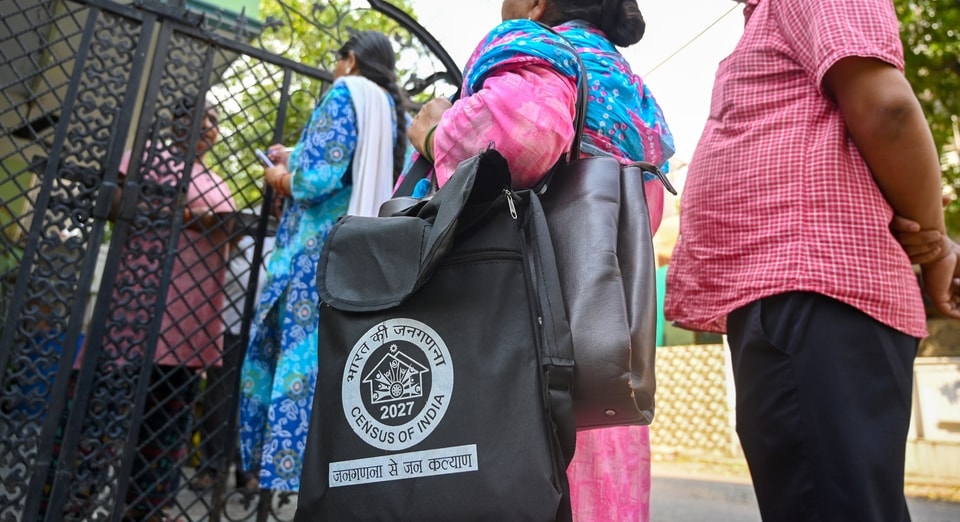
The 2027 census was supposed to be a watershed moment in India’s social justice bargain. It was to count non-SC-ST sub-castes for the first time since independence. This demand was made by a bunch of parties across the country which had made their political fortunes by mobilising OBCs against upper caste dominance; some did so in the 1960s and 1970s and some as late as the 1990s and 2000s. Some of the parties demanding it were the Bharatiya Janata Party’s (BJP) adversaries and some were its allies. Even the Congress, the original political victim of OBC assertion in Indian politics had supported the demand for a comprehensive caste census, hoping to undo some of the losses it suffered on account of OBC attrition.
The explicit justification for this demand was to get a de jure population count of OBCs. The implicit motivation was to demand that OBC reservations be made proportionate with their population share, which by all survey estimates is in the ballpark of about 50%. If one were to mechanically extrapolate numbers in politics, this demand has invincible traction. But the current census limiting it does not seem to have generated any serious protest whatsoever. Forget large scale mobilisation on the streets, even opposition parties have mentioned it only in passing. Why?
Is the politics of demanding an expansion of reservations in India past its prime now? Are larger caste groups, such as OBCs, now better seen as engaged in intra-group conflicts than solidarities? Has the communal divide within OBCs – unlike SCs, Muslims and Christians do have OBC status – made the demand for blanket expansion of OBC rights relatively less unpalatable for Hindu OBCs in India’s politics? These are all hypothetical questions. But they need to be thought over carefully to make sense of the damp squib (at least as of now) which the demand for caste census and the assumed social justice energy it was supposed to release against the BJP has become right now. Here is a possible explanation.
Social justice is the bedrock of India’s democratic cohesion. Its first instalment, part of the original constitutional contract, was a legacy of the Poona Pact between Gandhiji and BR Ambedkar, and resulted in affirmative action for SCs and STs in both the legislative arm and government jobs and educational institutions. This was expanded further to include OBCs – a wide administrative category which fuses both class and caste as far as availing benefits is concerned – in the 1990s and then in 2006.
The first battle of social justice was won in an arbitration of political morality between Ambedkar and Gandhi. Ambedkar had the power of truth on his side rather than numbers or resources. The second one was won by the brute force of democratic assertion. Post-universal franchise, OBCs were too large a segment to be ignored in Indian democracy.
Take away this contract and Indian democracy will transcend from peaceful to chaotic and punish those trying to undo these gains with a vengeance. From the 2015 Bihar results which routed the BJP after the Rashtriya Swayamsevak Sangh chief made remarks about reviewing reservations to the large protests which followed the Supreme Court’s dilution of Prevention of SC/ST Atrocities Act in 2018 – the government brought legislation to undo the ruling – there are enough examples to show this.
But there is also enough evidence to show that social justice now constitutes the floor rather than the ceiling of India’s larger democratic aspiration of equality. It has achieved what it could have and made Indian democracy more egalitarian in doing so. Anybody who even remotely understands politics in India will agree that these are gains which cannot be taken away.
However, what is also true is that practitioners of social justice politics have embraced many of the bourgeois expressions of power. In both the political and personal, they rarely embody an emancipatory or radical spirit and very often power is sought for a partisan sharing of its spoils rather than pushing the agenda of a radical change in how the larger political economy and its intersection with the social order works.
This is not lost on the larger constituency of the so-called subaltern too. They increasingly realise that mainstream social justice formations are more harbingers of representation than transformation of politics and society. This is perhaps the biggest reason why the promise of incremental gains even if large – which is what increasing OBC reservations from 27% to 50% would have entailed – is actually not as big a revolution as it was made out to be. And it is definitely not worth hitting the streets. India’s real problem is lack of jobs rather than their unfair distribution today.
Is cynical politics creating a cynical public? That would be the most tragic thing as far as Indian democracy is concerned. It still needs to fight for equality, justice and, as we are rightly reminded every once in a while, identity’s dark shadow on even basic human dignity. This is where the political developments of the past couple of months give far more hope than the hopelessness the old-style practitioners of social justice are displaying over the scuttling of the caste census.
For India’s socially weaker castes, demanding affirmative action was a survival rather than a sectarian strategy. Entrenched power structures which blatantly practised social nepotism and survived the transfer of power from colonialism to independent India, thanks to a compromise between capital and the landed elite, would never have given them a fair chance. Today, things are far from perfectly equal, but they are also not as unequal as they were. Representation is not the only concern animating the best of the mobilisers in the ranks of the socially discriminated. They are now emerging as the vanguards of the struggle for demanding universal justice and not just for their own constituency.
The recent students’ protests in Delhi and Ranchi were led by student leaders of whom one is a Dalit and another, an OBC. The subaltern today, is not worried about whether he can speak. He is speaking loudly. Both the government as well as the currently discriminated descendants of his erstwhile oppressors are listening. Social justice will continue to be the garrison of India’s democratic contract. The way forward is to make it a vanguard where the struggle can transcend the survival strategy to becoming a universal movement. Older social justice parties must heed this lesson and change themselves. The new social justice assertion will come with a banner of universalism. It is being able to do so because its ancestors fought for this day. It will be a travesty if the message were lost.


