E-Paper



In a first, school of cinematic studies to be set up in Uttarakhand’s Doon University
Chief minister Trivendra Singh Rawat said that the expert committee should also have noted people from the film industry who would help the university in giving shape to the courses and curriculum of the school.


In a first, school of cinematic studies will be set up at Doon University Dehradun, for which an expert working group will be formed to help the university to design the courses and syllabus of the school.
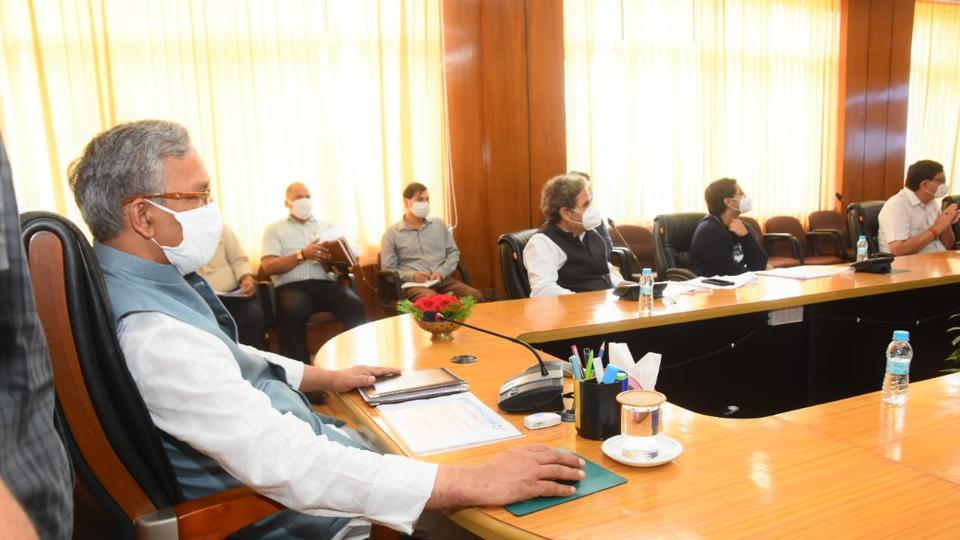
Chief minister Trivendra Singh Rawat said that the expert committee should also have noted people from the film industry who would help the university in giving shape to the courses and curriculum of the school.
Rawat said this after chairing a meeting in this regard here on Friday. The meeting was attended among others by filmmaker Vishal Bhardwaj and Doon University vice-chancellor Ajeet Kumar Karnatak.
Rawat said the cinematic studies school should have graduate degree courses, certificate courses and diploma courses for students aspiring to join the film industry.
“Film industry has huge employment potential. We have no dearth of talented people here who will be benefitted if efforts are made to hone their skills,” said Rawat.
Rawat also inaugurated an online portal for seeking online permission for shooting in the state.
Doon University vice-chancellor Ajeet Kumar Karnatak said the proposal with regard to the school of cinematic studies will be put before the academic council and the executive council of the university.
“We have plans to have four-year course in the school. Those completing one year or so will be given a certificate course, those attending two years will be given diploma certificate and those attending over three years will be given graduate degree”, he said.
“We will also take help of the experts at Film and Television Institute of India (FTII) Pune in setting up the school and designing the courses. In the expert working committee, apart from Vishal Bhardwaj, we will have two more Bollywood personalities”, he said.
Uttarakhand government has been keen to promote the film industry in the state and attract more filmmakers to shoot in the Himalayan state.
In August 2019 during the film conclave organised at Mussoorie by the state government, chief minister Trivendra Singh Rawat had said announced that Uttarakhand will soon set up a film city to promote filmmaking in the Himalayan state. He had also announced that ₹1.5 crore subsidy would be given to those Bollywood filmmakers who shoot 70 percent of their films in the Himalayan state.
Last month in a move to welcome producers and film shooting units, the state government on issued standard operating procedures (SOP) for film shooting in Uttarakhand with reference to Covid-19, with focus on physical and social distancing, regular thermal scanning and frequent sanitisation.