
 E-Paper



Boost to pregnancy care: IIT Madras, THSTI develop AI-powered model to determine foetus age in pregnant Indian women
The Garbhini-GA2 model is the first late-trimester GA estimation model to be developed and validated using Indian population data, as informed in the release.

 Prefer HTon Google


The Indian Institute of Technology (IIT) Madras and Translational Health Science and Technology Institute (THSTI), Faridabad have collaborated to develop the first India-specific Artificial Intelligence (AI) model to determine the age of a foetus in a pregnant woman in the second and third trimesters precisely.
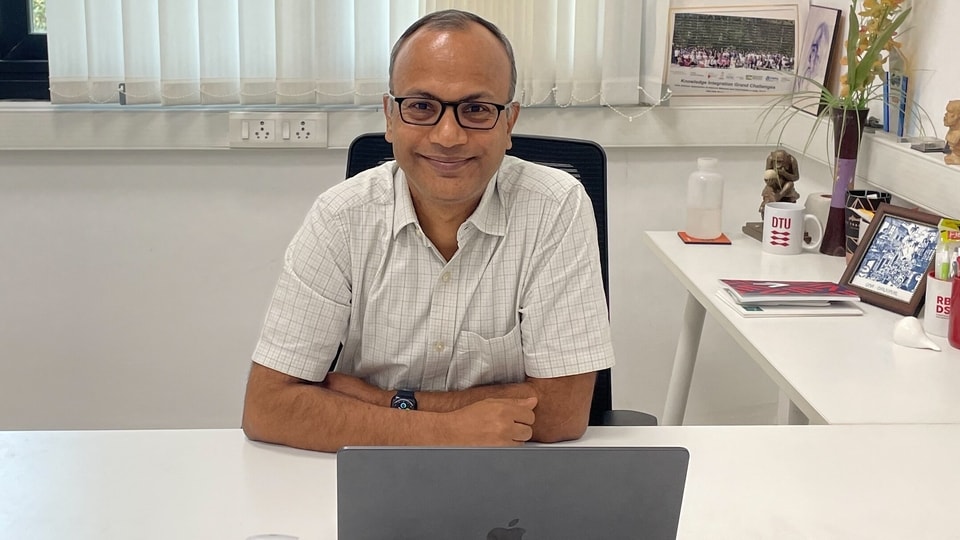
According to a press release, researchers at IIT Madras and THSTI developed the new technology as part of the Interdisciplinary Group for Advanced Research on Birth Outcomes – DBT India Initiative’ (GARBH-Ini) program.
Also read: ICSE History Analysis: Lucknow students find paper balanced, easy
The AI Model, called the ‘Garbhini-GA2’ is the first late-trimester GA estimation model to be developed and validated using Indian population data, the release stated. The objective of the AI Model is to help in identifying the accurate Gestational Age (GA) that is necessary for the appropriate care of pregnant women and for determining precise delivery dates.
The research was undertaken by Dr. Himanshu Sinha, Associate Professor at Bhupat and Jyoti Mehta School of Biosciences, Department of Biotechnology, IIT Madras, and Dr. Shinjini Bhatnagar, the Principal Investigator of the GARBH-Ini programme and professor at THSTI.
The release informed that the researchers used genetic algorithm-based methods to develop Garbhini-GA2, which resulted in being more accurate than the current Hadlock and recent INTERGROWTH-21st models when applied in the second and third trimesters of pregnancy.
The Garbhini-GA2 model reduces the GA estimation median error by more than three times when compared to compared to Hadlock.
Benefits of the Garbhini-GA2:
- Accurately estimating the age of a foetus, reducing error by almost three times. At present, the Gestational Age is determined using a formula developed for the Western population. This may likely be erroneous when applied in the later part of pregnancy due to variations in the growth of the foetus in the Indian population.
- Improve the care delivered by obstetricians and neonatologists, thereby reducing maternal and infant mortality rates in India.
Dr. Rajesh Gokhale, Secretary at the Department of Biotechnology (DBT), Government of India, welcomed the research and said GARBH-Ini is a flagship programme of DBT. He highlighted that the development of such population-specific models for estimating gestational age is a commendable outcome, adding that the models are being validated across the country.
Dr Himanshu Sinha, who is also a Coordinator at the Center for Integrative Biology and Systems Medicine at IIT Madras, led the data science work for this research. He said, “IIT Madras has been contributing towards solving healthcare problems at the grassroots and local level to enhance public health in India.
“Working with our clinical partner, THSTI, we are utilizing advanced data science and AI/ML techniques to build tools to predict unfavourable birth outcomes. The first step towards this is to develop accurate GA models that perform significantly better than currently used models designed using Western data,” added Dr Sinha.
Dr Shinjini Bhatnagar pointed out that improving GA accuracy is a critical component of the broader goals of the GARBH-Ini study, which aims to reduce adverse pregnancy outcomes. She said, “The mere application of sophisticated data science tools is not sufficient. The crux of ensuring that these technological advancements yield tangible benefits in the clinical realm lies in the end-to-end partnership between clinicians and data scientists.”
“Such collaboration ensures that the development of solutions is not only technically sound but also clinically relevant and seamlessly integrated into healthcare workflows. This study is an exemplar of this approach,” Dr Bhatnagar added.
The Garbhini-GA2 model can be deployed in clinics across the country after it is validated in prospective pan-India cohorts.
As per the release, the study was conducted in partnership with Gurugram Civil Hospital in Gurugram, Safdarjung Hospital in New Delhi, Christian Medical College in Vellore, and Pondicherry Institute of Medical Sciences in Puducherry. The GA model-building research was funded by the Grand Challenges India program of the Biotechnology Industry Research Assistance Council, DBT, Government of India.
The Robert Bosch Centre for Data Science and Artificial Intelligence (RBCDSAI), IIT Madras, and the Centre for Integrative Biology and Systems Medicine (IBSE), IIT Madras supported with additional funding, said the release.


