E-Paper



High-impact, cascading extreme events will strike India more frequently: IPCC
Compound extreme events are the combination of multiple drivers or hazards that contribute to societal or environmental risk. Examples are concurrent heatwaves and droughts, compound flooding, compound fire weather conditions

 Prefer HTon Google


India has already started witnessing exactly what the Intergovernmental Panel on Climate Change (IPCC) has flagged in its Climate Change 2021: The Physical Science Basis report released on Monday—compound extreme events that include severe cyclonic storms, floods, heatwaves, etc.
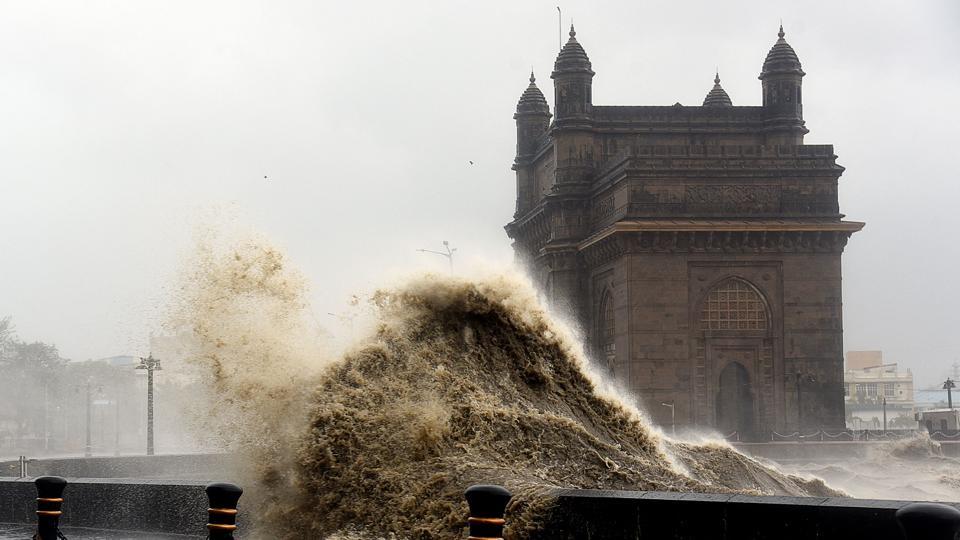
In May, extremely severe cyclonic storm Tauktae intensified rapidly and unexpectedly, clocking wind speed 180-190kmph gusting to 210kmph and bringing intense spells of rain that battered Mumbai bringing most services to a halt.
It was a combination of two extreme events— Tauktae had rapidly intensified over the ocean from a “very severe cyclonic storm” to an “extremely severe cyclonic storm” within a few hours on the morning of May 17, while torrential rains inundated and crippled the financial capital over land, shutting down Mumbai’s Chhatrapati Shivaji Maharaj International Airport.
Such compound or cascading extreme events will be much more frequent and lead to a high impact in recent years, IPCC warned.
Also Read | Climate crisis: No one will be spared
Compound extreme events are the combination of multiple drivers or hazards that contribute to societal or environmental risk. Examples are concurrent heatwaves and droughts, compound flooding (a storm surge in combination with extreme rainfall and river flow), compound fire weather conditions (a combination of hot, dry, and windy conditions), or concurrent extremes at different locations.
“The changing climate state is already altering the likelihood of extreme events, such as decadal droughts and extreme sea levels, and will continue to do so under future warming. Compound events and concurrent extremes contribute to increasing probability of low-likelihood, high-impact outcomes, and will become more frequent with increasing global warming,” the IPCC said in its report.
A projection that can be particularly relevant to India is that IPCC now is confident that compound effects of climate change, land subsidence, and human factors will lead to higher flood levels and prolonged inundation in the Mekong Delta and other Asian coasts. Increasing sea level compounded by increasing tropical cyclone storm surge and rainfall intensity will increase the probability of coastal city flooding.
“These events are already happening. This is basically one extreme event triggering another or two or more extreme events taking place at the same time. The impact of such events is very high. For example, there can be extreme precipitation and extreme flooding at the same time. Or there is extreme heat leading to heatwaves which then trigger wild fires which can make management of disasters very complicated. Another example is of tropical cyclones and extreme rainfall happening together. We can expect such multiple or cascading events taking place together more frequently when there is 1.5 degrees Celsius warming,” said R Krishnan, executive director, Centre for Climate Change Research at Indian Institute of Tropical Meteorology, and IPCC author.
This time, the IPCC report has a chapter on compound events. Extreme rain and extreme winds can result in infrastructural damage; the compounding of storm surge and rain extremes can cause coastal floods; the combination of drought and heat can lead to tree mortality; wildfires increase occurrences of hailstorms and lightning.
Compound storm types consisting of co-located cyclone and thunderstorm systems can cause extreme rainfall and extreme winds than individual storm types the IPCC said, adding that studies also show an increasing risk for breadbasket regions to be concurrently affected by climate extremes with increasing global warming, even between 1.5°C and 2°C of global warming.
India’s 7,516km-long coastline is particularly vulnerable to compound events, IPCC authors said. “Its very simple, the Indian Ocean is warming at a higher rate compared to the global average. This is often leading to tropical cyclones that intensify very rapidly. Along with that we have the sea level rise in coastal areas. We are also seeing higher storm surge and strong winds. All of this is coming together with extreme rainfall. Extreme rainfall events are rising at the rate of 7% with every 1 degree Celsius of warming. These are compound events and not singular events. We saw a similar pattern for Amphan, Tauktae and Yaas, and this will only become more frequent in future,” explained Subimal Ghosh, institute chair professor, department of civil engineering, IIT Bombay, and IPCC author.
Krishnan said early warning systems had improved significantly since the 1999 Odisha super cyclone but more accuracy is needed to forecast the intensity of cyclones. “We need widespread awareness of climate change-related disasters and training in climate change, oceanography and meteorology should start very early--from high school,” he added.