
 E-Paper



Opinion | A decade of Deepotsav: From the light of earthen lamps to the light of employment
The decade-long journey of Deepotsav is an example of how the 'light of earthen lamps' can transform into the 'light of employment', writes Manish Khemka.

 Prefer HTon Google


– Manish Khemka
Chairman, Global Taxpayers Trust, and Member, GST Grievance Redressal Committee, Uttar Pradesh
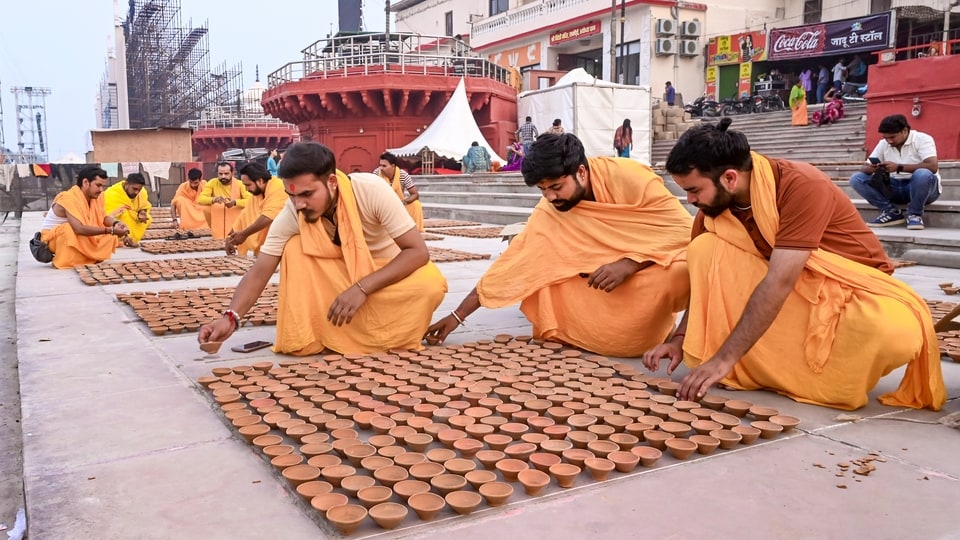
Ayodhya's Deepotsav is not merely an expression of faith or a religious event that illuminates the ghats of Saryu. It has become a golden chapter of cultural renaissance and economic self-reliance that has touched the lives of people at the last rung of society. When lakhs of earthen lamps are lit simultaneously along the ghats of the Saryu, each lamp also illuminates the hard work of a potter, the support provided by women who make cotton wicks, the struggles of boatmen, and the bright hopes of laborers. The decade of Deepotsav stands as the strongest testimony to how the 'light of earthen lamps' has given birth to 'light of employment'.
Whenever we talk about Deepotsav, the first image that comes to mind is lakhs of twinkling earthen lamps spreading a divine radiance along the banks of the Saryu. The light of these lamps has brought smiles to the faces of our artisans and potters associated with Mati Kala. These are not merely earthen lamps, but symbols of hope for artisans who were once disheartened and helpless, while successive governments continued to overlook their plight. Deepotsav, which began in 2017 under Chief Minister Yogi Adityanath, has given them a new market, a new identity, and unprecedented recognition. Today, this event has become the biggest source of year-round economic security for thousands and lakhs of families associated with Mati Kala.
Earthen lamps are made from clay, but they also require wicks and oil to illuminate. This is where a large employment ecosystem emerges, with rural women playing a significant role in its economy. The seemingly small but extensive task of preparing cotton wicks for lakhs and crores of earthen lamps is undertaken by local Self-Help Groups (SHGs) and rural women. The income generated from this work symbolizes their self-reliance and self-respect. Similarly, mustard oil is required to fill lakhs of earthen lamps. This provides significant economic benefits to local traditional oil mills, thereby securing the livelihoods of the laborers working there.
Deepotsav has now begun to shine on the global tourism map. Ayodhya's historic leap in religious tourism over the past ten years is a case study for the world. Lakhs of devotees, tourists and media personnel from every corner of the country, as well as from abroad, visit Ayodhya to witness this divine spectacle. This huge influx of tourists has created a wave of local employment opportunities, transforming the economy of the entire Awadh belt. A complete network of hotels, guest houses, dharamshalas and homestays has emerged in Ayodhya and its surrounding areas. This growth in the hospitality sector has created jobs for young people as receptionists, chefs, housekeeping staff, and managers.
This tourism boom has directly affected transportation and local livelihoods. During this period, incomes of e-rickshaw drivers who ferry tourists from railway stations or the airport to Ram Ki Paidi and temples, boatmen who offer boating experiences on the Saryu, tour guides who narrate the city's history, and taxi drivers have increased manifold. Ayodhya's unprecedented global branding through Deepotsav has ensured a steady flow of tourists and devotees year-round, turning these opportunities into sustainable livelihoods.
For the most disadvantaged sections of society, Deepotsav is nothing short of a divine blessing. For small traders who sell flowers and garlands along roadsides, run small shops selling chandan, roli and prasad, operate tea and paan stalls, sell wooden toys or offer local delicacies from pushcarts, this period truly embodies the spirit of Diwali. The principle of economics is that when money reaches the grassroots, the economy becomes strongest. When lakhs of people walk through the streets of Ayodhya, they leave behind crores of rupees in liquidity in the local markets.
This decade has also proved to be a golden era for cultural preservation and artists. Tableaux taken out on the streets of Ayodhya during Deepotsav, grand laser shows, staging of Ramlila and performances by folk artists from different states of the country multiply the grandeur of the event. There was a time when our traditional folk artists neither received an appropriate platform to showcase their art nor adequate remuneration to make a living. However, Deepotsav has given artists from Awadh, Braj, and Bundelkhand, as well as from every corner of the country, an international platform. Along with applause and recognition, it has also provided them with a livelihood. The unsung heroes working behind the scenes to bring this entire event to life must not be forgotten either. For the laborers who put up tents, artisans who undertake lighting and floral decorations, technicians who operate sound systems and craftsmen who build huge ceremonial gateways, this event is the biggest celebration of both their art and their trade.
From a broader economic perspective, Ayodhya's Deepotsav emerges as a successful 'economic and cultural model'. This model has demonstrated that the seeds of our economic prosperity are also hidden in our cultural and religious roots. Infrastructure development is essential for successfully organizing an event like Deepotsav. Constructing wider roads, beautifying ghats, and developing new railway stations and an international airport are all essential. These activities generate lakhs of employment days, both directly and indirectly. From unskilled laborers engaged in brick-and-mortar work to professionals in engineering, event management, and information technology, everyone has had the opportunity to demonstrate their skills and achieve economic progress through this development journey.
The past decade of Deepotsav in Ayodhya is the most vivid, authentic and heartfelt example of how the 'light of earthen lamps' can transform into the 'light of employment'. It is not merely a festival of illumination lasting a few hours. It is a continuously burning flame that has spread the glow of self-reliance across the faces of people standing at the last rung of society and filled the entire local economy with renewed energy.


