
 E-Paper



Punjab’s health scheme expands reach as over 40 lakh families get ₹10 lakh cover
Punjab's Mukhya Mantri Sehat Yojna is transforming healthcare access as over 40 lakh families receive cashless health coverage of ₹10 lakh.

 Prefer HTon Google


Punjab’s flagship Mukhya Mantri Sehat Yojna is witnessing rapid expansion across the state, with over 40 lakh health cards issued in just three months, according to an official statement dated April 23. The scheme, which provides annual cashless health cover of up to ₹10 lakh per family, is being positioned as a key intervention to improve access to affordable healthcare in both urban and rural areas.
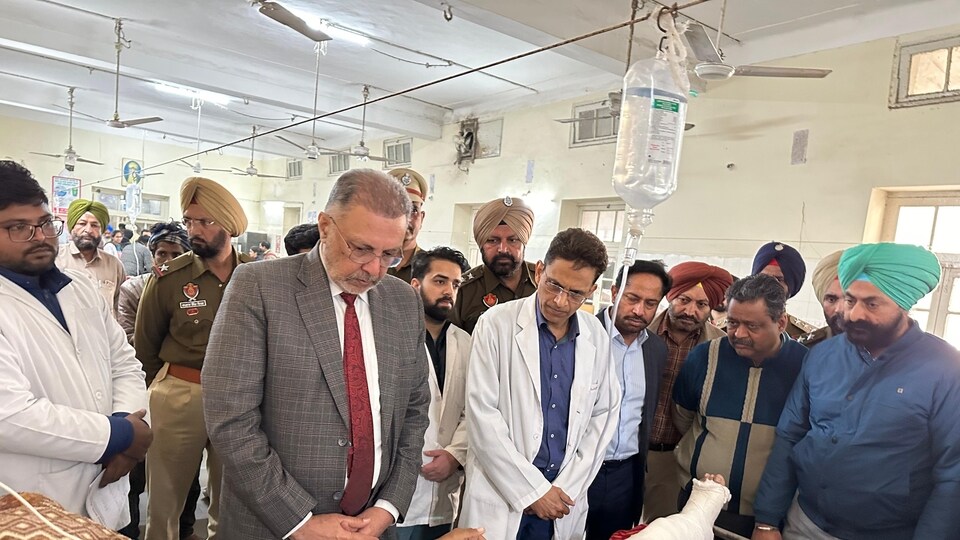
The development comes as the state government, led by Chief Minister Bhagwant Singh Mann, pushes for wider enrolment and utilisation of the scheme. According to the statement, 28,766 registrations were recorded on April 21 alone, indicating growing uptake and trust among residents. The scheme aims to address a long-standing issue where high medical costs forced patients to delay treatment, skip diagnostic tests or discontinue medicines midway.
District-level data shows that Ludhiana leads with 4.20 lakh cards issued, followed by Patiala with 3.82 lakh and Jalandhar with 2.85 lakh. Officials said the scheme is also gaining traction in Tier-2 and Tier-3 districts such as Hoshiarpur, Amritsar, Mansa, Fazilka and Barnala, reflecting its widening reach beyond major urban centres.
The expansion aligns with recent efforts by the state to promote enrollment through outreach programmes. Earlier this month, a two-day health camp in Patiala saw over 500 people register for Sehat cards, with the government stepping up awareness drives to move towards universal coverage.
Ground-level impact and medical outcomes
Doctors across Punjab reported a visible shift in healthcare-seeking behaviour since the scheme’s rollout. At Sub-Divisional Hospital Khanna, senior medical officer Dr Maninder Singh Bhasin said, “Health should not be a privilege. Earlier coverage was limited, but now every resident is included.” He added, “We have done over 200 gall bladder surgeries in recent months. Ideally it costs around ₹40,000 to ₹80,000, but patients paid nothing.”
He further said, “Knee and hip replacements costing over ₹1 lakh are now routine. We perform about 10 surgeries daily, all cashless.” On emergency care, Bhasin noted, “In STEMI heart attacks, every minute matters. With Tenecteplase, a thrombolytic medication used to rapidly dissolve blood clots during acute heart attacks, we restore blood flow quickly. We have saved close to 100 patients so far.”
Orthopaedic surgeon Dr Karan Chopra from Barnala echoed similar trends, stating, “Patients earlier delayed surgery for months. Now they come earlier. Savings per surgery are ₹1-1.5 lakh.”
Punjab health minister Dr Balbir Singh said, “Healthcare should not depend on a patient’s ability to pay or travel. With the Sehat card under Mukhya Mantri Sehat Yojna, every family is covered up to ₹10 lakh annually. Our goal is to ensure the best possible treatment reaches every household without financial burden.”
Policy push amid rising healthcare needs
The scheme has also been seen as a financial lifeline in high-cost treatments such as cancer care. HT had earlier reported that families have been able to access cashless treatment worth ₹8 to 10 lakh under the scheme, easing the burden of expensive procedures including surgery and chemotherapy.
Punjab continues to face a rising disease burden, particularly in oncology, with government and central agencies working to expand healthcare infrastructure alongside welfare schemes. Officials said the Sehat Yojna complements these efforts by ensuring that financial constraints do not delay treatment decisions.
According to the April 23 statement, the most significant change has been behavioural, with families seeking medical care earlier instead of waiting for conditions to worsen. Doctors across the state have pointed to a reduction in fear associated with treatment costs, allowing decisions to be driven by medical need rather than affordability.
The state government said the initiative is part of a broader effort to redefine healthcare delivery, ensuring that services are accessible, inclusive and based on dignity. With enrolment continuing to rise across districts, the scheme is expected to play a central role in Punjab’s healthcare strategy in the coming months.


