
 E-Paper



Ethical hackers help police check rising cyber crimes in Gurgaon
Gurgaon police say that at a time incidents of cyber crime are on the rise in the city, it might prove beneficial to be equipped with a specific set of skills including hacking which, when used ethically, could become an important tool to solve cyber crime

 Prefer HTon Google


In August, 2016, a cyber crime case related to defamation and harassment was registered after Kirti Singh, a 24-year-old year old woman, lodged a complaint with the Gurgaon police against Amit Roy (name changed) claiming Roy had hacked into her Facebook account and sent objectionable messages to her friends. The complaint also said he posted digitally altered (photoshopped) pictures defaming her publically. The case was taken up by the cyber cell for investigation.
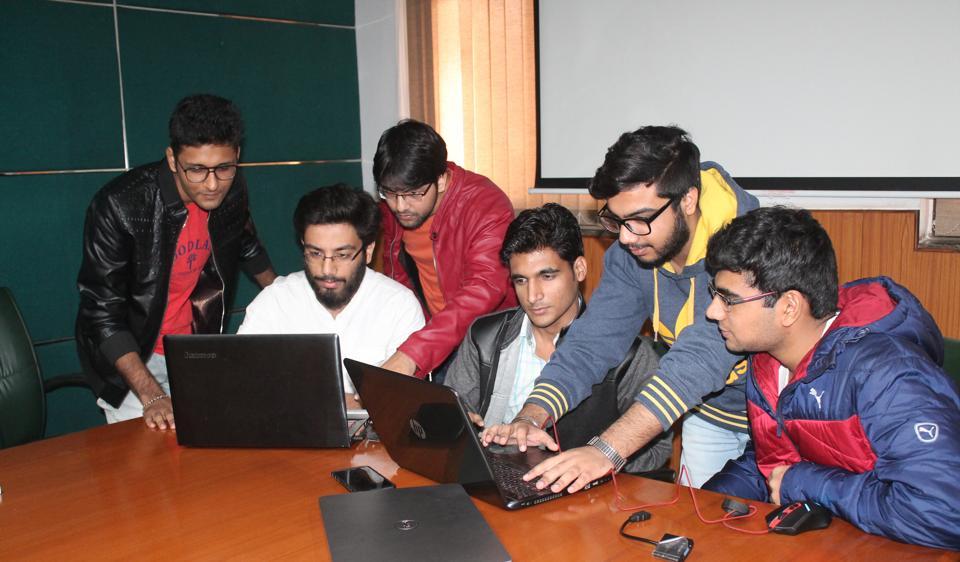
The cyber cell also took help of an ethical hacking group, members of which had interned with the police department. The group of engineering students of a private university assisted the police in breaking through her laptop password. Later, the investigating officers and ethical hackers found the laptop had been formatted and all files deleted. However, the ethical hackers made use of a specialised set of tools and software to recover the data, which showed that the allegations made by the woman were true. Later, Roy confessed to morphing her pictures in anger after their relationship ended on a sour note.
Gurgaon police agree that at a time incidents of cyber crime are on the rise, it might prove beneficial to be equipped with a specific set of skills including hacking which, when used ethically, could become an important tool to solve cyber crime.
The city has been witnessing a spurt in incidents of cyber crime over the years. The number of complaints have only gone up with every passing year.
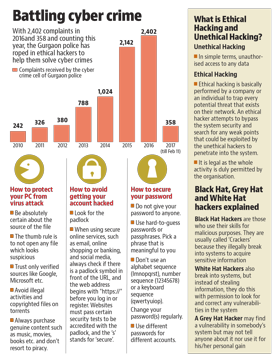
Last year, the cyber crime cell of Gurgaon police received 2,402 complaints and till Saturday, the number of complaints this year have already touched 358. Cyber crimes in the city have been on an upward curve over the last few years. In a bid to reverse the trend and tackle the challenge posed by cyber criminals, the Gurgaon police roped in cyber experts last year and also started taking help from the group of ethical hackers from The NorthCap University.
Read I 50 online banking fraud cases registered in Gurgaon after cyber crime cell nod
In another case which was solved with help from the group of hackers, a woman complained that her account was illegally accessed and an amount of Rs 5 lakh withdrawn. The cyber cell and hackers, working in tandem, found that the complainant’s mobile phone had a malicious application installed which allowed the criminals to access her banking details. It was found that the app installed in her phone had access to her private messages and automatically deleted messages from her bank alerting her on fraudulent transactions. The bank was also asked to provide the IP addresses of all the devices that were used to make transactions from the victim’s accounts. Later, the police was able to nab the criminals by tracking one of the accused at a cyber café in Gurgaon.
There have been several such instances where the ethical hackers joined hands with the police to crack cases and nab criminals.
Sachin Kushwaha (21), a third -year computer science student of the university and a member of the group of hackers, said no security system can promise a hack-proof, impregnable firewall to secure devices. He went to the extent of saying that the promise of 100% security is a myth and even the world’s best security system could be breached. “When we work with the cyber police, we take into account their strengths and also their weaknesses. There are technical issues and use of softwares which need specialized knowledge and we try to provide them with the same,” Kushwaha said.
“A lot of people keep their private data/information on the cloud. Most of their data remain on the servers owned by the companies they trust. Many people end up uploading their data, photos, credit card info, etc to unsafe sites, putting them at risk. Such unsafe sites allow hackers to directly read and modify the website’s and user’s content depending on how insecure a site is. Most of the cases happened in Gurgaon because of unsafe practices adopted by digital users,” Devansh Bhatia (20), a third-year B.Tech student of The NorthCap University who has interned with the police department twice, said.
Cyber crimes include preventing users from accessing a resource like a web page, email, the phone network, or something else. Phishing is a known technique used by hackers to prise out confidential information. It involves sending a message through an electronic medium (email, text message, etc.) to obtain personal or sensitive information (passwords, e-Wallet passwords, username, Credit/Debit Card details), often for malevolent reasons.
“The best defence against these attacks is not to be lured by spurious messages. The receiver of a dubious message should be wary and get in touch with the organisation named in the message and check if it was indeed from them,” Lakshay Mathur(21), another member of the group, said.
Last but not the least, the ethical hacking group also wants the users of social media sites to be careful while on Facebook, Twitter and other sites.
“Sixty per cent of profile pictures on social sites contains GPS coordinates of where it was taken. One’s personal information could be misused to rob, blackmail and even for defamation. So being careful about personal information is crucial,” Mayank Raheja(19), a third year B.Tech student who is pursuing an elective course in cyber security, said.
These days B.Tech and M.tech also offers specialisation in cyber security and many youths are opting for it.
To ensure safety, the group suggests that users regularly check privacy settings on social networking sites, think before posting any photographs or financial information online, turn the mobile’s GPS location off when not in use, respect privacy on the Net and be careful about talking to “strangers” on a computer network.
Gurgaon police also wants the citizens to be careful while using the internet and making online transactions. Police commissioner Sandeep Khirwar said, “Ethical hacking is an important skill as it could prove very useful to unravelling technical cases. We also use such skills and engage ethical hackers to solve such cases.”


